
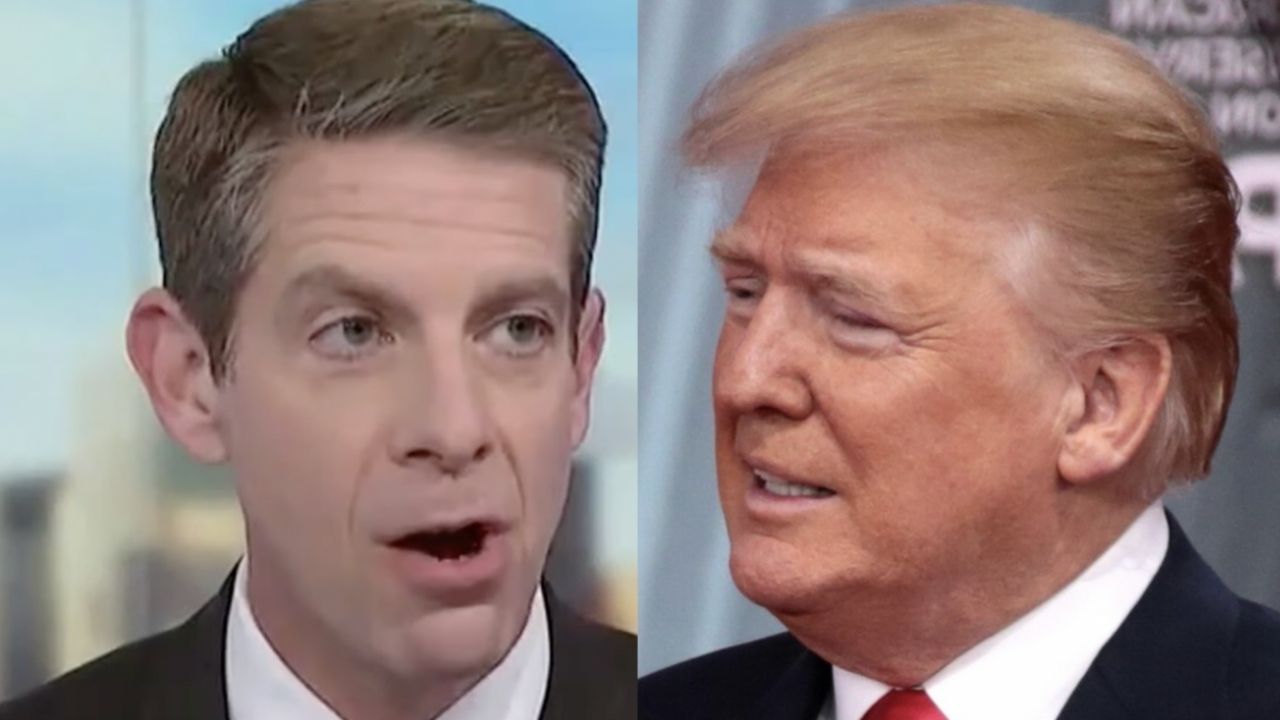
U.S. Rep. Mike Levin (D-CA), whose 49th District includes Marine Corps Base Camp Pendleton, accused President Donald Trump and Republican congressional leadership on Tuesday of pouring billions of taxpayer dollars into an Iran military campaign that Congress never authorized, expanding White House deputy chief of staff Stephen Miller’s mass deportation operation, and funding what he called the president’s “vanity projects” — all while offering no relief for Americans struggling with the cost of groceries and everyday life. The California Democrat made the accusation in a post on X published at 3:51 p.m. on September 8, 2026, tying the administration’s spending priorities directly to the upcoming November midterm elections.
Levin’s post read in its entirety: “Daily reminder that Trump and Republican leadership are spending billions of your tax dollars on military operations against Iran that Congress never authorized, expanding Stephen Miller’s mass deportation agenda, and funding the president’s vanity projects, while doing nothing to lower your grocery bill or make your life more affordable. This November, you can help put an end to it.”
The post is the latest in a string of public statements Levin has made since the war with Iran began, each pressing the same argument: that the Trump administration has bypassed Congress’s constitutional war powers while allowing the financial burden of the conflict, from gas prices to grocery bills, to fall on ordinary American households.
A War Levin Says Was Never Authorized
Levin’s objections to the Iran campaign date back to its opening hours. On February 28, 2026, hours after Trump announced what the president called “major combat operations” against Iran, Levin released a statement arguing the operation had already exceeded any legal justification for unilateral executive action. “In the dark of night, President Trump announced that the United States had begun ‘major combat operations’ in Iran, describing a ‘massive and ongoing operation.’ Those are not the words that describe a limited strike to repel an imminent threat or a sudden attack. They describe sustained warfare,” Levin said at the time. “Article I of the Constitution gives Congress, not the President, the power to declare war. A President may act to repel an imminent attack, but launching an open-ended campaign requires congressional authorization.”
Levin followed through on that position on March 5, 2026, when he voted in favor of a War Powers Resolution intended to force the withdrawal of U.S. forces from the conflict absent explicit congressional authorization. “Today, I voted for the War Powers Resolution to end the Trump Administration’s unauthorized military campaign in Iran,” Levin said after the vote.
Levin’s position was not new territory for him. Months earlier, following a June 2025 round of U.S. strikes on Iranian nuclear sites, he had made a nearly identical argument, warning that “we cannot allow any president to entangle the United States in another deadly and open-ended war without constitutional authority” and adding that “had the president come to Congress, a majority may very well have authorized a strike. But that is not what has happened.”
Rising Costs Tied to the War
Central to Tuesday’s post is Levin’s contention that the war has driven up costs for American families, a theme he has developed through legislative action as well as public statements. On March 18, 2026, Levin and Rep. Sean Casten (D-IL) introduced the Energy Bills Relief Act alongside more than 120 House Democrats, framing it as a direct response to energy prices that Levin said had climbed “as much as 13%” over the previous year under the Trump administration.
Five days later, at a press event in Encinitas, California, Levin explicitly connected those rising costs to the war effort, telling reporters that electricity prices had increased more than twice as fast as inflation over the prior 12 months and were expected to keep climbing “as the war with Iran continues.” He was more pointed in his prepared remarks: “President Trump promised to cut energy bills in half — instead, he started a war driving up the cost of gas, electricity, and groceries for every American family. We have a plan to lower energy costs and I will fight every single day to make it law.”
Levin returned to the affordability argument again during his response to Trump’s 2026 State of the Union address in late February, telling constituents that the president’s speech “didn’t include a single serious plan to lower costs for working families” and that Trump “said nothing about… the risk of dragging us into another endless war most Americans do not want.”
The Mass Deportation Agenda
Levin’s post also singles out Stephen Miller’s mass deportation agenda as a second front in what he characterizes as misplaced federal spending. Levin has repeatedly opposed the administration’s immigration enforcement funding levels in Congress, including a February 3, 2026, vote against a government funding package over what he described as the absence of accountability measures for Immigration and Customs Enforcement. “Congress has a duty to fund agencies that protect our communities. We also have a duty to make sure those agencies operate professionally, lawfully, and with appropriate safeguards,” Levin said in explaining his vote.
He took the same position again later that month on a Homeland Security funding bill, saying his office had proposed “commonsense accountability measures: requiring judicial warrants for home entries, setting clear limits on use of force, mandating body-worn cameras, and explicitly prohibiting the detention or deportation of U.S. citizens,” all of which he said Republican leadership rejected.
Ahead of the State of the Union, Levin announced he would bring Stephanie Quintino, the daughter of a deported Southern California couple, as his guest, saying he intended to use the moment to highlight what he called “the cruel reality of his mass deportation machine.” Levin said at the time, “I’ve watched President Trump use every podium, every platform, and every moment of national attention to mislead the American people.”
Congressional Pushback and a Postponed Vote
Levin’s Tuesday post arrives against the backdrop of a broader, monthslong fight in the House over the war powers question. Earlier this year, Levin publicly accused House Republican leadership of pulling a scheduled War Powers vote on Iran because GOP leaders “knew they were going to LOSE,” writing on X that “members of both parties were ready to reassert Congress’s constitutional authority over war and peace” before leadership “ran from” the vote.
Levin has also framed the fight as one that transcends party lines when it comes to the separation of powers. After a June 2025 classified briefing on U.S. strikes on Iran’s nuclear program, he criticized then-House Speaker Mike Johnson for calling the War Powers Resolution itself “unconstitutional,” saying the remark amounted to “a stunning abdication of responsibility.” Levin added, “Congress is not a ceremonial body. We are a co-equal branch of government. When American lives are at stake, when global stability hangs in the balance, our role is not optional — it is essential.”
Background: Affordability as a Midterm Flashpoint
Levin’s Tuesday message reflects a broader Democratic strategy heading into the November midterms, in which affordability — and grocery prices specifically — have emerged as a dominant campaign theme. Polling conducted for the Gardner Food and Agricultural Policy Survey found that a majority of Democratic respondents, along with sizable shares of independents and Republicans, said candidates’ statements about food affordability would strongly influence their votes this fall.
Grocery costs have been a persistent political flashpoint throughout 2026. The U.S. Department of Agriculture’s Economic Research Service projected food-at-home inflation would moderate to roughly 1.7 percent for the year, below the 20-year average, but government data compiled through the summer showed increases in several categories, including meats, poultry, and nonalcoholic beverages, alongside sharp multi-year run-ups in coffee and beef prices. Energy costs tied to the Iran war have compounded the picture: economic analysts have noted that the conflict’s disruption of Middle East oil markets pushed gas prices higher for months before easing somewhat as the U.S. drew down petroleum inventories as a net exporter.
Trump Administration’s Domestic Spending Under Scrutiny
The “vanity projects” reference in Levin’s post follows monthslong Democratic criticism of the Trump administration’s domestic construction initiatives, including a White House ballroom addition, a proposed triumphal arch, and a golf course project, all of which critics have cited as examples of discretionary spending pursued while cost-of-living concerns dominate voter sentiment nationally. Levin referenced a related version of this critique in his State of the Union response, noting that Trump “has personally profited to the tune of $1.4 billion from his time in office” while “lecturing the country about corruption.”
Levin’s Broader Legislative Record on the War
Beyond his public statements, Levin has pursued legislative measures tied directly to the themes raised in Tuesday’s post. In addition to the Energy Bills Relief Act, he introduced the House companion to the DEATH BETS Act on March 17, 2026, which would bar federally regulated financial entities from listing prediction-market contracts tied to war, terrorism, assassination, or individual deaths. “No one should make a profit betting on war and death through prediction markets,” Levin said in a statement announcing the bill, which is paired with a Senate companion led by Sen. Adam Schiff.
Levin’s record on Iran policy predates the current conflict as well. In January 2020, following the U.S. strike that killed Iranian Gen. Qasem Soleimani, Levin cosponsored an earlier War Powers Resolution, arguing that “the President has no clear, consistent strategy to de-escalate this conflict, protect Americans and our allies in the region, and effectively address hostilities by Iran,” and that “the President must follow the Constitution and consult Congress on any next steps.”
What Comes Next
Levin’s Tuesday post closes with a direct appeal to voters, urging them to act “this November” to change the trajectory of both war spending and domestic affordability policy. With the midterm elections roughly two months away, Levin’s district — anchored by Camp Pendleton and a large population of military families and veterans — is expected to remain a focal point for both parties’ messaging on the war’s human and financial costs. Levin has repeatedly emphasized his ties to that community, noting in past statements that “Chrissy and I are praying for our service members” and that he will “continue to uphold the oath I swore to defend both the Constitution and the security of the United States.”
Neither the White House nor Rep. Levin’s office issued additional comment beyond the statements cited above by the time of publication.