
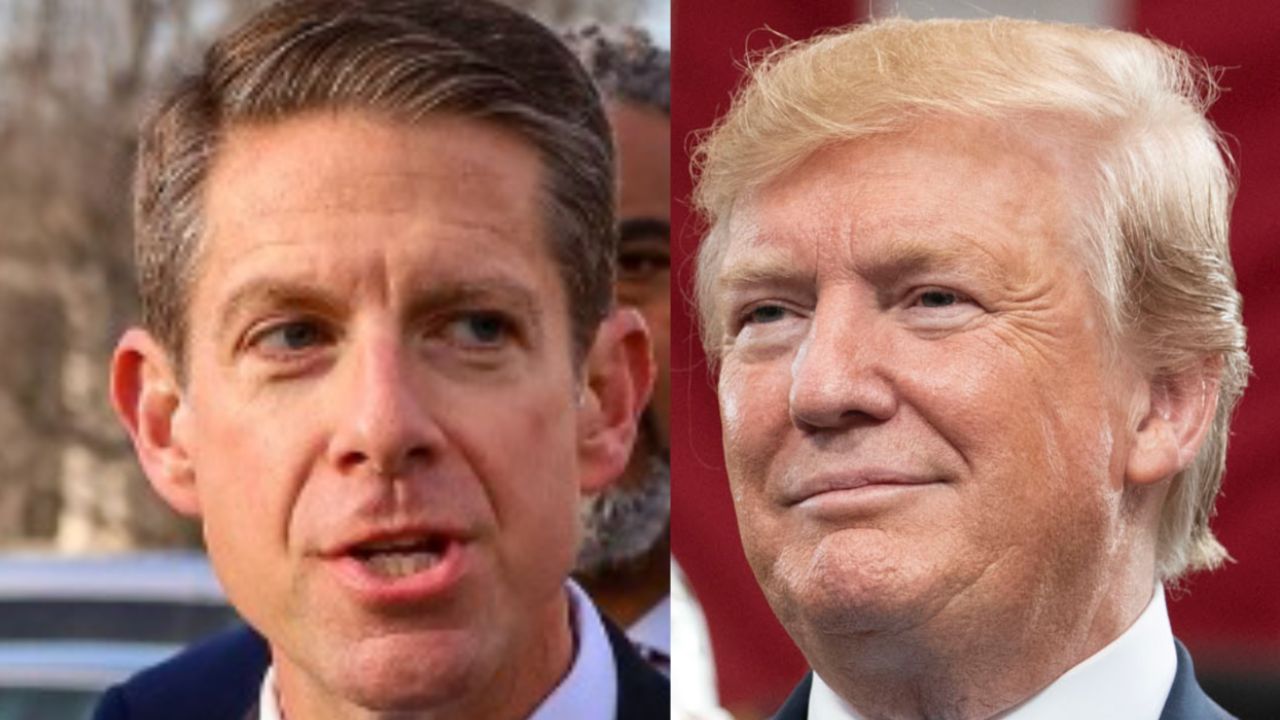
U.S. Rep. Mike Levin, a California Democrat, accused President Donald Trump of betraying Ukraine in a post on X on Wednesday. He linked the loss of Ukraine’s battlefield satellite access, Russia’s largest ballistic missile barrage of the war, a sanctions waiver for Russian diesel and a reported trip to Moscow by FBI Director Kash Patel. Levin wrote that Ukrainian officials say Washington ordered the Starshield restriction that disrupted the military communications network Kyiv uses to fly its drones. He closed the post with a declaration of support for Ukraine and for democracy.
What Levin Said
Levin posted the statement at 12:19 p.m. on Wednesday, October 14, 2026. The post read in full:
“The NY Times reports that Ukraine’s military access to Starshield (the Pentagon-funded version of Starlink) was restricted overnight without warning. That’s what Ukraine uses to fly its drones.
Ukrainian officials say the order came from Washington.
The same night, Russia hit Ukraine with 39 ballistic missiles, the biggest barrage of the entire war. 600,000 in Kyiv lost power.
This comes after Trump said Ukraine should get a new president. He said Putin wants a deal more than Zelensky. He gave Putin a (likely illegal) sanctions waiver to sell diesel, a total betrayal of Ukraine. And today Kash Patel reportedly landed in Moscow.
Ukrainians are fighting for the same freedom our grandparents’ generation fought for, the right of a free people to choose their own leaders.
Meanwhile, Putin is a murderous thug.
I stand with Ukraine. I stand with democracy.”
The Events Behind the Post
The sequence Levin describes began on Friday, October 9. That day the Treasury Department’s Office of Foreign Assets Control issued General License 135, which authorizes transactions otherwise barred under two Russia sanctions programs. Those transactions cover the sale, delivery, offloading and importation of Russian-origin diesel fuel, including into the United States. The license runs through 12:01 a.m. eastern daylight time on April 7, 2027. It does not authorize any debit to accounts of Russia’s central bank, National Wealth Fund or Ministry of Finance. The document is signed by OFAC Director Bradley T. Smith.
Trump announced the diesel arrangement after a phone call with Putin. Treasury said it was issuing the license at the president’s direction. It is the first such license to ease diesel sanctions for longer than the standard 30-day window since the start of the war in Ukraine. Trump framed it around prices, saying lower costs for Americans, “especially our Great Farmers, Ranchers, and Truckers,” were his greatest priority. Sen. Richard Blumenthal, a Connecticut Democrat who co-sponsored the Russia sanctions law Trump signed last month, called the decision “an embarrassment” that “makes us complicit in Putin’s war against Ukraine.”
The next day, Saturday, October 10, Trump told reporters before leaving the White House, “I think it’s time for Ukraine to get a new president.” He said Ukrainian President Volodymyr Zelensky “could have settled this war many, many times” and chooses not to. He also said Putin very much wants a settlement. He blamed Ukrainian strikes on Russian refineries for pressure on diesel supplies. Zelensky had earlier called the diesel arrangement a gift to Putin that would not bring peace.
The most recent events came overnight into Wednesday. The post cited a report by The New York Times, which said Russia launched dozens of ballistic missiles at Ukraine’s energy infrastructure. The attack included 39 ballistic missiles, according to Zelensky, which would be the largest such salvo of the war based on a Times data set built from Ukrainian Air Force figures. Zelensky said 600,000 people in Kyiv lost power. Ukrainian Prime Minister Serhii Koretskyi wrote that the strikes hit all three of the capital’s combined heat-and-power plants.
Starshield and the Battlefield
At the same time, Ukraine’s military lost some access to Starshield, a Pentagon-funded military version of Starlink that is harder to hack or jam. Officials from Ukraine’s defense ministry said SpaceX, without warning, restricted use of the system for devices traveling faster than 100 miles per hour. Terminals lose connection when they exceed that speed. The ministry said it was in contact with the U.S. government, SpaceX and NATO partners to address the problem. Ukrainian officials and analysts concluded the restrictions came from Washington. It was unclear how long they would remain in place.
The military consequences reach well beyond communications. The Ukrainian Army uses thousands of Starshield terminals on troop and supply vehicles, drones that carry food and water to the front, and long-range attack drones. The network also connects the interceptor drones Ukraine uses against Russian Shahed drones. Serhiy Beskrestnov, a military-technology adviser to Zelensky, said: “In effect, our partners’ actions are depriving us of one of the few ways we have to defend the country against jet-powered Shaheds.” Oleksandr, an officer in the 8th Air Assault Corps who was identified only by his first name under military rules, said the restrictions mainly hit heavy bomber and fixed-wing drones targeting Russian supply routes. If they persisted, he said, Russia could reopen those routes within days.
SpaceX, which operates both services, and its chief executive, Elon Musk, did not respond to requests for comment. The Pentagon did not immediately respond either. Musk said earlier this year that Starshield is “operated by the U.S. government.” Starlink does not operate in Russia, so the restrictions cannot be tied to Trump’s demand that Ukraine stop striking Russian oil refineries. Zelensky told a British television host on Wednesday, “It’s a pity that we are losing a strong partner,” and added, “This is not the right side of history.”
The Patel Trip
Levin’s post says Patel “reportedly landed in Moscow” on Wednesday. Reports published in July said Patel was expected to travel to Moscow and St. Petersburg on October 14–15, on a trip likely hosted by Russia’s Federal Security Service. The purpose of the visit has not been disclosed. It was also unclear whether he would meet Putin. The FBI has not confirmed the visit or its agenda in the material reviewed for this article. The reports noted that the last serving FBI director to visit Russia was Robert Mueller in 2013.
Levin’s Record on Ukraine
Levin’s post follows more than four years of public statements on the war. On February 22, 2022, he called Russia’s invasion “a blatant assault on international law.” He said he expected the Biden administration and allies “to continue to implement increasingly severe sanctions on Vladimir Putin, his cronies, and the Russian government.” He also said he was confident the United States and its allies would remain united in “holding Putin accountable” and “supporting Ukraine’s right to defend itself.”
On October 25, 2022, he issued a statement on his “continued support for Ukraine.” He called U.S. military and humanitarian support “fundamental to defending our own values and national security interests.” He criticized then-House Republican leader Kevin McCarthy for suggesting his party was ready to abandon aid. He also rejected the idea of negotiating with Putin, whom he called “a war criminal,” saying he “could not disagree more strongly” with colleagues in his own party who suggested talks were appropriate.
On April 20, 2024, Levin announced his vote for the House national security package providing assistance to Ukraine, Israel and Indo-Pacific allies. He said “global democracy and stability are on the line” and urged the Senate to pass it swiftly. He also criticized Republicans for the time it took to bring the package to a vote.
The language in Wednesday’s post closely tracks his reaction to the February 28, 2025, Oval Office meeting between Trump and Zelensky. Levin called that meeting “an internationally embarrassing failure of American leadership.” He wrote, “Putin is a murderous thug who illegally invaded Ukraine,” and said “my grandfather and the Greatest Generation didn’t fight authoritarians in WWII to see the U.S. take the side of one today.” He added that Trump “has made clear that he intends to abandon our allies and hand over power to Russia and China.”
What Comes Next
Several questions remain open. The Starshield restrictions have no stated end date. The diesel license is scheduled to expire April 7, 2027, though a general license is a permission that can be withdrawn. Ukraine’s energy system faces a winter in which, as the Times reported, Russia is gearing up to push Ukraine to its breaking point while Kyiv runs low on air defenses. The 2026 midterm elections are weeks away, and the diesel waiver comes as fuel prices weigh on Trump’s party. Levin ended his post with five words: “I stand with Ukraine. I stand with democracy.”