
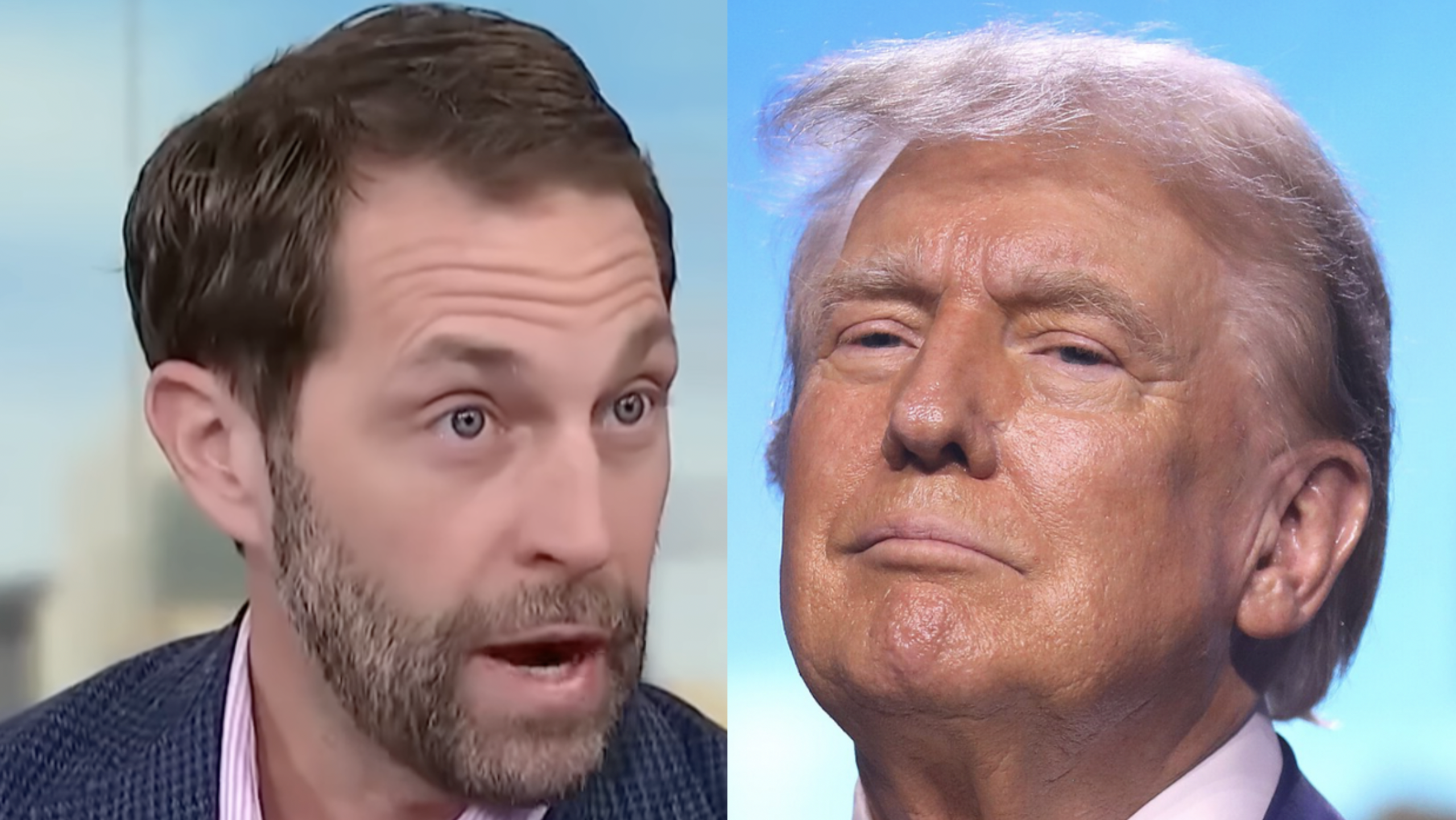
Rep. Jason Crow (D-CO) on Wednesday accused President Donald Trump of holding bipartisan housing relief hostage, after Trump abruptly canceled a planned signing ceremony for a sweeping affordable housing package just hours before it was scheduled to take place. The dispute, unfolding against the backdrop of an already strained relationship between the White House and Senate Republicans, has injected fresh uncertainty into one of the few major bipartisan achievements of the current Congress.
Crow’s criticism came in a post on X published at 9:55 a.m. on June 24, 2026. “Congress passed a bipartisan bill to make it easier to own a home. The President is refusing to sign it. Donald Trump doesn’t care about lowering costs for you,” Crow wrote.
The statement followed Trump’s own announcement roughly 30 minutes earlier on Truth Social, in which the president confirmed he would not move forward with the signing as planned. “Today’s Housing News Conference and Signing is hereby cancelled until such time as we pass the desperately needed SAVE AMERICA ACT, which I consider to be a National Emergency. Thank you for your attention to this matter! President DJT,” Trump wrote.
Background on the Housing Bill
The bill at the center of the standoff, the 21st Century ROAD to Housing Act, cleared both chambers of Congress with broad bipartisan support after months of negotiations between House and Senate leaders. The legislation is designed to increase housing supply, reduce barriers to homeownership, and cap the number of single-family homes that institutional investors can purchase. Lawmakers in both parties had hoped to highlight the bill as a rare example of cooperation ahead of the November midterm elections, with affordability emerging as a central concern for voters nationwide.
The signing had been scheduled to take place in Statuary Hall at noon Wednesday, with congressional leaders from both parties expected to attend. Trump’s cancellation came after he had already signaled skepticism toward the bill earlier in the morning, before confirming outright that he would withhold his signature until Congress acts on the SAVE America Act, a separate and far more contentious piece of legislation that would impose nationwide voter identification requirements and mandate proof of citizenship for voter registration.
The SAVE America Act Standoff
Trump has pressed congressional Republicans for months to advance the SAVE America Act, even as the measure has failed to gain the votes necessary to overcome a Senate filibuster. The bill has passed the House on multiple occasions but has stalled repeatedly in the Senate, where Republicans hold 53 seats but lack the 60 votes needed to clear procedural hurdles. Senate Majority Leader John Thune has acknowledged the limits of the GOP’s position, telling reporters that “those are just hard realities,” and that “people at some point have to come to grips with that.”
Wednesday’s housing bill cancellation set the stage for Trump’s planned afternoon visit to Capitol Hill, where he was expected to attend a closed-door lunch with Senate Republicans at the invitation of Sen. Rick Scott (R-Fla.), a supporter of the SAVE America Act. Presidential visits to Senate GOP lunches are uncommon, and Wednesday’s meeting arrived amid what has become an increasingly fractured relationship between Trump and members of his own party in the chamber. Senate Republicans have in recent weeks resisted several of the president’s legislative priorities, including a push to eliminate the filibuster altogether to force the voting measure through.
Crow’s Broader Record on Trump and the Iran War
Crow’s statement Wednesday extended a pattern of criticism the Colorado Democrat has directed at the Trump administration throughout 2026, much of it centered on the president’s decision to engage in military action against Iran and its downstream effects on the cost of living for American families. Crow, a former Army Ranger and paratrooper who serves on the House Permanent Select Committee on Intelligence and the House Armed Services Committee, has repeatedly argued that the war has driven up gas prices and everyday costs while delivering little strategic benefit. After House Republicans voted down a War Powers Resolution in April, Crow said the failure to end “the President’s war of choice is a disgrace,” adding that “Americans are struggling to get by, yet House Republicans and this Administration are more focused on continuing a war no one wants than on making their lives better for working people.”
Crow has been among the most vocal members of the House on the Iran conflict since its outset. In a statement responding to the administration’s initial military operations and calls for regime change in Iran, Crow said the president “is plunging us into another war in the Middle East,” arguing it was “a war of choice with no clear end game, no authorization from Congress, and little support from Americans.” He has since introduced multiple pieces of legislation aimed at curbing the conflict, including a War Powers Resolution alongside Rep. Seth Moulton (D-MA) and a bill to cut off federal funding for the war effort. Of that funding measure, Crow said, “I won’t vote for a dime to continue this illegal war with Iran. It’s clear that President Trump has no endgame and no strategy.”
When the House did ultimately pass a bipartisan War Powers Resolution, Crow framed it as long overdue. “People are fed up with endless conflict in the Middle East. With today’s bipartisan vote, Congress is finally doing what it should have done months ago. The American people oppose this war and want our leaders to end this reckless war,” he said at the time, while noting that the conflict had already cost the lives of 13 American servicemembers and billions in taxpayer dollars.
Crow has consistently tied the administration’s handling of foreign policy to its domestic economic toll, a theme that runs directly through his Wednesday statement on the housing bill. Speaking on the House floor in May, Crow said that “working class Americans, like the kids that I grew up with, the kids that I deployed with, fought with, suffered with, they’re the ones that have to do the fighting, and the dying, and the paying for these conflicts,” arguing that “the burden of these wars fall on them, while the elites and the rich and the powerful in this country get richer, and more powerful, and more comfortable.”
Wider Republican Tensions
The housing bill dispute also comes amid broader friction between Trump and Senate Republicans that has intensified in recent weeks. On Tuesday, four Republican senators — Susan Collins, Lisa Murkowski, Rand Paul, and Bill Cassidy — joined Democrats to pass a separate measure halting U.S. military action against Iran, prompting a pointed response from Trump on social media, where he wrote that the senators had “just made my job more difficult.” Republican Sen. Thom Tillis of North Carolina has separately voiced frustration that GOP attention devoted to the SAVE America Act could come at the expense of issues more likely to help Republicans in November, telling reporters, “every minute we spend on it, we’re not spending on something that can get my colleagues reelected.”
As of Wednesday afternoon, the housing bill remained unsigned, with the White House offering no indication of when — or whether — Trump intends to act on it before the 10-day window in which he must either sign or veto the legislation expires. Crow’s office did not immediately indicate whether he plans additional action on the matter beyond his social media statement.