
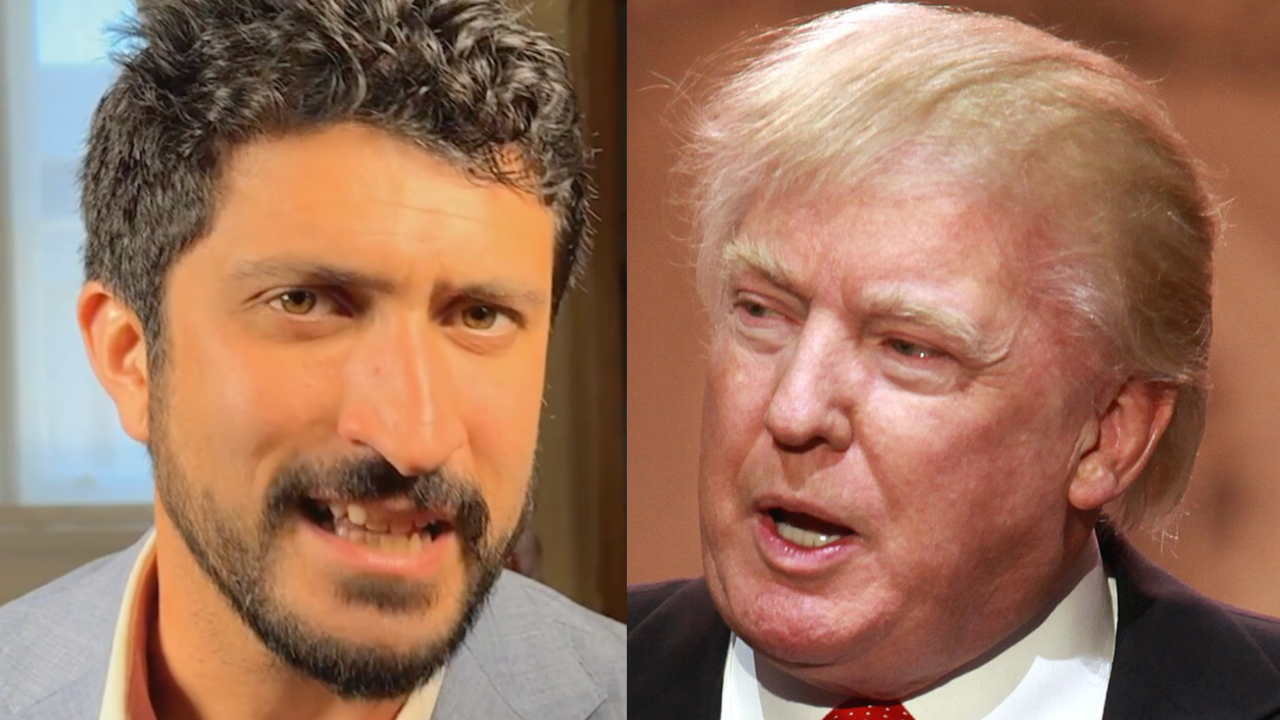
A Democratic congressman puts two numbers side by side to make his case against the president
U.S. Representative Greg Casar, a Texas Democrat, took to X on Tuesday, August 4, 2026, to accuse President Donald Trump of using the presidency for personal enrichment while ordinary Americans absorb the cost of rising prices. In a post published at 2:08 p.m., Casar paired two figures — one measuring what he says Trump and his family have gained, the other measuring what everyday households have lost — and summed up the comparison in three words: “Corruption, plain and simple.”
The post read in full: “Here are two new numbers every American should know: $4 billion — how much Trump and his family have profited off the presidency. $3,500 — how much rising prices cost the average family since he took office. Corruption, plain and simple.”
The context behind the numbers
Casar’s post did not arrive in isolation. It is the latest in a string of public statements the congressman has made tying the Trump family’s financial gains directly to the economic strain facing American households, a theme he has returned to repeatedly since Trump’s second term began in January 2025. In February 2026, Casar announced he would skip Trump’s address to Congress, telling reporters the president owed Americans for what Casar described as illegal tariffs, billions in profits drawn from his position as president, and tax breaks benefiting the wealthy. “Americans don’t need a rambling, two-hour lecture from Trump,” Casar said in a statement at the time. “We need our money back.”
Just weeks before Tuesday’s post, Casar had raised a similar alarm over the Trump family’s cryptocurrency dealings. In a post on X, Casar wrote that “the Trump family has made over $5 billion in corrupt crypto deals,” adding that the president was “openly bragging that his government won’t investigate cryptocurrency-related crimes.” He closed that post with the same phrase he used Tuesday: “Corruption, plain and simple.”
Where the $4 billion figure comes from
The $4 billion figure Casar cited Tuesday tracks closely with estimates published by Senate Democrats and financial disclosures reviewed by news outlets earlier this year. According to a report from Senate Democrats, Trump has earned at least $2 billion since returning to the White House in 2025, based on his own financial disclosures — a sum the report calls “a stunning sum for a sitting president.” That figure grows to more than $4 billion when the earnings of his entire immediate family are included, an estimate attributed to The New Yorker.
Forbes has separately tracked the surge in wealth across the Trump family since the start of the second term. The magazine estimated in January 2026 that Trump’s own net worth climbed from $2.3 billion in 2024 to $6.7 billion by the end of 2025, a jump driven in large part by cryptocurrency ventures and licensing deals. A separate Washington Times report in April 2026 put Trump’s net worth at an estimated $6.3 billion, a 60 percent increase since he returned to office, and noted that his sons Eric Trump and Donald Trump Jr. had signed eight overseas real estate deals in just over a year, compared with zero during Trump’s first term.
The Trump sons’ individual fortunes have grown just as sharply. Forbes reported in December 2025 that Eric Trump, who serves as executive vice president of the Trump Organization and co-founded the crypto venture World Liberty Financial and the mining company American Bitcoin, had seen his net worth rise to an estimated $400 million — a tenfold increase from the roughly $40 million to $50 million he was worth before the 2024 election. Eric Trump has collected more than $80 million from World Liberty coin sales alone, according to Forbes, in addition to $36 million worth of his own tokens and $19 million from the venture’s stablecoin business.
Donald Trump Jr.’s wealth has followed a similar trajectory. Forbes estimated his net worth jumped from roughly $50 million to $300 million within a year of his father’s return to office, with some estimates placing the increase closer to $400 million once additional crypto holdings in American Bitcoin — worth as much as $80 million — are factored in. Forbes had previously reported that the extended Trump family, including son-in-law Jared Kushner, was collectively worth a staggering $10 billion as of September 2025, roughly double its net worth from the 2024 election.
House Oversight Committee Democrats have compiled their own tally of the family’s gains. Ranking Member Robert Garcia released a report in January 2026 finding that Trump and his family had generated nearly $2.25 billion in what the report called “risk-free profits” from foreign payments and other sources, a figure that rises to as much as $9.72 billion when unrealized paper wealth from digital assets is included. “The Trump Family’s corruption is deeply disturbing and should concern every American,” Garcia said in a statement accompanying the report. “President Trump was elected to serve the people of this nation, not enrich himself or his family.”
Where the $3,500 figure comes from
The second number in Casar’s post — the $3,500 in added costs he says the average American family has absorbed since Trump took office — matches figures published by the Joint Economic Committee’s Democratic minority staff. In a report updated in June 2026, the committee found that the average U.S. household had spent more than $3,500 on goods and services under Trump, factoring in tariffs and the economic fallout from Trump’s war with Iran. “President Trump vowed to lower costs, but his tariffs and his ongoing war with Iran have made life even more expensive,” said Senator Maggie Hassan, the committee’s ranking member, in the release accompanying the data.
The committee’s breakdown attributes much of the increase to energy and grocery costs. It found that Americans have spent $60 billion more on gasoline nationwide since the start of Trump’s war with Iran, translating to roughly $504 in additional gas costs per average family. Electricity bills rose by $110 per household in 2025 compared with 2024, with a further $116 increase projected for the first half of 2026. Grocery prices climbed as well, with families paying $310 more in Trump’s first year in office and ground beef reaching a record high of more than $7 per pound.
Gas prices in particular have become a recurring flashpoint. In June 2026, the committee noted that the national average gas price had reached $4.26 per gallon — 43 percent higher than before the Iran war began — after Treasury Secretary Scott Bessent characterized the cost increases as a “short-term blip” during Senate testimony. Hassan pressed Bessent directly during that hearing, asking whether he had told Trump “the truth about how much costs have increased for the American people.” Separately, Fortune reported in March 2026 that average U.S. gas prices had climbed past $4 a gallon for the first time since 2022, as the Iran conflict pushed fuel prices higher worldwide.
Casar’s broader record on the issue
Tuesday’s post extends a pattern in Casar’s public messaging as chair of the Congressional Progressive Caucus and a member of the House Oversight Committee. In January 2024, before Trump’s return to office, Casar had already pressed the issue of presidential profiteering, releasing a statement after an Oversight Committee report found that Trump received at least $7.8 million from 20 foreign governments during his first term through properties including his hotels in Washington and Las Vegas. “Donald Trump lied to Americans and made millions of dollars from foreign countries while he was President, violating the U.S. Constitution,” Casar said at the time, calling Trump “the biggest Grifter-in-Chief in our nation’s history.”
On the day of Trump’s second inauguration in January 2025, Casar, in his capacity as chair of the Congressional Progressive Caucus, issued a statement warning that “Trump’s White House is government by the billionaires, for the billionaires,” and pledged that the caucus would “not stand by as our government is sold to the highest bidder.”
Corroborating findings from other oversight bodies
Casar’s framing is consistent with findings from other congressional Democrats tracking the administration’s financial dealings. The House Judiciary Committee’s Democratic staff released a report in November 2025 detailing how Trump family cryptocurrency ventures had become entangled with foreign governments and corporate interests. Ranking Member Jamie Raskin said the report showed Trump had “turned the Oval Office into the world’s most corrupt crypto startup operation, minting staggering personal fortunes for him and his family in less than a year.”
Representative Rosa DeLauro, the ranking Democrat on the House Appropriations Committee, has also compiled a running list of what she calls Trump’s “record of corruption,” including a jet accepted from the Qatari government and a $2 billion deposit into World Liberty Financial from an entity linked to the ruling family of the United Arab Emirates. DeLauro also criticized the administration’s decision to fund a large-scale White House ballroom project with contributions from wealthy donors, calling it a project for “billionaire friends and donors” while “20 million Americans are about to lose their healthcare.”
The administration’s response to profiteering questions
Trump himself has addressed questions about his family’s financial gains directly. Asked by the New York Times why he was pursuing business deals in his second term after largely avoiding them during his first, Trump responded, “Because I found out that nobody cared. I’m allowed to.” The administration has not disputed the scale of the family’s financial gains, though officials including Bessent have pushed back on the scale of the cost increases attributed to the president’s economic policies.
The larger picture
Casar’s Tuesday post distills a debate that has defined much of the political conversation around Trump’s second term: whether the president’s business dealings while in office amount to a conflict of interest at odds with the financial pressures facing ordinary households. With gas, grocery, and electricity costs all cited by Democratic lawmakers as evidence of a widening gap between the Trump family’s fortunes and the finances of everyday Americans, Casar’s post is likely to remain one entry in a continuing effort by congressional Democrats to keep both numbers in public view ahead of further budget and oversight fights expected later this year.