
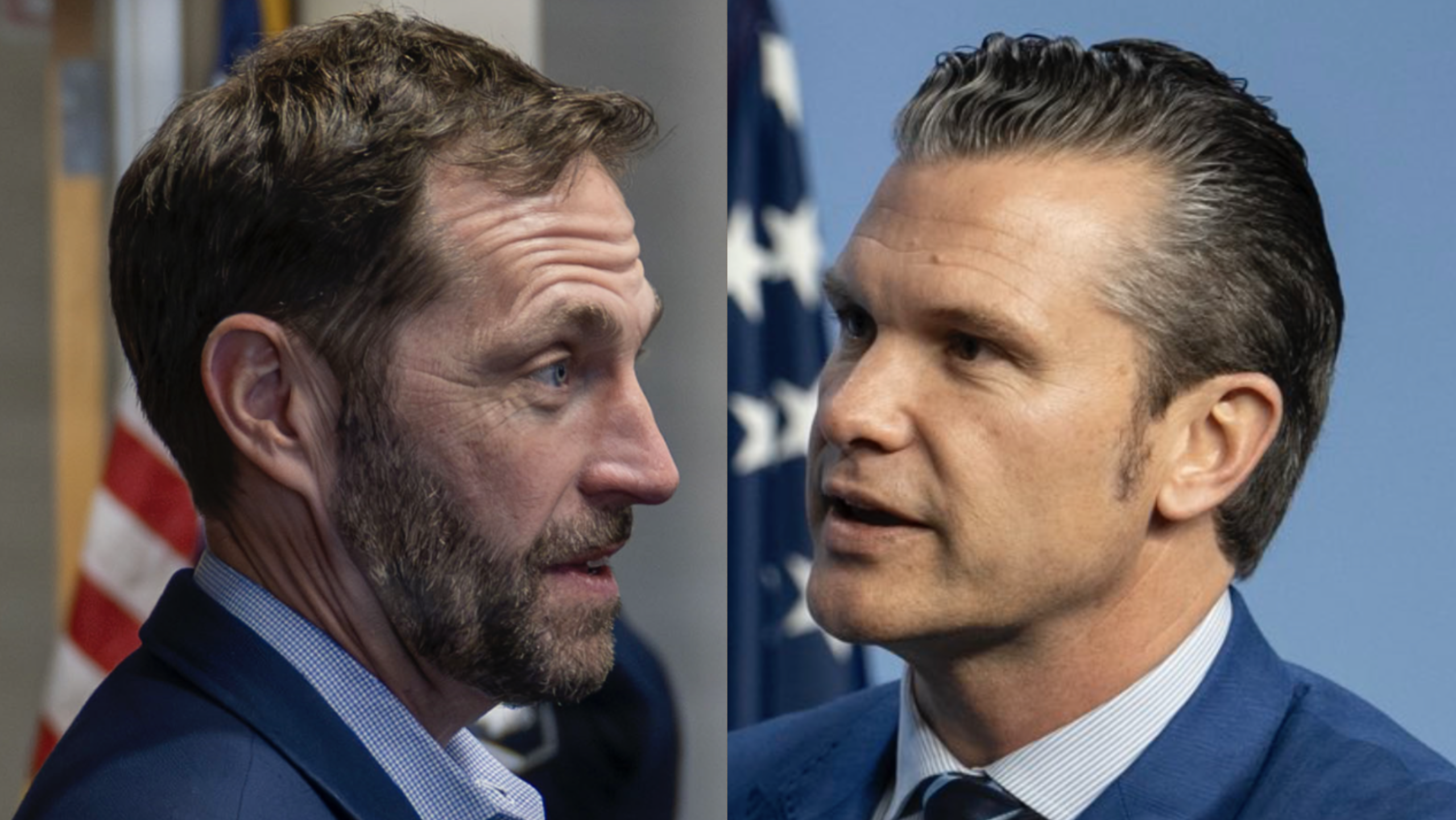
Rep. Jason Crow is calling out Defense Secretary Pete Hegseth’s threat to investigate Senator Mark Kelly for allegedly discussing classified weapons stockpile data on television — pointing to what he calls the defining irony of the situation: that Hegseth himself was found by the Pentagon’s own Inspector General to have shared classified information about ongoing military operations on unsecured systems, a determination Crow says resulted in zero accountability for the secretary.
“Donald Trump is moving thousands of American troops around — all because he didn’t like a foreign leader’s comments,” Crow posted Sunday. “This should concern every American.” The post came in direct response to Hegseth’s threat to open a second Pentagon legal review of Kelly, whom Hegseth accused of “blabbing on TV (falsely and dumbly) about a CLASSIFIED Pentagon briefing.”
Who Jason Crow Is in This Fight
Crow is not a bystander in the Hegseth-Kelly dispute — he is one of its central figures. He was one of the six Democratic veterans who appeared in the November 2025 video alongside Kelly reminding service members of their legal obligation to refuse unlawful orders. The DOJ opened an investigation into the video and a grand jury was subsequently convened — only to reject the DOJ’s effort to indict the lawmakers, according to CBS News. Crow sits on both the House Armed Services Committee and the House Permanent Select Committee on Intelligence — the two panels that receive the most sensitive national security briefings in Congress. He has been at the center of the administration’s effort to punish Democratic veterans for more than six months.
The Hegseth Classified Information Finding — His Own Inspector General
The core of Crow’s argument is documented in an official government report. On December 3, 2025 — just days after the November video controversy — the Pentagon’s own Office of Inspector General released findings that Hegseth had shared classified information about ongoing military operations on unsecured systems, likely jeopardizing national security and endangering American troops. Crow issued a formal statement in response, published on his official House website: “Pete Hegseth risked our servicemembers’ lives by sharing classified information about ongoing military operations on unsecured systems. If any general, lieutenant, or private had done the same thing as Pete Hegseth, they would immediately face accountability. With Pete Hegseth, there is no leadership or accountability. Without change, our servicemembers remain at risk.”
That finding — from Hegseth’s own department’s watchdog — was issued the same month Hegseth was threatening Kelly with court-martial proceedings, rank reduction, and pension cuts for the lawful orders video. Hegseth faced no formal disciplinary action over the Inspector General’s findings. The contrast between the treatment of Hegseth and the treatment of Kelly is the argument Crow has been making ever since — and it is the backdrop against which Sunday’s new investigation threat landed.
What Kelly Actually Said — and Why Crow Calls the Investigation Threat Meritless
Kelly made his weapons stockpile remarks Sunday morning on CBS News’s Face the Nation, telling host Margaret Brennan that Pentagon briefings on munitions — Tomahawks, ATACMS, SM-3, THAAD, and Patriot rounds — had revealed it was “shocking how deep we have gone into these magazines,” and that the depletion would take years to reverse and could affect a hypothetical U.S. conflict with China. Kelly named the weapons systems involved but disclosed no specific inventory numbers, percentages, or classified figures.
Kelly’s rebuttal was precise: he posted a video of Hegseth’s own testimony at an open, unclassified Senate Armed Services Committee hearing the previous week, in which Hegseth told senators the war had consumed “years worth of munitions” and that replenishment would take “months and years.” “We had this conversation in a public hearing a week ago and you said it would take ‘years’ to replenish some of these stockpiles,” Kelly wrote. “That’s not classified, it’s a quote from you. This war is coming at a serious cost and you and the president still haven’t explained to the American people what the goal is.”
The Pattern Crow Is Pointing To
For Crow, the Kelly stockpile investigation is not an isolated incident — it is the latest episode in a sustained pattern of the administration using the threat of legal action against Democratic veterans as a political weapon. The same administration that investigated Kelly for a video quoting the Uniform Code of Military Justice, that threatened him with court-martial and pension cuts for reminding troops of their legal obligations, and that opened a DOJ grand jury probe that ultimately went nowhere — is now threatening a second investigation for discussing information Hegseth himself confirmed publicly on Capitol Hill. Crow has made the through-line explicit across multiple congressional hearings and public statements: this is an administration that punishes oversight and protects its own, regardless of who actually handles classified information responsibly and who does not.
The stockpile data Kelly discussed is, moreover, already extensively documented in the public domain. The Center for Strategic and International Studies published a comprehensive April 21 unclassified analysis finding the U.S. had expended more than half its prewar inventory of four of seven critical munitions — including the entire Precision Strike Missile inventory and critically low THAAD interceptors with no new deliveries expected until April 2027. CNN had previously reported the same figures — 45 percent of PrSMs, 50 percent of THAAD, and nearly 50 percent of Patriot interceptors depleted — citing three people familiar with internal Pentagon stockpile assessments. The question of what is actually classified in Kelly’s remarks remains, at best, deeply unclear.
The Grand Jury Already Said No
The administration’s track record of converting political disputes into criminal investigations of Democratic veterans has not produced results. The DOJ convened a grand jury to consider indicting the six lawmakers — including Crow and Kelly — over the November lawful orders video. That grand jury rejected the effort. A federal court ruled in February that Hegseth’s administrative actions against Kelly were unconstitutionally retaliatory and likely violated the First Amendment rights of Kelly and “millions of military retirees.” A D.C. Circuit Court of Appeals panel last week appeared largely skeptical of the government’s attempt to revive those actions.
Crow’s argument — that Hegseth is threatening to investigate a senator for publicly confirming information Hegseth himself confirmed publicly, while facing no consequences for a finding by his own Inspector General that he shared actual classified information on unsecured systems — is now the central Democratic frame on this dispute. It is a frame with a documented factual record behind it: the IG report, the court rulings, the grand jury rejection, and Hegseth’s own C-SPAN-archived testimony are all on the public record. Whether the Pentagon’s legal counsel finds anything different this time remains to be seen.