
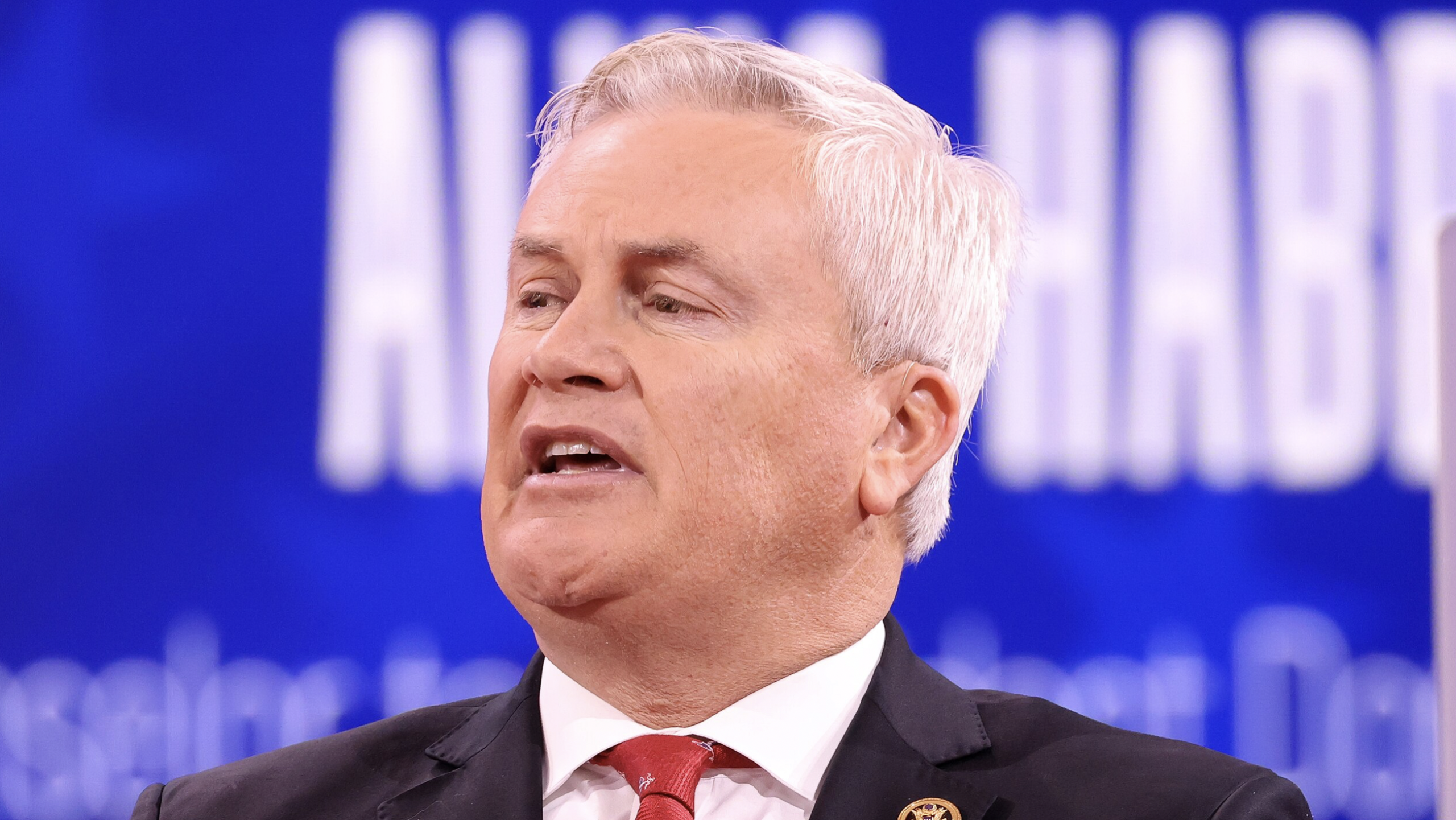
Rep. James Comer, the Republican chairman of the House Oversight Committee from Kentucky, highlighted President Donald Trump’s decisive action against Iran’s nuclear program, positioning it as a long-overdue step that previous administrations had avoided. In statements made on May 4, 2026, Comer contrasted Trump’s approach with what he described as years of inaction by prior presidents and inconsistent priorities among Democrats on foreign threats.
Comer shared his views in a post on X, stating: “Remember: Democrats are eager to send blank checks to Ukraine but willing to turn a blind eye to Iran’s nuclear program. Every President for the last 2 decades has said something needs to be done about Iran. President Trump is the first that has the guts to do it. @FoxNews.” The remarks came amid ongoing U.S. military operations targeting Iranian capabilities.
In a related Fox News interview, Comer elaborated on the need for bipartisan support for the president’s efforts. He said: “Absolutely. And I think the president’s gonna have to work hard to try to get some Democrats, and I think he needs to look at the Democrats that have always been you know, so supportive of any efforts to send a blank check to Ukraine. It’s hard for me to believe- That’s right … that Democrats would be so vocal in supporting Ukraine, but then opposed to doing anything to combat Iran from having a nuclear weapon. So hopefully, the president can sit down, and his cabinet can sit down with some level-headed Democrats and, and get an agreement. We have to support our troops. We have to finish this job, and, and I’m confident he can do that.”
Comer’s comments underscore his broader emphasis on addressing Iran’s nuclear ambitions as a critical national security priority. As chairman of the House Oversight Committee, he has repeatedly drawn attention to the risks posed by Iran, including the potential for escalation into wider conflict. He has expressed concerns about the possibility of a “third world war” stemming from tensions with Iran while stressing that preventing such an outcome remains essential, even if it requires difficult decisions such as ground operations.
The Kentucky lawmaker has long advocated for a strong national defense paired with greater fiscal accountability in military spending. His stance favors targeted actions against specific threats over open-ended interventions, often calling for diplomacy where possible but backing firm responses when U.S. interests are at stake. This perspective aligns with the ongoing Operation Epic Fury, launched by U.S. Central Command on February 28, 2026, at the direction of President Trump.
Operation Epic Fury has involved extensive strikes aimed at dismantling Iran’s security apparatus and neutralizing facilities posing imminent threats. U.S. forces have employed a wide array of assets, including B-1 bombers, B-2 stealth bombers, F-22 and F-35 stealth fighters, various electronic warfare aircraft, reconnaissance platforms, and naval assets such as nuclear-powered aircraft carriers and submarines. Ground-based systems like Patriot and THAAD missile defenses have also supported the operation.
Targets struck during the operation include command and control centers, Islamic Revolutionary Guard Corps headquarters and intelligence sites, integrated air defense systems, ballistic missile sites, naval vessels, weapons production facilities, and military infrastructure. Reports indicate that more than 13,000 targets have been hit, with over 155 Iranian vessels damaged or destroyed. The operation has also resulted in the deaths of Iran’s supreme leader and more than 40 other Iranian leaders and officials.
Comer’s praise for Trump’s initiative reflects his view that earlier presidents recognized the Iranian nuclear threat but failed to act decisively. He has positioned the current administration’s moves as a necessary break from that pattern, emphasizing the importance of completing the mission to safeguard U.S. troops and interests.
On related foreign policy matters, Comer has criticized the scale of U.S. assistance to Ukraine, questioning “blank check” funding and calling for stricter oversight to protect American taxpayers. While condemning Russia’s invasion, he has advocated for accountability in how aid is used. This contrasts with his calls for robust action against Iran, where he sees an existential threat requiring immediate attention.
Comer has also maintained a strong supportive stance toward Israel and its right to defend against terrorist threats. His oversight role has included scrutiny of past military withdrawals, such as from Afghanistan, which he described as poorly executed. He continues to push for policies that prioritize American interests, ensuring troops are properly equipped while seeking to limit unnecessary foreign entanglements.
In the context of broader strategic competition, Comer has described U.S. relations with China as a “new Cold War,” citing economic pressures and issues like the fentanyl crisis. His comments on Iran fit within this framework of focused defense priorities that protect U.S. security without indefinite commitments abroad.
As operations against Iran continue, Comer’s statements highlight ongoing debates in Washington over resource allocation and bipartisan cooperation on defense matters. He has urged engagement with Democrats who have supported Ukraine aid to extend similar backing to efforts curbing Iran’s nuclear capabilities, framing it as essential for mission success.
The developments in the Middle East, combined with Comer’s oversight responsibilities, underscore the complex balance between military action, fiscal responsibility, and political consensus in addressing global threats. His remarks on May 4 reinforce the narrative that sustained pressure on Iran represents a shift toward more assertive protection of U.S. national security interests.