
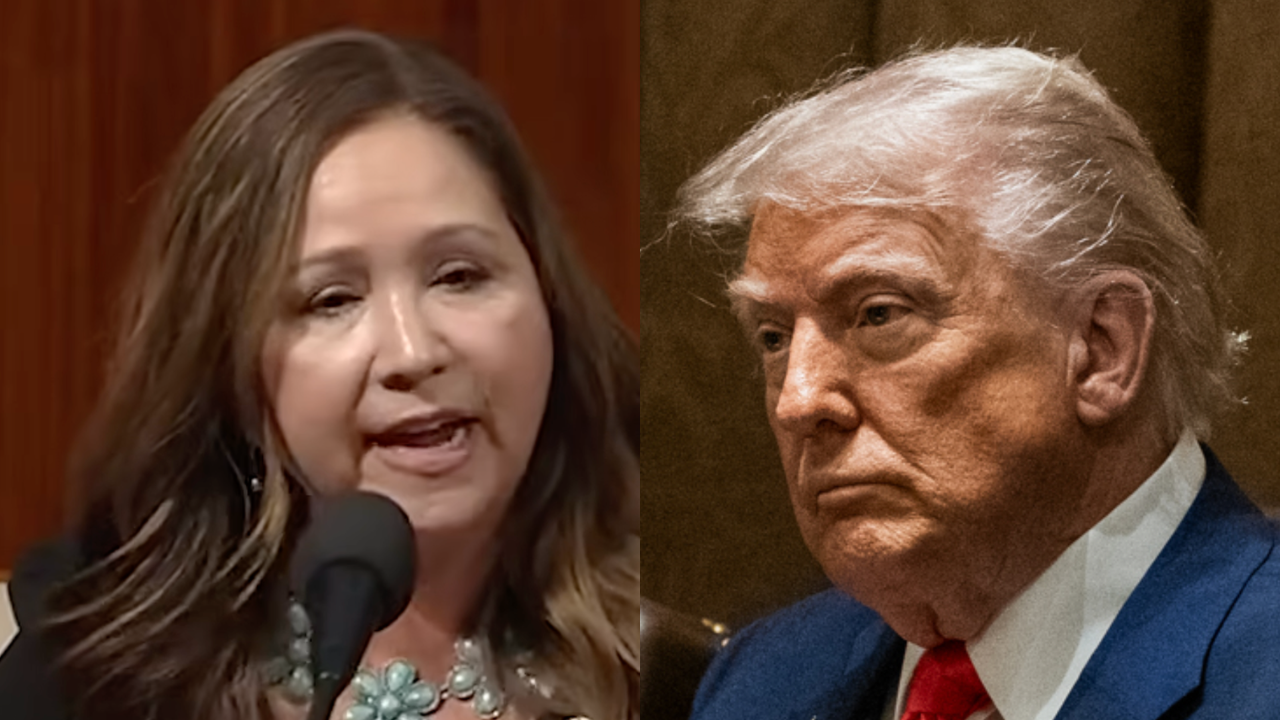
U.S. Rep. Adelita Grijalva, D-Ariz., accused the Trump administration on Friday of targeting the families of active-duty American service members for deportation, saying the government “doesn’t care who you are” if someone fits its mass removal agenda. The statement, posted to X on the morning of August 7, 2026, came in direct response to an Associated Press investigation published two days earlier that found more than 50 parents and spouses of active-duty troops have been detained by immigration authorities since President Donald Trump returned to office.
Grijalva’s post read in full: “New reporting shows the Trump administration is detaining and deporting family members of active-duty service members. This administration doesn’t care who you are. If you fit their mass deportation agenda, they’ll come for you—even if you’re the mother of a Marine caring for your grandchild.”
The congresswoman’s post amplified findings from an AP investigation, the first known accounting of its kind, since the federal government does not track detentions of military family members. The AP found that more than 50 parents and spouses of active-duty service members have been detained since Trump took office for a second term, that at least six have been deported and one self-deported, and that at least eight remain in federal immigration custody as of publication. Reporters compiled the data by analyzing thousands of federal court records gathered by Habeas Dockets, a project run by the Immigration Justice Transparency Initiative, cross-referenced with media coverage and verified directly with families and attorneys.
A Policy Reversal Even From Trump’s First Term
For decades, parents and spouses of U.S. troops were largely shielded from deportation under a bipartisan consensus that spanned both Democratic and Republican administrations, including Trump’s first term. That changed with a policy implemented in April 2025 stating that “military service alone does not exempt aliens from the consequences of violating U.S. immigration laws.” Dan Gividen, who served as ICE’s deputy chief counsel from 2016 to 2019 under Trump and now represents a soldier’s father who has spent more than eight months in ICE custody, told the AP that immigration authorities rarely detained service members’ immediate relatives during his tenure unless they had committed violent crimes. “We would not place them into removal proceedings, period. That’s insane,” Gividen said. “The fact that they’re doing it now is just outrageous.”
Margaret Stock, an immigration attorney and retired Army Reserve lieutenant colonel, said ICE previously tended to cancel past removal orders and allow military relatives to adjust their status specifically so troops could stay focused on their duties. “It’s the same thing that happens if you don’t provide healthcare to the troops, or you don’t provide housing to the troops,” Stock said, adding that when soldiers are worried about detained or deported family, “they’re not concentrating on their job anymore.”
Families Torn Apart Across the Country
The human toll documented by the AP spans multiple branches of the military. Army Sgt. Hedar Leonel Turcios Juarez, stationed at Fort Bliss, Texas, watched his career strain under the weight of his wife’s detention outside a Walmart in front of their 6-year-old daughter in July. “How can I even focus on my military career because I have to worry about how my wife is doing?” he said. Air Force Tech. Sgt. Wendy Gbeve said she hasn’t slept well since her father, Luis Alberto Ramirez Zavala, was detained at a routine USCIS interview in Missouri and deported to Mexico roughly two weeks later, before her family was ever told why. “It’s the most frustrating, helpless feeling,” Gbeve said.
Army Staff Sgt. Alexis Jaramillo, who has served more than a decade, is now on administrative leave caring alone for his 5-year-old stepson after his Brazilian wife, Maisa Lopes Eliaser, was detained during what the family believed was a routine USCIS appointment in Alabama. “It is really overwhelming because I need to take care of my kid by myself. No one is here to help me out,” Jaramillo said. At least one active-duty soldier halted an imminent deployment after her husband was detained, leaving no one to care for their 5-year-old son, according to court records; a judge eventually ordered him released.
Deportations That Followed Decades of Service
Some of the cases documented involve multi-generational military service. Anh Dung Cong Tran, known as “Tony,” had both a father and a son who served in the U.S. armed forces. Tran came to the United States in 1990 through a program for children of American military personnel born in Vietnam and lived in the country for decades, checking in regularly with immigration authorities after an assault conviction shortly after his arrival. He was deported in July. His son, Antonio Tran, who was discharged as an Army specialist in March after a serious injury, said his father persuaded him to enlist in 2022. “He has a totally different view on America now,” the younger Tran said. Tony Tran, speaking to the AP by video call from Vietnam, said bluntly: “Whatever your family have done for this country, to keep this country safe, to give the people, Americans, the freedom to walk around and to sleep safe at night, well, we don’t care about that.”
Marine Cpl. Jose Manuel Vilchis-Valle’s mother, Ursula Borja Valle, was detained at an immigration appointment in August 2025 and deported to Mexico within a week, despite having lived in the U.S. since the 1990s without a known criminal record. Vilchis-Valle said military recruiters had specifically cited immigration benefits for parents as a reason to enlist. “They basically told me that if you serve, and if you served honorably, you can help your parents,” said Vilchis-Valle, 23, who was honorably discharged shortly after his mother’s deportation. “In a perfect world, I wished, because of my service, they could have pardoned her.”
A Soldier Who Patrolled the Border Now Watches His Father Detained
The AP investigation also captured the case of Army Specialist Romero Ralios, who spent nine months last year supporting U.S. Customs and Border Patrol as part of the Joint Task Force Southern Border. This summer, his own father, Guatemalan landscaper Sebastian Ralios Tino, who had lived in the U.S. for nearly two decades without legal status and had no known criminal record, was detained. Ralios’ commanding officer, Capt. Mohamed Elmaola, told the AP that Ralios is a “phenomenal soldier” whose father deserves due process. “It’s very hard to communicate and to have credibility as a leader when your own subordinates are unable to get support,” Elmaola said. Ralios himself said the experience has left him second-guessing his border deployment. “It was karma. I should’ve known,” he said. “All those families I broke. I have regrets.”
DHS and the Pentagon Respond
The Department of Homeland Security said it does not compile data specifically tracking detentions of military family members, and it did not provide case-specific information for most of the individuals the AP identified. The agency noted that at least seven of those detained had previously been removed from the U.S., at least eight had existing removal orders, and at least two had drunken-driving or drug-related convictions. In a statement to the AP, DHS said: “DHS and ICE value the contributions of all those who have served in the U.S. military. U.S. military service alone does not automatically grant lawful immigration status, or exempt aliens from the consequences of violating U.S. immigration laws.” The Pentagon declined to comment on the AP’s findings altogether.
Even Republicans Have Pushed Back
The crackdown has drawn criticism from some members of Trump’s own party. Florida Republican Rep. Maria Elvira Salazar said at a July news conference advocating for the release of retired Staff Sgt. Wilmer Trujillo’s wife, who served in Iraq and Afghanistan: “The immigration system is failing the honorable and good Americans.” DHS has said Trujillo’s wife illegally reentered the country after being deported in 2005; her attorney says the family is seeking to rescind that removal order because she was never properly notified of the hearing that produced it. A handful of similar cases involving military spouses have prompted public backlash significant enough to draw personal intervention from Homeland Security Secretary Markwayne Mullin to secure releases.
The Numbers DHS Has Released
While DHS maintains it does not track detentions of active-duty troops’ relatives, it has released figures covering military veterans and their families. From January 20, 2025, through January 26, 2026, immigration authorities detained 125 military veterans, placing 34 into removal proceedings, and arrested more than 150 immediate family members of veterans, according to a DHS letter sent to several Democratic senators. Because the government does not systematically track these cases, the AP noted that the true number of detained military family members is likely significantly higher than the 52 cases its investigation was able to independently confirm.
Recruiters Still Promote the Benefits Being Denied
One of the most heavily advertised immigration benefits for military families is “parole-in-place,” which allows spouses, children and parents of active-duty troops and veterans to pursue legal status from within the country rather than returning to their home nation first. The policy was implemented under Republican President George W. Bush in 2007, during the Iraq War, and later codified under Democratic President Barack Obama. Under the current administration, the average processing time for parole-in-place has more than doubled to 12 months according to USCIS data, leaving military families in legal limbo and more exposed to detention. In June 2025, the Marine Corps stopped advertising enlistment as a way to protect immigrant family members after AP inquiries, but recruiters for the Army and National Guard continue to promote the benefit. An official Army recruiter based in California posted on Instagram in late July: “For some service members, enlisting isn’t just about serving their country. It’s also about doing everything they can to help protect their parents who sacrificed everything for them.” Army spokesperson Christopher Surridge said recruiters are expected to highlight the benefits of service and that parole-in-place remains officially in effect.
Grijalva’s Broader Record on Military Immigration Policy
Friday’s post is consistent with a position Grijalva has staked out publicly for months. In May 2026, she introduced the Veterans Visa and Protection Act alongside Sen. Tammy Duckworth in the Senate, legislation designed to create a pathway back to the U.S. for deported veterans and to shield other immigrant veterans from removal. At the time, Grijalva said 400 veterans had been deported that year alone. “Those who wear the uniform should never be abandoned by us. Yet far too many of our nation’s veterans have been deported after completing their service,” Grijalva said in a statement introducing the bill. “This legislation makes clear that if you were willing to serve and risk your life for this country, you should not be treated as disposable. This is about honor, fairness, and keeping our promise to those who served.”
Grijalva has also framed immigrant service members’ contributions in similar terms elsewhere, stating in a related release that “immigrant servicemembers answer the same call to serve and sacrifice as anyone else who wears the uniform” and that “they deserve the opportunity to build their lives here, remain with their families, and receive the benefits they earned through their service.” Her office has noted that while roughly 40,000 foreign nationals serve in the active and reserve components of the U.S. armed forces, according to 2024 Department of Defense figures, the government does not comprehensively track how many veterans have been deported, a gap also flagged in a Government Accountability Office report.
Other Democrats Echo the Criticism
Grijalva is not alone among congressional Democrats in condemning the trend documented by the AP. California Rep. Gil Cisneros, a former undersecretary of defense for personnel who introduced separate legislation this year aimed at making it harder for the government to deny parole-in-place to troops’ relatives, called the findings alarming. “It’s the job of the military to ensure that families are being taken care of — and this is not the way you take care of families,” Cisneros said. “This administration just doesn’t care, and they are not thinking about people who are putting their lives on the line for the country and to defend our nation.” Organizations that assist military families facing deportation, including Repatriate Our Patriots, also described the AP’s findings as alarming.
A Long-Running Warning From Both Parties
Concerns about stripping deportation protections from military families are not new. In 2019, during Trump’s first term, Sens. Elizabeth Warren and Kirsten Gillibrand sent a letter to then-acting DHS Secretary Kevin McAleenan after reports surfaced that the administration was considering eliminating parole-in-place and deferred action protections for undocumented relatives of active-duty troops, reservists and veterans. The senators warned at the time that “eliminating these programs would risk creating anxiety among deployed servicemembers that their family members will be deported and would risk distracting those servicemembers from their mission.” That warning echoes almost precisely the concerns raised by immigration attorneys and lawmakers about the current wave of detentions seven years later.
The Stakes Amid an Active War Footing
Immigration and military law experts warn the crackdown carries consequences beyond individual families. With the United States currently engaged in war in Iran, experts told the AP that detaining and deporting the relatives of active-duty personnel risks undermining military readiness at a moment when troop focus and morale are especially critical. The AP’s reporting documented multiple instances of service members being forced into administrative leave, delaying deployments, or losing childcare arrangements entirely as a direct result of a parent’s or spouse’s detention — outcomes that directly affect the operational availability of the troops involved, not just their families.
Grijalva’s Friday statement places her among a growing chorus of lawmakers, retired immigration officials, and military family advocates arguing that the current enforcement posture represents a fundamental break from decades of precedent — one carried out, according to her post, without regard for whether the person being detained is the parent of a soldier, the spouse of an airman, or, as she put it, “the mother of a Marine caring for your grandchild.”