
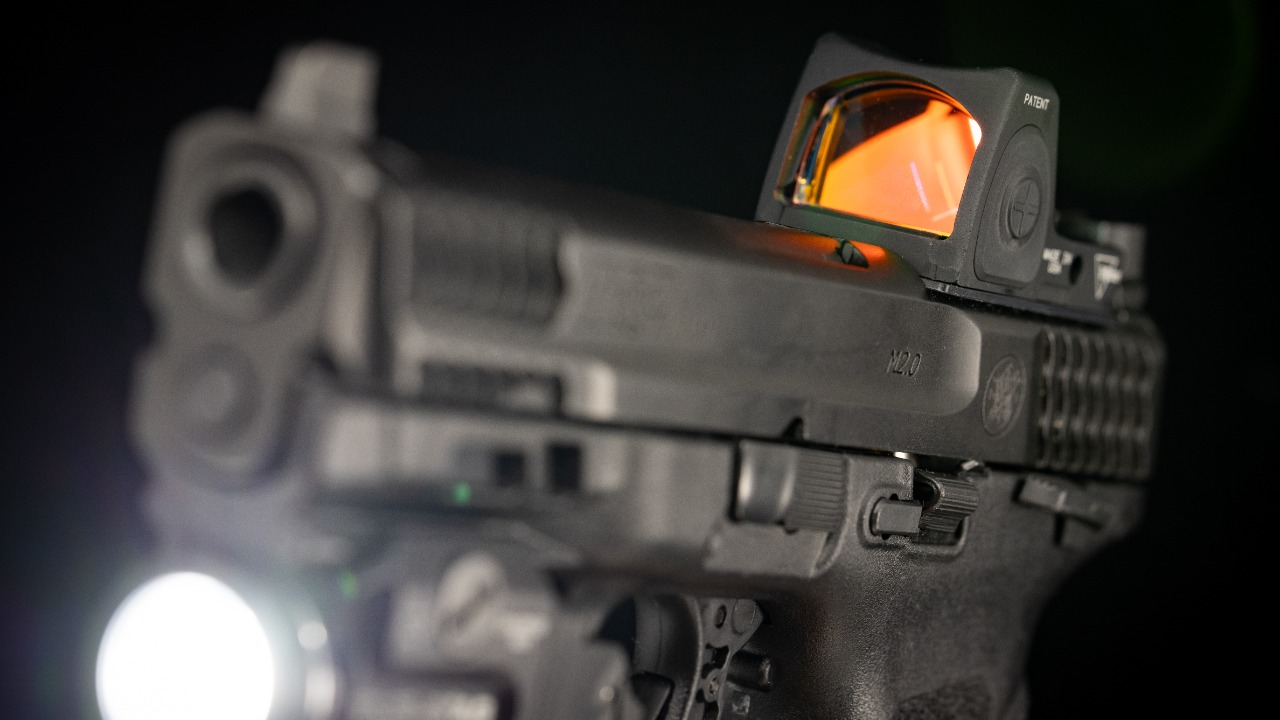
Red dot sights on handguns have moved from niche competition gear to a fixture on gun-store shelves, sparking a sharp debate over whether they are a genuine leap forward or just the latest accessory fad. Advocates point to measurable gains in speed and accuracy, while skeptics warn that electronics, cost and training demands can outweigh the benefits for many everyday carriers. The answer sits somewhere in the middle, where technology, human vision and real-world context all collide.
Understanding whether a pistol optic is indispensable or simply optional gear starts with how shooters actually use their handguns, from concealed carry to duty work to weekend matches. The same device that gives a clear edge at 25 yards can feel like clutter at arm’s length, and the line between “essential” and “overrated” shifts dramatically depending on skill level, environment and willingness to train.
How pistol red dots became the new default
Red dots did not suddenly appear on pistols as a marketing gimmick; they migrated from long guns after years of proving their worth on carbines and rifles. Competition shooters were among the first to bolt bulky optics onto handgun slides, chasing faster times and more precise hits, but early setups were heavy, fragile and poorly suited to duty or concealed carry. As miniaturized designs improved and manufacturers began cutting slides at the factory, the balance tipped, and the reward of adopting the new system started to outweigh the risk of sticking with older sighting methods, a shift traced in detailed histories of pistol optics development that follow this evolution from niche to mainstream.
That technological curve has reshaped the handgun market itself. Modern micro-compacts like the Springfield Armory Hellcat are now sold in “optic-ready” variants as a matter of course, with reviewers noting that red-dot-ready pistols are becoming the norm and that the advantages are too numerous for the trend to slow or reverse. Industry retrospectives describe how slide length and optics are less likely to cause printing with contemporary holsters that are cut for optics, which has eased earlier concerns that a mounted sight would make concealed carry impractical. At the same time, training organizations tracking Pistol Mounted Red Dot Sights report adoption across all levels of law enforcement and in agencies in Australia, Europe and Canada, underscoring that this is no longer a fringe experiment but a standard option in professional circles.
Why many shooters see red dots as a real performance upgrade
The strongest case for pistol optics rests on how they align with human vision. Traditional iron sights require the shooter to juggle three focal planes, rear sight, front sight and target, and then accept that only one can be perfectly sharp at a time. A red dot collapses that process into a single focal plane, allowing the shooter to keep eyes locked on the target while simply superimposing the dot, which can translate into faster target acquisition and cleaner hits, especially as distance grows. Instructional guides on Handgun Red Dot Basics, Pros, Cons, Shooting Tips emphasize that this target-focused approach can improve situational awareness and precision, particularly when shooters are moving or engaging multiple threats.
There is also emerging data to back up the subjective feel of shooting with a dot. In one structured comparison, students using a Trijicon Ruggedized Miniature Reflex sight on their pistols produced significantly more accurate results than those relying on irons, with the study’s summary noting that the red-dot-equipped group proved much more accurate overall. Trainers who work with new and aging shooters report that many find it easier to learn with a dot than with irons, because the illuminated aiming point is intuitive and forgiving of imperfect head position, and because it helps those with presbyopia or other vision issues who struggle to focus sharply on a front sight. Defensive shooting overviews add that illuminated optics are easier to pick up in low light, when traditional black irons can all but disappear against a dark background, a factor that matters in the kind of dim, chaotic environments where handguns are most often used.
The steep learning curve and real-world drawbacks

For all the advantages, pistol optics are not a plug-and-play cheat code, and some of the most experienced voices in the community argue that they are oversold to casual carriers. Critics of red dots on carry guns describe the idea of putting an electronic optic on a concealed handgun as “just dumb,” contending that the benefits are minimal at the close ranges where most defensive shootings occur and that the extra bulk, cost and complexity are hard to justify. Longtime iron-sight shooters often discover that the main difficulty is not hitting with the dot once it is on target, but finding the dot in the first place, especially from awkward draws or unconventional positions, a challenge that training pieces on Handgun Red Dot Basics, Pros, Cons, Shooting Tips flag as the primary stumbling block for new adopters.
Electronic sights also introduce new failure points that simply do not exist with fixed irons. Batteries die, electronics short, and small glass windows can be obscured by lint, mud, rain or even a smear of sweat, which is why many instructors insist on backup iron sights that co-witness through the optic. Commentators in “No BS” style breakdowns of whether red dots are overrated stress that these sights are not a magic solution and that shooters still have to train hard to manage presentation, dot tracking under recoil and malfunction drills. Training-focused analyses of Pistol Mounted Red Dot Sights note that agencies are not adopting optics because they are trendy, but because they believe the technology will bring advantage to their officers, and that this belief only holds if departments invest in new curricula rather than assuming the dot will fix poor fundamentals.
Concealed carry: essential upgrade or unnecessary complication?
The divide between “must-have” and “nice-to-have” is sharpest in the concealed carry world, where comfort, concealment and simplicity often trump marginal performance gains. Some defensive writers argue bluntly that putting a red dot on a concealed carry handgun makes no sense, pointing to the added snag risk, the need for specialized holsters and the reality that most self-defense shootings happen at distances where a flash sight picture or even point shooting can be effective. On user forums dedicated to everyday carry, one widely upvoted comment sums up the pragmatic view: no accessory is indispensable, and lots of people have defended themselves with lots of handguns that had nothing more than basic iron sights, a reminder that history is full of successful defensive uses without electronics.
At the same time, the market and many trainers are moving in the opposite direction, treating optics-ready carry guns as the default rather than the exception. Analyses of why red dots became standard on handguns highlight that modern holsters cut for optics mitigate printing and comfort issues, and that slide length and optic height are less likely to give away a gun than poor clothing choices or belt setups. Retailers who specialize in sighting systems for popular pistols note that not everyone runs a red dot and that many shooters still prefer the direct connection of traditional iron sights, and for good reason, but they also acknowledge that the revolution in pistol sights has been driven in large part by the widespread acceptance of red-dot optics. Even among skeptics on r/CCW, some concede that while red dots feel overrated, a pistol remains completely usable if the optic fails or is removed, which suggests that the real question is not whether a dot ruins a carry gun, but whether the owner is willing to manage the added complexity.
Choosing between dot and irons based on context, not hype
Sorting out whether a pistol red dot is essential or overhyped ultimately comes down to context rather than blanket rules. For a competitive shooter chasing tenths of a second, or a duty officer who may need to make a precise shot at extended distance under stress, the combination of faster target acquisition, improved accuracy and better low-light performance can make an optic feel close to mandatory. Studies showing that students with a Trijicon Ruggedized Miniature Reflex sight were much more accurate than their iron-sight peers, along with the widespread adoption of Pistol Mounted Red Dot Sights in law enforcement and military units, support the view that in high-stakes professional use, the technology delivers measurable gains that justify its cost and training demands.
For a budget-conscious civilian who carries a compact pistol in a simple inside-the-waistband holster and practices only occasionally, the calculus is very different. Quality optics can cost as much as an entry-level handgun, and milling a slide or buying an optic-ready replacement adds more expense, while the learning curve means that a shooter who is unwilling to train may actually perform worse in the short term as they hunt for the dot. Commenters who argue that red dots are overrated often point out that irons are durable, always on and more than adequate at typical self-defense distances, a view echoed by product pages that remind buyers that many shooters prefer the feel and simplicity of traditional sights. The most balanced assessments from trainers and industry analysts converge on a simple conclusion: red dots on pistols are a mature, proven technology that offers real advantages, but they are tools, not talismans, and their value depends entirely on the shooter’s needs, environment and commitment to practice.