
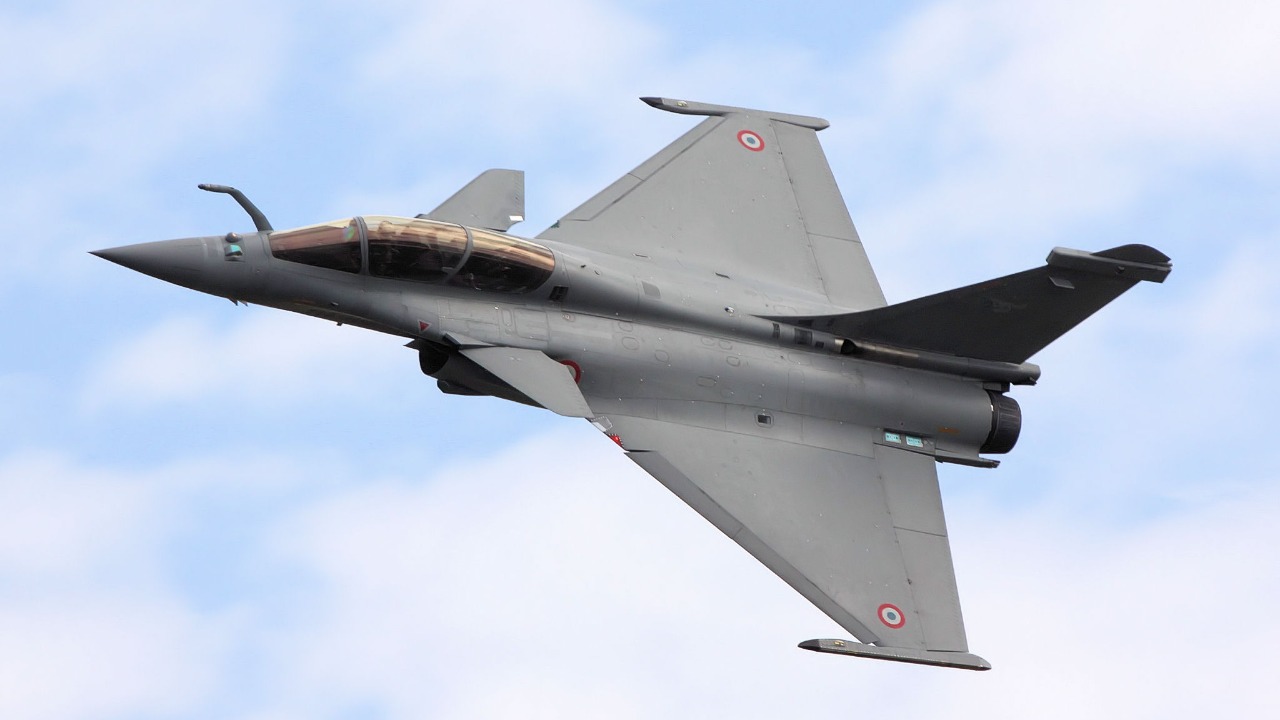
India’s decision to send 35 Rafale fighters for the cutting edge F4 upgrade has done more than signal a technological leap. It has also quietly settled a heated wartime dispute, showing that only one aircraft has been lost rather than the four kills loudly claimed by Pakistan. The numbers behind the upgrade plan, and the paper trail around a single crash, now give the clearest picture yet of what really happened in the skies.
As I look at the emerging evidence, the story that comes into focus is not of a hidden debacle but of a tightly managed fleet, a single confirmed loss and a broader strategic bet on Rafale as the backbone of India’s air power for decades. The political noise has not vanished, yet the hard arithmetic of airframes, contracts and future orders is starting to drown it out.
The 35‑jet F4 upgrade that exposed the real loss count
The turning point in this saga is the decision to send 35 Rafale jets for the F4 standard, a move that effectively reveals how many aircraft India still has on its books. The original induction plan covered 36 fighters, so a commitment to upgrade 35 of them implies that only one airframe is missing from the inventory. Analysts have noted that Jan contract details for the F4 work, which refer to a 35‑jet package in phase one of the program, align neatly with the long standing reports of a single loss and contradict the narrative of multiple shootdowns that Pakistan has pushed since the cross border clashes.
There is still no formal public statement from New Delhi that spells out this arithmetic, but the structure of the upgrade deal has become a de facto admission that only one Rafale has been written off. Reporting on the F4 plan has stressed that India intends to keep the rest of its fleet flying with their F3‑R aircraft until the upgraded tranche returns, a detail that would be impossible to square with claims that three additional jets had been destroyed in combat. As one Jan analysis put it, there is still no official confirmation, yet the 35‑jet F4 package in phase one of the contract sits uneasily with Pakistan’s talk of four kills and instead points to a single loss that the Indian side has quietly absorbed into its long term planning, a conclusion supported by the structure of the F4 upgrade.
From wartime claims to a single crash in Punjab
The political storm began when Pakistan claimed that its air defences had shot down four Rafale jets during a period of intense cross border strikes. That assertion gained traction in parts of the region’s media ecosystem, yet it always sat uneasily with the absence of wreckage, pilot names or even basic photographic evidence. Over time, the focus narrowed to one verifiable incident, a crash involving an Indian Rafale in Punjab that occurred after a retaliatory night raid on Pakistan, a loss that Indian officials acknowledged internally even as they declined to spell out every operational detail in public.
Accounts of that night describe how an Indian Rafale returning from strikes on targets in Pakistan went down in Punjab in the early hours, highlighting the risks of high tempo operations between the two nuclear armed neighbours. Aviation records list the event as Accident Dassault Rafale EH BS001, with the entry for that Wednesday noting the Date and basic circumstances of the crash, which was later locked for editing in the database, a sign of how sensitive the incident had become in both military and political circles, as reflected in the Accident Dassault Rafale file.
Dassault’s rebuttal and the technical failure narrative
The manufacturer’s intervention was decisive in cutting through the fog of competing claims. When the controversy over alleged shootdowns refused to die down, Dassault Aviation CEO Eric Trappier stepped in to clarify that India had indeed lost a Rafale, but not as a result of enemy fire. In a detailed rebuttal, the company framed the Pakistani narrative as inaccurate and unfounded, stressing that the aircraft in question had been lost to a technical failure rather than a successful intercept by Pakistani forces, a position that directly undercut Islamabad’s portrayal of the episode as a major air defence victory.
One account of that intervention notes that Jul statements from the company carried a clear message, with the phrase Dassault Rejects Pakistani Narrative, Acknowledges Technical Failure used to capture the thrust of the CEO’s remarks, which were aimed at closing down speculation that the Rafale platform itself had been exposed as vulnerable in combat. In a bid to counter allegations made by the Pakistani military, the Dassault Aviation CEO categorically denied reports of multiple shootdowns and reiterated that the single loss had not occurred during combat, a line that has since been echoed in other Jul coverage that framed the company’s stance as Dassault Rejects Pakistani Narrative, Acknowledges Technical Failure while Labeling the Pakistani claims as inaccurate, as seen in the technical failure report.
How deception and information warfare fed the four‑kill myth
The confusion did not arise in a vacuum. Earlier reporting on the cross border campaign has described how May India launched a complex operation that included both kinetic strikes and information tactics designed to unsettle Pakistan’s command structure. In that environment, it was perhaps inevitable that India and Pakistan would each seek to shape the story of what had happened in the air, with New Delhi emphasising the success of its raids and Islamabad eager to claim that it had blunted the offensive by shooting down high value assets like Rafale fighters.
One detailed reconstruction of the campaign argues that May India used decoys and electronic warfare to trick Pakistan into believing it had scored a Rafale kill, even as the actual loss profile remained limited to the later crash in Punjab. The same account notes that Jul assessments of the operation concluded that India had successfully eliminated several terror hubs in Pakistan while also exploiting the fog of war to keep its own losses opaque, a pattern that helps explain why Pakistani officials felt confident enough to talk about four kills despite the lack of corroborating evidence, a dynamic explored in depth in a video on how May India shaped perceptions. However, nearly seven months after the conflict, the emerging consensus in Jan commentary is that the mystery is now effectively over, with the 35‑jet F4 plan and the single recorded crash aligning to show that India has lost one Rafale rather than four, a conclusion that matches the logic laid out in the later Jan analysis.
The 114‑jet mega deal and what it means for India’s air power
While the debate over losses has dominated headlines, the larger story is India’s decision to double down on Rafale as its primary multirole fighter. New Delhi and France have agreed on the modalities for the procurement of 114 Rafale F4 fighters for the Indi Air Force, a package that will include a Final Assembly Line in Nagpur and deep involvement of Indian firms in the supply chain. The Jan summary of the agreement notes that India and France have also linked the deal to future cooperation on the Future Combat Air System, signalling that Rafale is not just a stopgap but a bridge to the next generation of air combat technology, as outlined in the New Delhi framework. It is also learnt that the Final Assembly Line will eventually cater to Rafale global demand and will act as the second manufacturing hub for the aircraft, with the contract to be signed in 2026, a detail that underscores how the Final Assembly Line and FAL in Nagpur are meant to serve both domestic and export markets.