
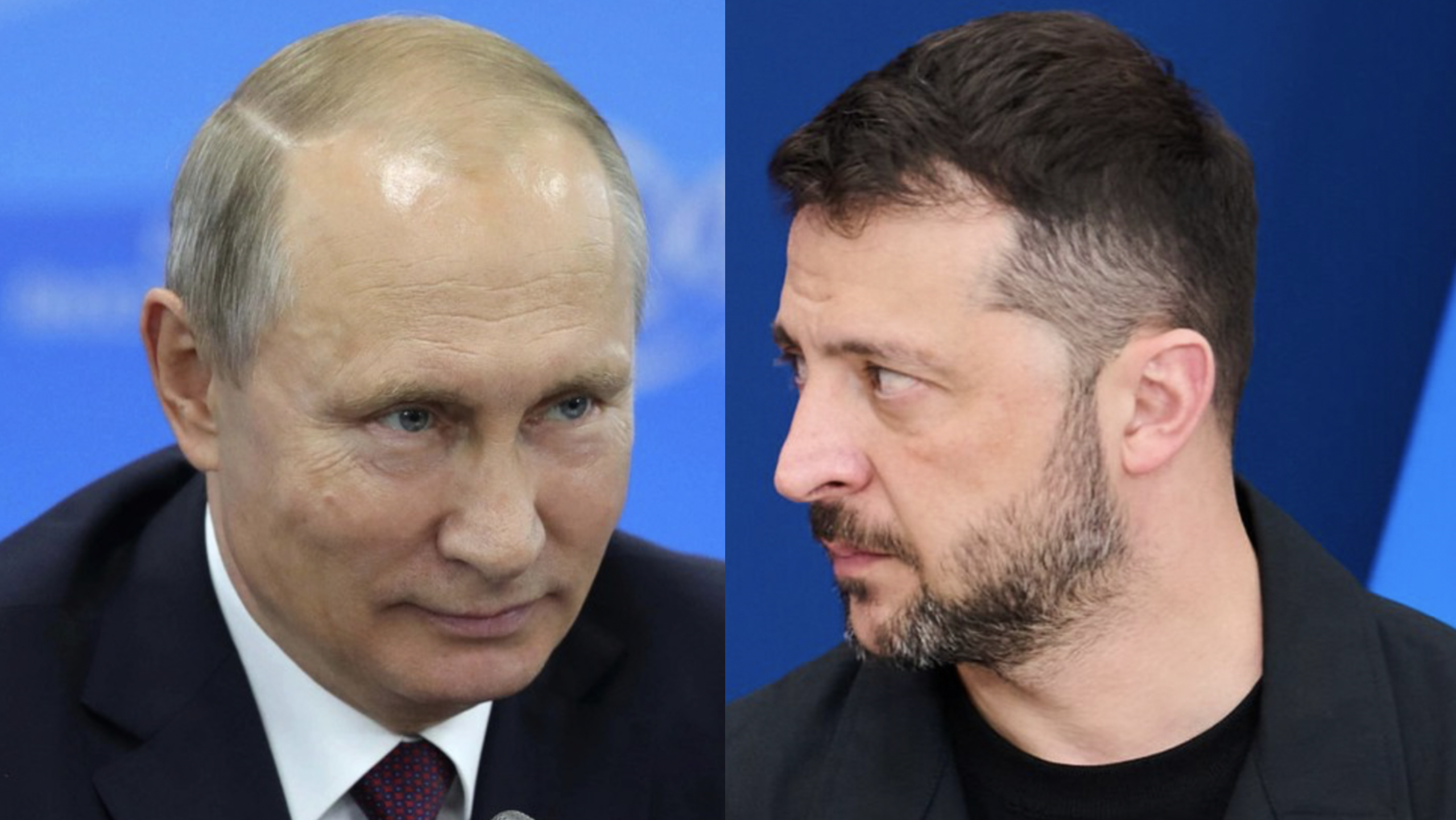
Russian President Vladimir Putin said on Saturday that he believes the four-year war between Russia and Ukraine is approaching an end, comments that came only hours after he delivered a Victory Day address in Moscow pledging eventual victory in the conflict. The remarks were made as the war passed the four-year mark since Russia launched its full-scale invasion of Ukraine in February 2022, a conflict that has become Europe’s deadliest war since World War Two and one that continues to reshape the security landscape across Europe.
Speaking to reporters inside the Kremlin following Russia’s annual May 9 Victory Day commemorations, Putin said, “I think that the matter is coming to an end,” when discussing the war in Ukraine. He also signaled openness to broader negotiations over European security arrangements and identified former German Chancellor Gerhard Schroeder as his preferred counterpart for future discussions involving Europe.
Putin’s comments came during one of the most subdued Victory Day parades seen in Moscow in recent years. Traditionally, the event features displays of Russian military hardware moving through Red Square, including tanks, missile systems, and intercontinental ballistic missiles. This year, however, Russia instead displayed footage of military operations and battlefield equipment on giant screens positioned near the Kremlin walls. The annual holiday commemorates the Soviet Union’s victory over Nazi Germany during World War Two, a conflict in which approximately 27 million Soviet citizens died.
The Kremlin leader used the occasion to again present Russia’s justification for the war. Putin blamed what he described as “globalist” Western leaders for expanding NATO eastward after the collapse of the Soviet bloc and attempting to pull Ukraine closer toward the European Union. Moscow has repeatedly argued that NATO expansion represented a direct threat to Russian security interests, while Western governments have rejected those claims and continued military and financial backing for Kyiv.
Russia’s invasion of Ukraine in 2022 triggered the deepest confrontation between Moscow and the West since the Cold War era. The conflict has severely damaged relations between Russia and European nations and prompted widespread sanctions against Moscow. Despite repeated diplomatic initiatives over the course of the war, negotiations have failed to produce a lasting settlement, and the Kremlin has maintained that Russia will continue military operations until its objectives are achieved.
As the war enters its fifth year, Russian forces continue to control roughly one fifth of Ukrainian territory, including Crimea and significant portions of the Donbas region as well as areas in southern Ukraine. Russian advances have slowed compared to earlier stages of the war, with Ukrainian defensive positions continuing to hold in several heavily fortified areas across the eastern front.
The prolonged conflict has exacted a massive human and economic cost on both countries. Estimates indicate that more than 15,000 civilians have been killed since the start of the invasion, while millions of Ukrainians have been displaced from their homes. Military casualty figures remain difficult to independently verify, though officials and analysts widely acknowledge that losses on both sides have reached into the hundreds of thousands.
Ukraine has increasingly relied on drone warfare and long-range strikes as the conflict has evolved into a grinding war of attrition. Ukrainian forces have carried out repeated attacks targeting Russian energy infrastructure, oil facilities, and logistical sites deep inside Russian territory. At the same time, Russia has continued large-scale missile and drone attacks against Ukrainian cities and infrastructure, contributing to widespread destruction across the country.
The war has also had significant geopolitical consequences. Western governments have continued providing large-scale military and economic assistance to Ukraine. By early 2026, reported aid commitments from the United States had reached approximately $188 billion, while European Union support totaled roughly $197 billion. Despite sweeping sanctions imposed by Western nations, Russia’s economy has remained more resilient than many analysts initially predicted, though the war has placed growing strain on government spending and long-term economic stability.
Putin acknowledged broader anxiety within Russia surrounding the conflict. Having led Russia as either president or prime minister since 1999, he now faces mounting pressure tied to the length of the war, the economic burden, and deteriorating relations with Europe. The fighting has already lasted longer than Soviet involvement in what Russia refers to as the Great Patriotic War of 1941-45.
Recent diplomatic efforts have shown limited signs of movement. Russia and Ukraine agreed to exchange 1,000 prisoners following discussions supported by the United States. U.S. President Donald Trump also announced a ceasefire running from Saturday through Monday, an arrangement reportedly backed by both Moscow and Kyiv. Trump described the war as “the worst thing since World War Two in terms of life” and said he hoped to see the ceasefire extended further. No immediate reports of violations from either side emerged during the truce period.
Putin also addressed the possibility of future negotiations involving European leaders. Asked whether he was prepared to engage directly with European representatives, he said Schroeder would be the preferable figure for talks. The former German chancellor has long maintained close ties with Russia and previously faced criticism in Europe for his relationship with the Kremlin and Russian energy companies.
European leaders have consistently maintained that Russia must not be allowed to achieve victory in Ukraine and have accused Putin of aggression that threatens broader European security. NATO officials and European governments have repeatedly warned that a Russian victory could embolden Moscow in future confrontations involving alliance members, claims the Kremlin has dismissed as unfounded.
Putin additionally commented on the possibility of direct engagement with Ukrainian President Volodymyr Zelenskyy, stating that such a meeting could only take place after a broader peace agreement had been finalized. Despite intermittent diplomatic contacts and outside mediation attempts, a comprehensive settlement to end the war remains elusive as fighting continues across multiple front lines entering the conflict’s fifth year.