
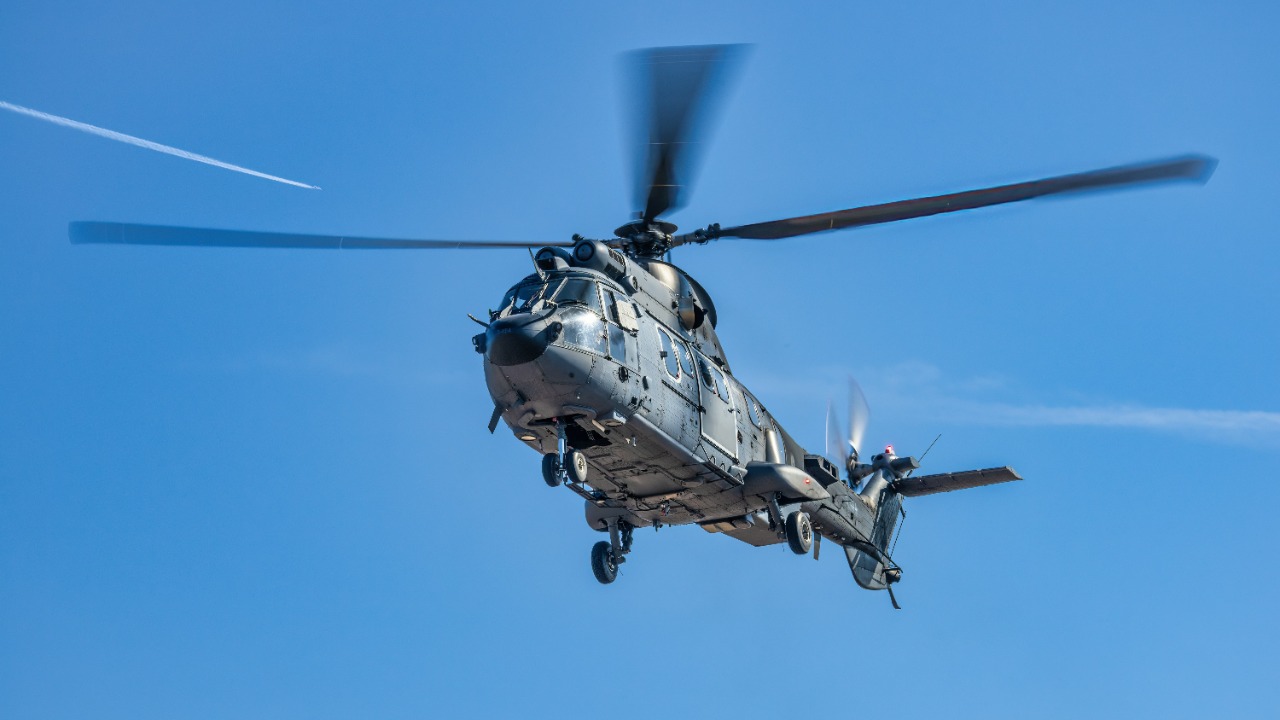
A festive open house at a U.S. base in Okinawa ended in catastrophe when a low-flying rescue helicopter knocked a Japanese schoolteacher to the ground, causing fatal head injuries and sending shock waves through a community long wary of military risk. An internal Air Force probe now concludes that the aircraft flew too close to spectators and that basic safety rules were ignored, turning what was billed as a family event into a preventable tragedy.
The findings, centered on the power of rotor wash and the decisions of the crew and planners, have intensified scrutiny of how the U.S. military manages public demonstrations in Japan and how it weighs operational showmanship against the safety of residents. For the family of the 60-year-old victim and the children who watched her fall, the report reads less like a technical document and more like an indictment of complacency.
The fatal approach and a crowd caught off guard
The accident unfolded at Kadena Air Base in Okinawa Prefecture as a U.S. Air Force HH-60W Jolly Green II from the 33rd Rescue Squadron flew a low approach over a crowd gathered for a family-focused event. Investigators found that the Air Force helicopter landed too close to the crowd, placing spectators directly in the path of intense downwash from the spinning rotors. That blast of air, known as rotor wash, slammed into a 60-year-old elementary school teacher, knocking her to the pavement and causing severe head trauma that would prove fatal.
The same gusts toppled children nearby, with two students also knocked over by the force of the wind, though they escaped serious injury. According to an Air Force Accident report cited in Jan, the woman, a Japanese educator, suffered severe head injuries when she struck the ground. The same report, described in Jan by The Stars and Stripes, concluded that the low approach and proximity to the crowd were central to the chain of events that turned a routine demonstration into a deadly mishap.
What the investigation found about safety failures
The internal probe paints a picture of layered human error rather than a freak accident. The Air Force Accident Investigation Board determined that the HH-60W crew flew a profile that brought the helicopter within a danger zone of spectators, despite regulations that should have kept children and teachers at least 60 meters away from the aircraft. Instead, the crowd was positioned much closer to the helicopter’s final approach path, leaving them exposed to the full force of the rotor wash.
Investigators described a culture of “false confidence of safety” within the 33rd Rescue Squadron, noting that those mistakes arose despite a heavy focus on safety in training. The Air Force Accident Investigation Board cited poor planning, inadequate risk assessment, and a failure to enforce standoff distances as substantial factors in the incident, findings echoed in Jan by Stars and Stripes. According to the report, Air Force regulations that should have governed crowd placement were not properly applied, and the aircraft’s final approach path was allowed to intersect with the spectator area.
A community’s grief and renewed Okinawa tensions
The victim’s death has deepened long-standing unease in Okinawa about the risks of hosting large U.S. bases so close to civilian neighborhoods and schools. Local media identified the woman as a Japanese teacher from the region, and Jan reports from Naha, Okinawa Pref, described how she was struck by the wind from the helicopter and later died after being taken to the hospital. Coverage under the banner Okinawa Teacher Died in a Military Chopper Wind Accident has underscored the emotional weight of losing a local educator at a U.S. sponsored event.
For many residents, the incident is not an isolated misfortune but part of a pattern of accidents and near misses linked to the heavy U.S. presence on the island. Detailed accounts of the death of an Okinawa teacher involving a U.S. military helicopter at Kadena Air Base in Okinawa Prefecture have fueled calls for stricter oversight of flight operations near civilian gatherings. Another Jan report from Okinawa by Jiji Press noted that the teacher was confirmed dead several days after the accident, a delay that only prolonged the community’s anguish.
Rotor wash risks and the path to accountability
The technical hazard at the center of the case, rotor wash, is well known to aviators but often invisible to spectators until it is too late. The HH-60W Jolly Green II, identified in one account as an Air Force HH Jolly Green II assigned to the 33rd Rescue Squadron, generates powerful downwash that can knock adults off their feet even at some distance. A Jan analysis titled Rotor Wash Knocked at the Kadena Event stressed that this physical force is predictable and must be managed through strict crowd control and flight profiles that keep aircraft well clear of people on the ground.
Yet the Air Force Accident Investigation Board found that those safeguards were not fully in place. According to Jan’s coverage of the Copter rotor wash case, the Japanese teacher’s death occurred even though the risks of downwash were well documented. The same reporting noted that the rotor wash also knocked over two students, but neither of them was seriously hurt, a detail echoed in a separate Jan account that stated the rotor wash also knocked over two students near the aircraft’s final approach path. Another Jan report from Jiji Press in Naha, Okinawa Pref, said that spectators should have been kept at least about 150 meters away from the helicopter, a standard that was not met at the Kadena event.