
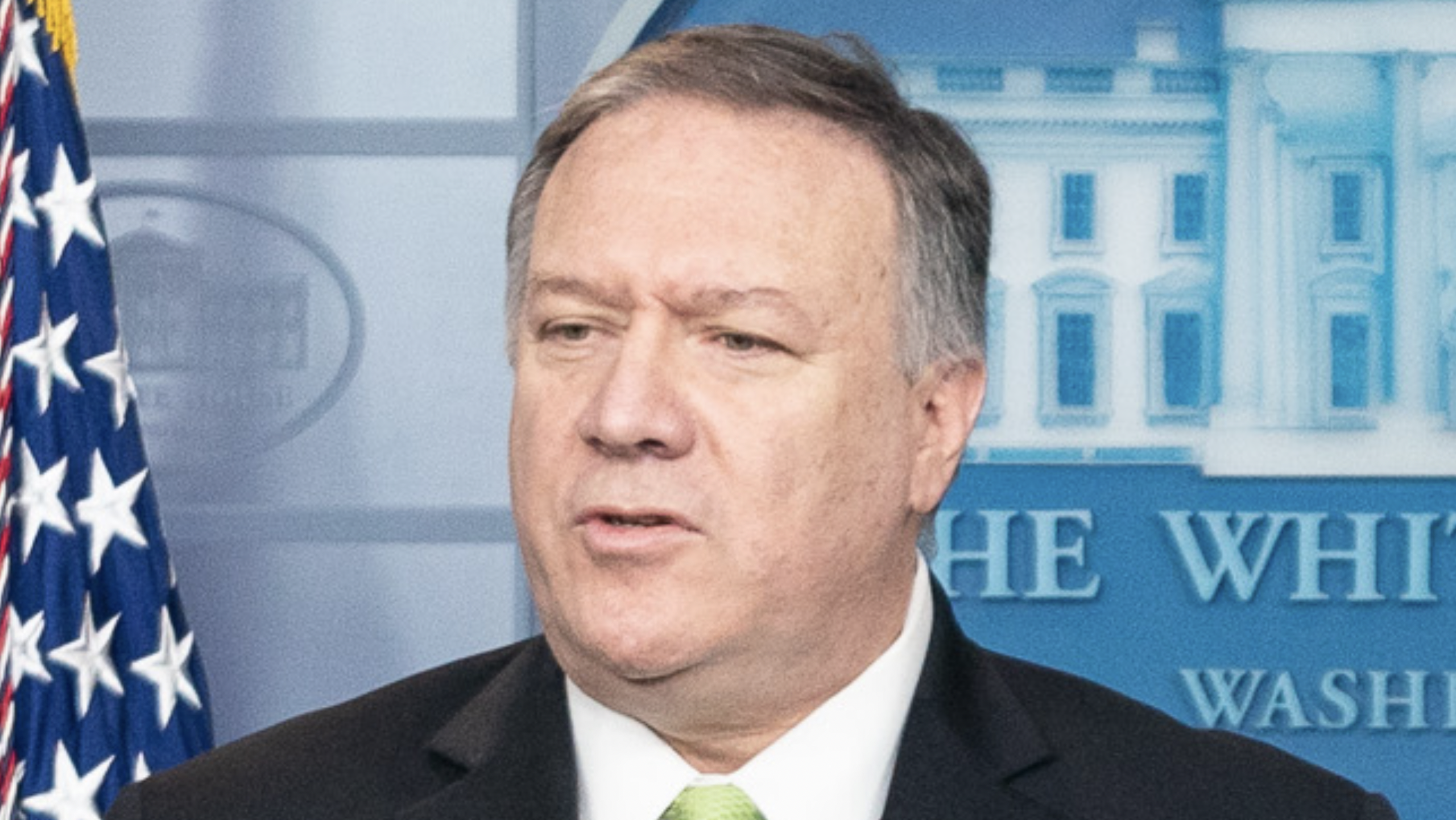
Former U.S. Secretary of State and CIA Director Mike Pompeo declared Friday that the Iranian regime remains “determined to kill President Trump and destroy the United States,” calling for the government in Tehran to be “permanently defanged” as fallout continues from newly disclosed Israeli intelligence on a fresh assassination plot against the president.
Pompeo, who also serves as a United States Attorney, posted the statement to X at 11:02 a.m. on July 10, 2026. The full post read:
“As recent intelligence from Israel shows, the Iranian regime remains determined to kill President Trump and destroy the United States. For the sake of American security and global stability, we need to make sure this evil dictatorship is permanently defanged.”
The post came one day after The Wall Street Journal first reported, and CNN separately confirmed, that Israel had shared new intelligence with the United States indicating Iran had devised a fresh plan to assassinate Trump. That disclosure landed as the 60-day ceasefire between Washington and Tehran showed signs of collapse, with both sides trading renewed strikes and threats in recent days.
A Warning Rooted in Personal Experience
Pompeo’s warning carries particular weight given his own history as an Iranian target. Federal law enforcement officials and a source close to Pompeo have said he was among the officials named in an Iranian assassination plot tied to the 2020 killing of Islamic Revolutionary Guard Corps Quds Force commander Qassem Soleimani, a strike Pompeo helped oversee as secretary of state. A 2022 incident in which Iranian operatives allegedly came close to killing Pompeo at a hotel in Europe was later detailed in reporting on the campaign against former Trump administration officials, and Pompeo has continued to face what officials have described as credible, long-running threats from Tehran.
That history is central to why Pompeo has remained one of the most vocal advocates within Trump’s political orbit for a decisive end to the Iranian regime rather than a negotiated settlement. His Friday post placed the new intelligence squarely in that framework, arguing that a plot against the president’s life is not an isolated incident but evidence that the regime itself, not merely individual actors within it, must be dismantled.
Part of a Sustained Campaign Against the Regime
Friday’s statement was not an isolated outburst. It extends a pattern of public commentary Pompeo has offered throughout the U.S.-Iran conflict, consistently framing the war in existential terms and pressing the Trump administration toward more aggressive terms with Tehran.
In February, as joint U.S.-Israeli strikes against Iran’s nuclear program and regime targets got underway, Pompeo published an op-ed asserting that “the joint U.S.-Israeli military operation against the Iranian regime is just and imperative,” and that the strikes marked “an important step toward removing the threat posed by this evil regime.”
In January, amid widespread protests inside Iran over living costs and state repression, Pompeo posted a New Year’s message on X declaring that “the Iranian regime is in trouble” and that bringing in mercenaries was “its last best hope,” a post that also referenced Mossad activity inside the country and drew scrutiny from demonstrators and regional observers alike.
More recently, as reports emerged in May of a possible ceasefire framework being negotiated between Washington and Tehran, Pompeo broke publicly with the administration’s approach. He wrote on X that the deal “being floated with Iran seems straight out of the Wendy Sherman-Robert Malley-Ben Rhodes playbook” — a reference to Obama-era negotiators — and warned it would “pay the IRGC to build a WMD program and terrorize the world.” He called the emerging terms “not remotely America First,” and argued instead for opening the Strait of Hormuz, cutting off Iran’s access to money, and eliminating enough of Iran’s military capability that it could no longer threaten U.S. allies in the region. That post drew a sharp public rebuke from White House Communications Director Steven Cheung, who said Pompeo “has no idea what the f— he’s talking about” and should “shut his stupid mouth.”
The New Intelligence Behind Friday’s Post
The intelligence Pompeo referenced Friday was first reported Thursday by the Wall Street Journal and confirmed separately to CNN by multiple sources familiar with the matter. According to those sources, Israel recently shared intelligence with the United States indicating that Iran had developed a new, specific plot to assassinate Trump, distinct from the broader pattern of threat chatter U.S. agencies have tracked for months. One source told CNN the warning was delivered to the U.S. this week; American intelligence agencies had not independently verified the plot and had not been tracking it before Israel raised the alarm.
Asked about the threat by reporters in Ankara, Turkey, on Wednesday, Trump did not dispute that he remained a top target, telling reporters, “They want to take out the U.S. leader — me,” and adding that he had been shown intelligence that morning placing him on “every single one” of Iran’s target lists. He described those behind the threats as “evil, sick people” and said he had “been a little bit lucky” but that his luck “maybe doesn’t last very long.” The White House referred both the Journal and CNN to those remarks rather than issuing a new statement of its own.
Roots Going Back to 2020
The threat against Trump’s life traces back to the January 2020 U.S. drone strike that killed Soleimani, an operation U.S. officials have long warned could draw Iranian retaliation against the president and the officials who carried it out. That threat has persisted across multiple administrations, and sources familiar with current intelligence say agencies are tracking several actors who have discussed potential attacks but have not moved to act on them. Concerns extend beyond Trump himself: one source said the intelligence community believes Iran could be looking to target a broader range of current and former senior U.S. officials.
Pompeo has separately been identified as a continuing target of that campaign. Congress has reportedly been notified more than a dozen times of credible threats against him, and he remains under government protection alongside other former officials tied to the Soleimani decision, including former national security adviser John Bolton and former State Department envoy Brian Hook.
Funeral Chants and a Fraying Ceasefire
Friday’s post also came just after the burial of Iran’s Supreme Leader, Ayatollah Ali Khamenei, who was killed in the opening strikes of the war. Mourners at his days-long funeral chanted for Trump’s death and displayed a banner reading “We Will Kill Trump,” underscoring the intensity of hostility toward the American president inside Iran even as diplomatic efforts continue.
That hostility has unfolded against the backdrop of a rapidly deteriorating ceasefire. Trump declared Wednesday that the Memorandum of Understanding between the two countries was “over,” and the U.S. has resumed strikes on IRGC targets following attacks on commercial shipping in the Strait of Hormuz. A U.S. official said Thursday that diplomatic efforts were nonetheless continuing behind the scenes, with both sides still working toward a broader nuclear agreement and officials targeting a mid-August deadline.
Military preparations have kept pace with the diplomatic uncertainty. Officials told CNN that preparations for potential U.S. strikes were in place Thursday night, and crews aboard the USS Abraham Lincoln loaded fighter jets with weapons earlier in the day as pilots ran drills in case they were called into action.
Where the War Stands
Trump and Israeli Prime Minister Benjamin Netanyahu spoke by phone Thursday, with Netanyahu’s office saying the two leaders agreed to continue coordination and that Trump briefed him on recent U.S. activity in the Gulf. The call was the latest in a series of exchanges between the two leaders whose alignment on the war’s objectives has grown increasingly strained, with Netanyahu pushing to continue strikes on Iran while Trump has sought a path out of the conflict.
Whether the new intelligence on the assassination plot factored into that conversation has not been disclosed by either side. As of Friday, the scope of the plot, its planners, and its intended method remained unconfirmed by U.S. intelligence — leaving Pompeo’s call to permanently defang the Iranian regime as one of the loudest voices pushing the administration toward a harder line as it weighs its next move against Tehran.