
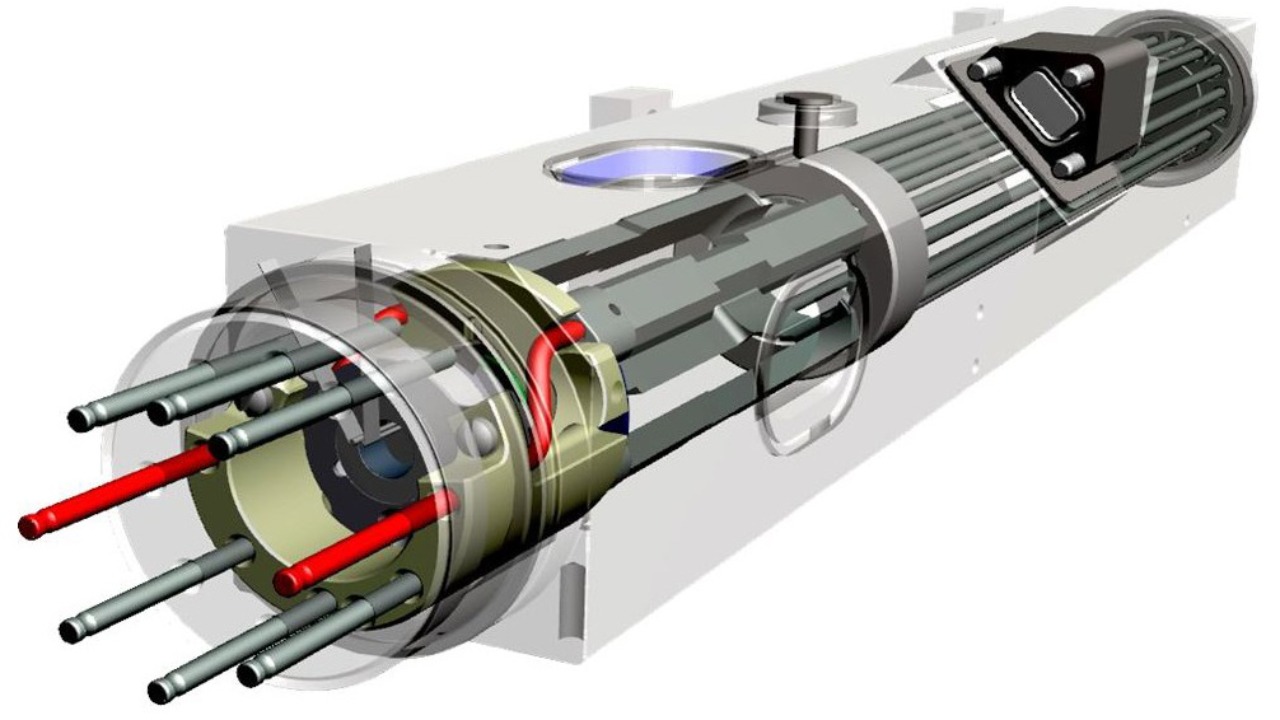
A new generation of atomic clock has emerged in the United Kingdom, shrinking laboratory-grade precision into a device that can be carried by hand. By compressing the complexity of a caesium fountain into a compact package, researchers have opened the door to ultra-stable timekeeping outside traditional metrology institutes.
This pocket scale instrument promises to reshape how navigation, communications, and defence systems access trusted time, especially in places where satellite signals are weak, blocked, or deliberately attacked. It is a technical milestone, but also a strategic one, because control over precise time increasingly underpins economic resilience and national security.
From a national standard to hand carried instrument
I see the most striking aspect of this development in the way it collapses the distance between national standards laboratories and field equipment. Researchers at the National Physical Laboratory, referred to in the sources as NPL and The National Physical Laboratory, have taken the architecture of a caesium fountain primary frequency standard and re-engineered it into a miniaturised atomic fountain clock that can be moved by a single person. Reporting describes how researchers at the UK’s National Physical Laboratory have produced an ultra-precise atomic clock that is small enough to carry by hand, a detail that underlines just how far the hardware has been reduced from room-sized installations.
In technical terms, the team has preserved the essential physics of a caesium fountain, in which atoms are cooled, launched, and interrogated to define the second, while stripping away bulk and power-hungry infrastructure. NPL has publicly framed this as a miniaturised atomic fountain clock that still relates directly to its established caesium fountain primary, which remains the ultimate reference for UK time. By keeping that lineage explicit, the laboratory signals that this is not a loser derivative technology, but a portable expression of the same definition of time that underpins national and international timing systems.
How miniaturised quantum timing works
As I read the technical descriptions, what stands out is the careful balance between quantum control and engineering pragmatism. The miniaturised atomic fountain clock still relies on clouds of caesium atoms whose quantum transitions define the reference frequency, but the apparatus that cools, launches, and measures those atoms has been compressed into a much smaller footprint. NPL has highlighted in a paper in Applied Physics Letters that this compact system can operate with performance linked to its larger caesium fountain primary frequency standards, which indicates that the miniaturisation has not come at the cost of fundamental accuracy.
From an engineering perspective, the device sits in the middle ground between chip-scale atomic clocks and full laboratory fountains. It is far smaller than the racks of equipment that usually surround a primary standard, yet it is more capable than the low-power oscillators embedded in smartphones or car navigation units. Coverage of the project describes it as a mini atomic clock developed and tested by The National Physical Laboratory, with NPL emphasising that the design is intended to be robust enough for deployment in real-world environments rather than confined to carefully controlled labs. That combination of quantum-level precision and practical packaging is what makes the device feel like a genuine platform shift rather than a niche experiment.
Transforming navigation, communications, and finance
In my view, the most immediate impact of a hand-carried atomic clock lies in positioning, navigation, and timing services that currently lean heavily on satellites. Global navigation satellite systems provide time signals that keep everything from 5G base stations to high-frequency trading platforms in sync, but they remain vulnerable to jamming, spoofing, or simple loss of coverage in dense cities and remote regions. NPL has explicitly framed its miniaturised atomic fountain clock as a tool for transforming global positioning,, arguing that local, sovereign-controlled time sources can back up or even temporarily replace satellite signals when they are compromised.
That argument extends well beyond navigation apps on a smartphone. The same precise timing that lets a ship determine its position also keeps data centres aligned, synchronises financial transactions, and coordinates power grids. Reporting on the mini atomic clock stresses that the National Physical Laboratory (NPL) see it as a way to revolutionise global timing, not simply to shave a few nanoseconds off existing systems. If a bank can host its own ultra-stable reference in a secure vault, or a telecom operator can install one at a remote mast, then resilience improves because critical infrastructure no longer depends on a single external timing feed that might be disrupted at a distance.
Strategic stakes for defence and national resilience
As I consider the broader context, it is clear that defence planners have been watching this class of technology closely. A separate strand of UK work has already produced a pioneering atomic clock for military use, described as a UK-built device that promises to transform operations with advanced quantum technology. Reporting on that project notes that the system is intended to enhance security by providing a sovereign-controlled time, language that mirrors NPL’s emphasis on domestic control of critical timing infrastructure. When armed forces can carry their own reference clocks into the field, they are less exposed to the risk that an adversary might degrade satellite timing as part of a wider conflict.
That concern is not theoretical. A UK defence laboratory has already unveiled what it described as the first quantum atomic clock of its kind to be built in the country, with officials stressing that it is designed to keep working even when satellite signals are disrupted or blocked by adversaries via jamming. Coverage of this groundbreaking quantum clock makes clear that the strategic logic is the same as in the NPL work, namely, to ensure that critical systems can continue to operate on trusted time even in contested environments. I see the new pocket-sized atomic clock as part of this continuum, a civilian-facing technology that nonetheless carries significant implications for how the United Kingdom, and its allies, think about resilience in an era where time itself has become a contested resource.