
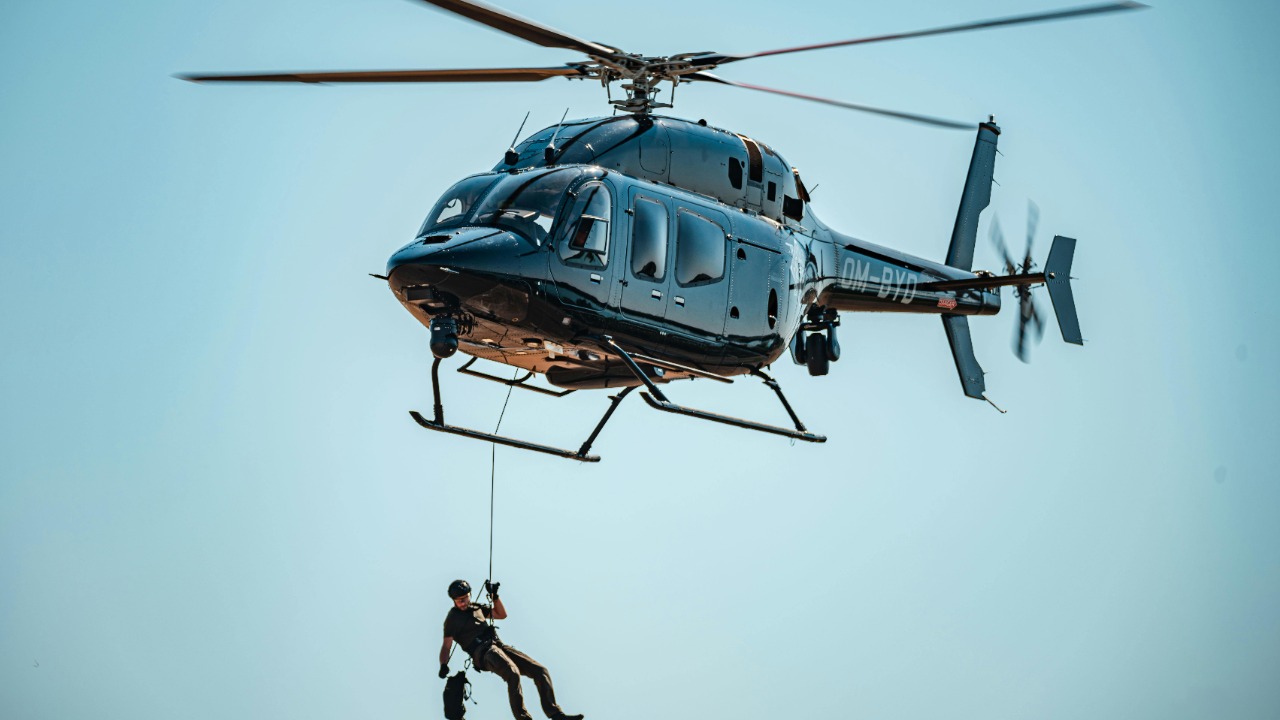
A couple clung to a flood-soaked rock for 27 hours while a swollen river tore past them, their survival depending on whether rescuers could reach them before the water rose again. Their ordeal ended only when a pilot pushed his aircraft and his own nerve to the limit to pull them out of the torrent. The rescue, captured in dramatic footage, has become a stark symbol of both the ferocity of recent flooding and the quiet professionalism of those who fly toward danger rather than away from it.
The story is not only about one daring maneuver above a raging current. It also reveals how a chain of decisions, from the first sighting of the stranded pair to the final lift from the rock, can mean the difference between life and death when weather turns lethal and infrastructure fails.
The long wait on a shrinking rock
The couple’s nightmare began when floodwaters surged through the river valley, cutting off escape routes faster than they could retreat. Swept toward the center of the torrent, they scrambled onto a jagged rock that sat just high enough above the current to offer a fragile perch. For 27 hours they remained marooned there, soaked, exhausted, and exposed to fierce winds that drove spray into their faces and made every movement treacherous, while the river below them churned with debris and opaque brown water that hid any safe path to shore.
From the banks, rescuers could see that any attempt to reach the pair by boat would likely end in disaster, as the current twisted around the rock and formed violent eddies that could flip even a heavy craft. The couple’s position left them trapped between the pull of the river and the risk of hypothermia, with no shelter and no way to climb to higher ground. It was only when a helicopter crew spotted the tiny shape of the rock and the two figures clinging to it that a viable plan emerged, turning the focus from grim endurance to the possibility of a high risk aerial extraction that would have to be flown with extreme precision in the teeth of the storm, as described in detailed accounts of the dramatic rescue.
The pilot’s split second decisions in brutal conditions
At the center of the operation was pilot Will Miller, who had to judge not only the limits of his aircraft but also the shifting moods of the river and the wind. As he brought the helicopter in low over the water, rotor wash whipped the surface into a white haze that threatened to blind both crew and victims. Miller had to hold a steady hover while buffeted by fierce gusts that tried to push the aircraft sideways, all while keeping enough clearance from the rock to avoid a catastrophic strike yet staying close enough for the rescue line to reach the couple before they were blown off their precarious footing.
Inside the cabin, every second demanded coordination between Miller and his team as they watched the river surge and fall beneath them. The pilot’s choices were constrained by the narrow corridor of air between the steep banks and the turbulent updrafts rising from the water, which could suddenly lift or drop the helicopter without warning. Reports on the mission describe how the aircraft edged in over the rock, with the couple framed against the torrent as the crew lowered a harness into the spray, a sequence that underlined how much depended on Miller’s ability to read the wind and react faster than the river could change beneath him, a feat captured in coverage of the hero pilot.
From first sighting to final lift
The rescue did not begin with the hover above the rock but with a methodical search over a landscape that flooding had turned into a patchwork of islands and channels. Miller and his crew flew over a steep valley that had become a temporary lake, scanning for signs of life amid rooftops, treetops, and submerged fields. When they finally spotted the couple, the rock appeared as a dark speck in a wide sheet of moving water, and the crew had to circle repeatedly to assess wind direction, potential escape routes, and the safest angle of approach that would not drive the rotor wash directly onto the victims and knock them into the current.
Once the plan was set, the helicopter edged in from the side of the valley, using the contour of the north bank as partial shelter from the strongest gusts. The crew lowered a rescuer on a winch, who then secured first one member of the couple and then the other, timing each lift between surges of the river that threatened to overtop the rock. The sequence required the aircraft to hold position for far longer than is comfortable in such conditions, yet the team persisted until both victims were safely aboard. Accounts of the mission note that the operation unfolded against a backdrop of widespread devastation, with entire communities cut off and thousands of people left homeless by the same floodwaters that had trapped the couple, a context that frames the mission as one critical success amid a much larger emergency response, as detailed in reporting on the flooded region.
A rescue that reflects a wider climate of risk
The image of two people stranded on a rock for 27 hours, waiting for a helicopter to thread its way through a storm, has resonated far beyond the river valley where it occurred. It encapsulates how quickly extreme weather can turn familiar landscapes into lethal traps, and how survival often depends on a handful of highly trained professionals who are willing to accept personal risk in order to reach those in peril. The precision flying by Will Miller and the discipline of his crew highlight the level of preparation that underpins such missions, from constant training in low visibility maneuvers to rehearsed communication protocols that allow a team to act as a single unit when seconds matter.