
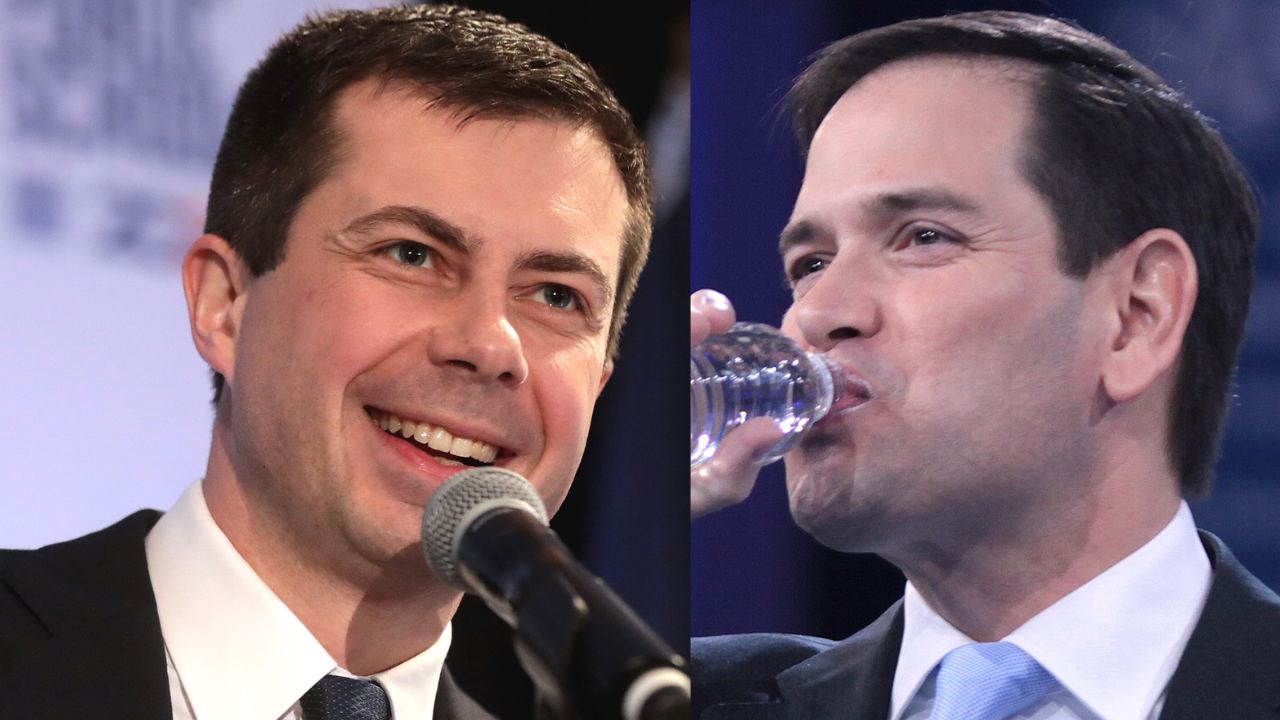
WASHINGTON, June 2, 2026 — Secretary of State Marco Rubio declared “the war’s over now” during a sharp Senate exchange Tuesday — a claim that former Transportation Secretary Pete Buttigieg immediately labeled “a bizarre lie” that every American paying elevated gas prices knows is false.
“I am not making this up: Secretary Rubio actually sat before Congress today and said ‘the war is over,'” Buttigieg wrote on X. “It’s a bizarre lie to tell when Americans know there’s obviously a war underway — not just from seeing it on screens, but from paying its costs every day at home. Leaders with this little respect for the American people have no business in office.”
The Exchange That Triggered the Backlash
The moment came during Rubio’s appearance before the Senate Committee on Foreign Relations, where he was testifying on the FY2027 State Department budget request — his first public congressional testimony since the Iran war began in February 2026. Sen. Cory Booker, D-N.J., pressed Rubio on his repeated claims that the U.S. was winning the conflict.
“Mr. Rubio, you keep telling us how we’re winning this war. The president keeps saying—” Booker began, before Rubio interjected: “Well, the war’s over now.” Booker immediately pushed back: “The war is not over. Completely annihilated — the war is not over.”
Buttigieg, who added his own commentary to a video clip of the exchange, said: “The Secretary of State, with a straight face, just told Congress that the war on Iran is over, even though we all know that obviously the war in Iran is not over.”
Rubio’s Broader Iran Testimony
The “war is over” remark came amid a broader Iran discussion at the hearing in which Rubio defended the administration’s negotiating posture and pushed back against Democratic criticism. Rubio told senators that any sanctions relief for Iran is “condition-based” and tied exclusively to Tehran giving up its nuclear program. “Iran is being sanctioned because they’ve highly enriched uranium. Iran is being sanctioned because of their nuclear activities. If they agree to give up those things, there will be sanctions relief,” he said.
Rubio also said Iran had attempted to build up its conventional weapons capability as “a shield” for its nuclear program — spelling out why Trump felt it was imperative to launch the war in February. He said there were “indications” that Iran’s new Supreme Leader Mojtaba Khamenei, who has not been seen in public since being wounded in the strike that killed his father on the war’s first day, is “increasingly engaged at some level” in negotiations.
Sen. Jeanne Shaheen, D-N.H., the top Democrat on the Foreign Relations Committee, blasted Rubio for what she described as deliberately avoiding congressional oversight. “When I talk to my constituents, they asked for economic relief at home, not regime change in Havana or Caracas or Tehran,” she said. “You sent Congress a war powers notification saying we are not in active hostilities with Iran, while the U.S. was conducting strikes against Iran, and Iran was bombing U.S. embassies and bases throughout the Middle East. That was not consultation, it was an attempt to avoid answering to this committee and this Congress about this war.”
The Gas Price Reality Buttigieg Referenced
Buttigieg’s specific reference to Americans “paying its costs every day at home” pointed to the sustained increase in gas prices driven by Iran’s closure of the Strait of Hormuz — the waterway through which approximately 20 percent of the world’s oil supply passes. The strait has been closed since the war began in late February, disrupting global energy markets and pushing fuel costs higher for American consumers heading into the summer driving season.
Republican lawmakers have been increasingly vocal about the economic pressure the war is creating ahead of November’s midterm elections, which will determine whether the party retains its slim majorities in the Senate and House. Trump has insisted for weeks that he will reach a deal soon that would reopen the strait and bring gas prices down.
Buttigieg’s Pattern Argument
Buttigieg did not limit his criticism to Tuesday’s exchange. He argued the “war is over” claim fits a broader pattern of Rubio making obviously false statements to Congress. “It’s not even the first time Secretary Rubio has made an obviously false statement to Congress,” Buttigieg said in his video commentary. “Last year, he sat there with a straight face and said that no one had lost their lives because of his cuts to medical aid around the world, even though not only did children die, we know some of their names.”
“When one of the highest officials in the country says things that are obviously false to the United States Congress, that doesn’t just debase him and the Trump administration,” Buttigieg said. “It brings America down.”
The War’s Current Status
The Iran war entered its fourth month on June 2, 2026 — the same day Rubio told the Senate it was over. The conflict began on February 28 with U.S. and Israeli strikes on Iranian nuclear facilities in Operation Midnight Hammer. Iran has since conducted strikes on U.S. embassies and military bases throughout the Middle East, closed the Strait of Hormuz, and continued ballistic missile launches against targets in the region.
The Senate last month voted to advance a war powers resolution that would end the Iran conflict unless Trump obtains congressional authorization. Days later, House leaders abruptly postponed a vote on a similar resolution when it appeared likely to pass. Rubio’s testimony Tuesday was the first of four congressional appearances scheduled this week on the FY2027 budget request, which calls for a 30 percent cut in the foreign affairs budget to $36 billion while planning a 50 percent increase in military spending to $1.5 trillion, according to Reuters.
Rubio’s prepared written testimony did not use the phrase “the war is over.” The remark came spontaneously during the Booker exchange.