
The U.S. Court of Appeals for the D.C. Circuit granted the Pentagon’s emergency motion for a stay Thursday, allowing the Department of War to keep its journalist escort requirement in effect while a First Amendment lawsuit brought by the New York Times proceeds on an expedited appeal schedule — a significant legal win for the administration’s effort to restrict unescorted press access to the building.
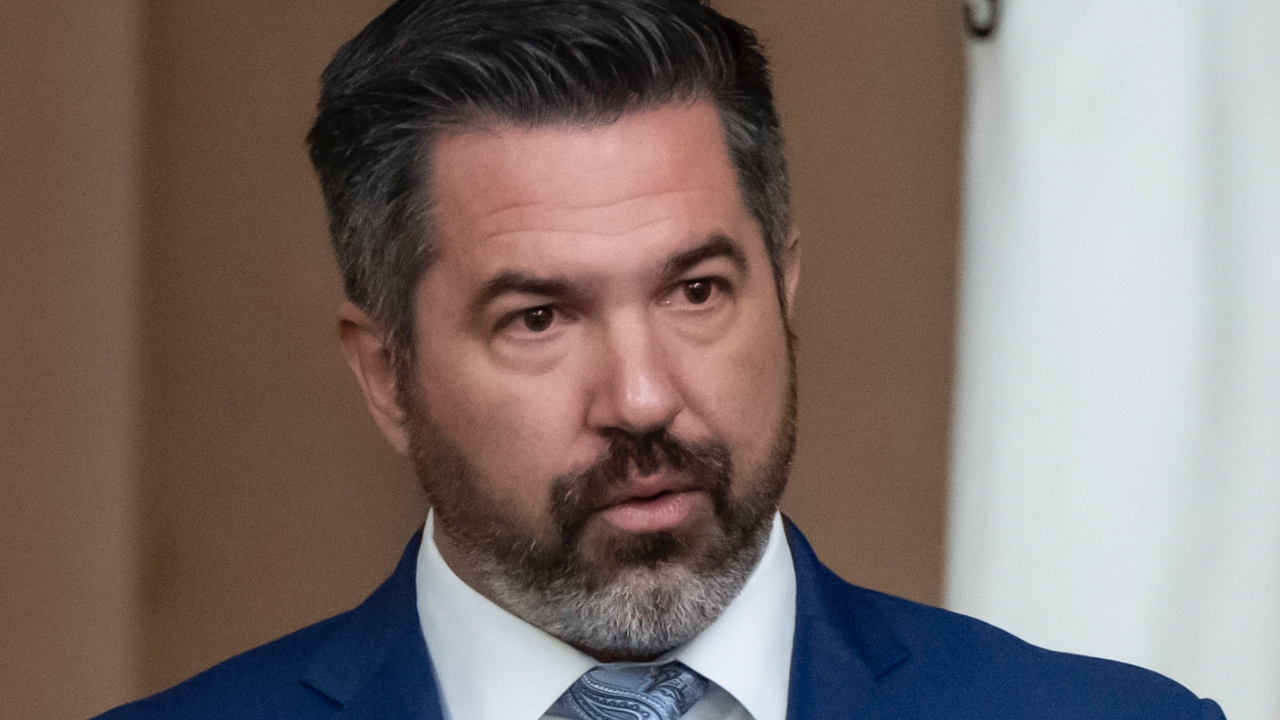
“Reporters do not have a First Amendment right to freely roam the halls of the Pentagon,” Pentagon spokesman Sean Parnell wrote on X. “The Department of War welcomes the D.C. Circuit Court of Appeals’ decision granting our emergency motion for a stay — a big win for protecting national security. The Court found that we are likely to succeed on the merits of our argument, so our policy remains in effect while the case moves forward on an expedited schedule.”
The stay reverses a June 30 preliminary injunction issued by U.S. District Judge Paul Friedman, who had found that the Pentagon’s escort requirement violated the First Amendment and ordered it lifted, according to the case docket at CourtListener. The D.C. Circuit’s stay means the escort policy — which requires journalists to be accompanied by a Pentagon official at all times while in the building — returns to force while the appeal is briefed and argued.
The Long Road to This Ruling
The legal battle over Pentagon press access has now spanned more than 18 months and produced five separate court orders. The Pentagon introduced its first set of Pentagon Facility Alternate Credentials rules in October 2025, which allowed the revocation of journalist credentials for soliciting unauthorized information — even if unclassified. Most major news organizations, including the Times, the Washington Post, the Associated Press and Reuters, surrendered their credentials rather than sign the pledge, shifting building access toward outlets more favorable to the administration.
The Times sued in March 2026. Judge Friedman ruled on March 20 that key provisions of the original credential policy constituted unconstitutional viewpoint discrimination and violated due process. He ordered the Times’ journalists restored to full access. The Pentagon responded with a revised “Interim Policy” that closed the building’s Correspondents’ Corridor and imposed the escort requirement as an alternative. Friedman struck that down as a “repackaged” unconstitutional restriction on April 9, per the earlier D.C. Circuit docket.
A divided D.C. Circuit panel granted a limited stay in late April, allowing the escort requirement to remain in effect pending appeal. The Times filed a new, direct constitutional challenge to the Interim Policy in May. Friedman granted a second preliminary injunction on June 30, again finding the escort requirement likely violated the First Amendment. The Pentagon immediately sought an emergency stay from the appeals court — which was granted Thursday.
What the Escort Policy Does
Under the current policy, journalists credentialed to cover the Pentagon must be accompanied by a Defense Department public affairs officer at all times while in the building. They cannot walk unescorted to a restroom, stop to speak with a general or civilian official in a hallway, or access the building’s press work areas without an escort present. The Pentagon’s press briefing room and workspace for correspondents was relocated away from the building’s interior after the Correspondents’ Corridor was closed.
Parnell argued the policy has been effective. “Since its implementation, the Department has seen a meaningful reduction in unauthorized disclosures that previously occurred with alarming frequency and put American lives, service members, and our allies at risk,” he said. The Times has argued that the escort requirement fundamentally changes the nature of Pentagon journalism — making it impossible for reporters to develop independent sources, observe daily operations or encounter officials outside of staged briefings, according to documents filed in the case at the U.S. District Court for the District of Columbia.
The First Amendment Questions at Stake
The core legal dispute is whether the Pentagon, as a government facility, can restrict journalist access in ways that go beyond general security requirements. The Times has argued that the longstanding practice of unescorted press access at the Pentagon — which had existed for decades before Hegseth took over — created a constitutionally protected forum for newsgathering that cannot be revoked without a content-neutral, narrowly tailored justification. The Pentagon argues that no right of unescorted access ever existed and that a government building is not a public forum for press purposes.
Judge Friedman, who has now ruled twice against the Pentagon, found in his June 30 opinion that the escort policy appears designed to control messaging rather than purely secure facilities — noting that the same officials who imposed the escort requirement also dramatically reduced the independent press corps with access to the building and shifted access toward outlets whose coverage is more favorable to the administration. The D.C. Circuit’s stay Thursday is a preliminary ruling on likelihood of success, not a final merits decision — meaning the Times’ underlying argument will still be heard on the full appeal.
The Broader Context
The press access lawsuit is one of multiple legal fronts on which the Pentagon and the broader Trump administration are engaging with news organizations. The DOJ simultaneously issued subpoenas to four Times reporters — Julian E. Barnes, Eric Lipton, Tyler Pager and Eric Schmitt — seeking to compel their testimony before a federal grand jury about sources for reporting on the Qatari-donated Air Force One jet, according to the Times Company’s official statement on the subpoenas. The Pentagon also announced last week a joint Pentagon-DOJ task force to “identify and prosecute” national security leakers, with Parnell stating the department had seen a “meaningful reduction in unauthorized disclosures” since the escort policy was implemented — the same claim he repeated Thursday in his response to the court ruling.
The Reporters Committee for Freedom of the Press, which has tracked the case through its official litigation tracker, called the D.C. Circuit’s stay a temporary setback rather than a permanent defeat. The case now moves to full briefing on an expedited schedule, with the Times arguing the merits of its constitutional challenge and the Pentagon defending the escort requirement as a national security necessity. The outcome will set a precedent with significant implications for how journalists cover the U.S. military — not only at the Pentagon but potentially at other sensitive government facilities where similar access questions could arise.