
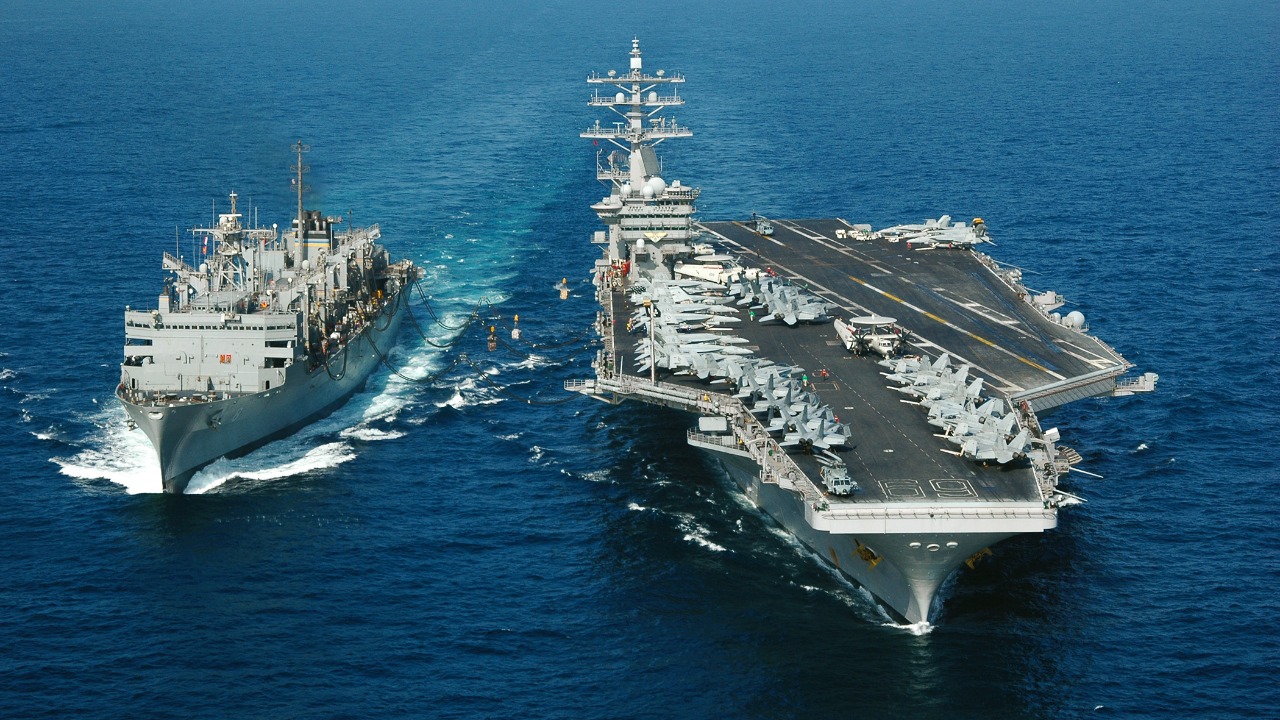
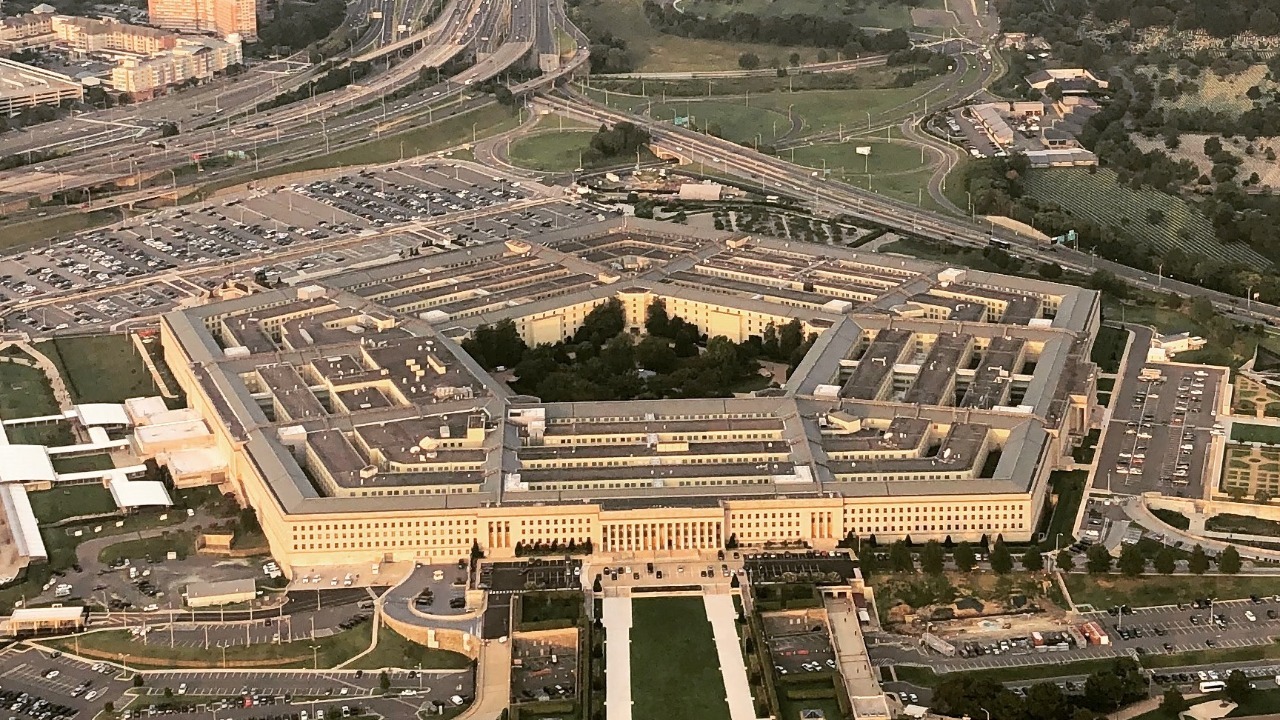
The Pentagon is warning that China is on track to field a blue-water fleet that could stand shoulder to shoulder with the U.S. Navy by the mid 2030s, reshaping the balance of power at sea. A new assessment of Chinese military power argues that Beijing’s rapid naval buildup, combined with broader “national total war” preparations, is eroding long-held American advantages and raising the risk that a regional crisis could escalate into a direct clash between two near-peer maritime forces.
At the center of the warning is the projection that China could operate as many as nine aircraft carriers by 2035, supported by a growing submarine force and a vast armada of surface combatants. U.S. defense officials say this trajectory, if sustained, would give the People’s Liberation Army Navy the ability to challenge U.S. intervention in the Western Pacific and directly threaten American forces and allies across the Indo-Pacific.
Pentagon’s new China report reframes U.S. vulnerability
The latest annual report to Congress on Military and Security Developments involving the People’s Republic of China describes Beijing as the United States’ “pacing challenge” and stresses that China’s military is now capable of directly threatening the security of Americans. According to coverage of the assessment, the Pentagon concludes that China’s buildup has left the United States “increasingly vulnerable,” particularly in scenarios where Washington might seek to defend Taiwan or support allies in the Western Pacific. Analysts note that this is a shift from earlier eras, when U.S. planners assumed overwhelming maritime superiority and relatively uncontested access to key theaters.
Reporting on the new assessment explains that the Pentagon’s core point is not simply that China is stronger, but that the vulnerability equation has changed for Washington. The report argues that the People’s Liberation Army has developed the capacity to disrupt U.S. forces in the Pacific while absorbing disruption at home, a posture some analysts describe as a form of “national total war” preparation that blends military, economic, and technological mobilization. In this framing, China’s naval expansion is one pillar of a broader strategy to deter or defeat U.S. intervention in the Indo-Pacific, a theme echoed in detailed analyses of how the PLA is positioning to challenge U.S. forces in the region.
Nine carriers by 2035: how China plans to close the flattop gap
One of the most striking elements of the Pentagon’s warning is the projection that China Wants Nine Aircraft Carriers by 2035, a figure that would bring the PLAN’s flattop fleet into the same numerical range as the U.S. Navy’s carrier force. According to reporting on the new Pentagon findings, Chinese planners envision a mix of conventionally powered and more advanced carriers, supported by modern escorts and logistics ships, to sustain continuous deployments across the Indo-Pacific. Analysts say this would give Beijing the ability to project air power far beyond its immediate coastline, complicating U.S. operations from the Philippine Sea to the Indian Ocean.
Additional reporting notes that The United States now warns China’s Navy could field a fleet of nine aircraft carriers by 2035, underscoring how quickly the PLAN’s ambitions have expanded from a coastal defense force to a global presence. At present, the PLAN operates a smaller number of carriers, but the Pentagon’s projection suggests a sustained shipbuilding program and a deliberate effort to match or narrow the U.S. lead in carrier aviation. Observers point out that carriers are only as effective as their air wings, escorts, and logistics chains, yet the report indicates that China is investing across this ecosystem, from advanced fighters to replenishment ships, to make its future carrier groups credible tools of power projection.
Submarines and undersea warfare: challenging U.S. dominance below the surface
While carriers draw the headlines, the Pentagon is equally focused on China To Surpass U.S. Navy In Submarine Strength and the implications for undersea warfare. According to detailed coverage of the Pentagon’s assessment, U.S. officials now expect China’s submarine fleet to outnumber America’s by 2035, even as Beijing improves the quieting, sensors, and weapons on its boats. This projected edge in numbers, combined with growing sophistication, could erode one of the U.S. Navy’s most prized advantages, its long-standing dominance in the undersea domain.
Earlier analytical work on IMPLICATIONS of CHINA’s GROWING UNDERSEA WARFARE CAPABILITIES warned that a more capable Chinese submarine force could pose a credible challenge to U.S. undersea dominance in the near future. The new Pentagon report appears to validate that trajectory, suggesting that China’s investments in attack submarines, ballistic missile submarines, and anti-submarine warfare platforms are designed to complicate U.S. operations across the Western Pacific. For Washington, this raises hard questions about how to protect carrier strike groups, secure sea lines of communication, and maintain a survivable nuclear deterrent in waters where Chinese submarines are more numerous and more capable than in the past.
A navy built for “national total war” and regional denial
Beyond raw ship counts, the Pentagon’s assessment emphasizes that China’s naval buildup is embedded in a wider strategy that some analysts describe as “national total war.” Reporting on this concept explains that Beijing is aligning its industrial base, technology sectors, and civilian infrastructure to support sustained military operations, including at sea. The report cited by Washington-focused coverage argues that the PLA is preparing to fight while absorbing disruption at home, a posture that could allow China to endure economic or cyber shocks while continuing to contest U.S. forces in the Pacific.
Within this framework, the PLAN is being optimized to deny The United States access to key maritime approaches and to hold U.S. bases and ships at risk. Analyses of the Pentagon’s findings highlight how China’s growing inventory of long-range missiles, integrated air defenses, and maritime strike capabilities are designed to create layered “no-go” zones around its periphery. The navy’s expanding fleet of surface combatants, amphibious ships, and submarines, combined with shore-based systems, supports a strategy of anti-access and area denial that could make any U.S. intervention in a Taiwan contingency or South China Sea crisis far more costly and uncertain than in previous decades.
From ship counts to combat power: can China really rival the U.S. Navy?
Even as the Pentagon warns that China’s military expansion poses a direct threat to U.S. Security, defense analysts caution that matching or exceeding U.S. ship numbers does not automatically translate into equivalent combat power. A detailed look at whether a larger Chinese Navy can rival the U.S. Navy notes that Ten years ago many Pentagon experts predicted the Chinese Navy would surpass the U.S. fleet in sheer size, a milestone that has effectively been reached in hull numbers. Yet questions remain about training, combat experience, joint integration, and the ability to sustain operations far from home waters, areas where the U.S. Navy still holds important advantages.
At the same time, the scale and pace of China’s naval buildup are undeniable. One assessment of The PLAN, the People’s Liberation Navy, reports that it currently has 395 surface ships (excluding submarines), a figure that is set to rise further as new destroyers, frigates, and amphibious assault ships enter service. The People, Republic of China Military Power Report, including its Executive Summary and Chapter on the Overview of China’s forces, reinforces the picture of a navy that is modernizing across the board, from command structures to weapons. For U.S. planners, the question is no longer whether China can field a large fleet, but how to adapt strategy, posture, and alliances to deter a PLAN that, by 2035, could match the U.S. Navy in carriers, surpass it in submarines, and operate under a national system geared for prolonged competition at sea.