
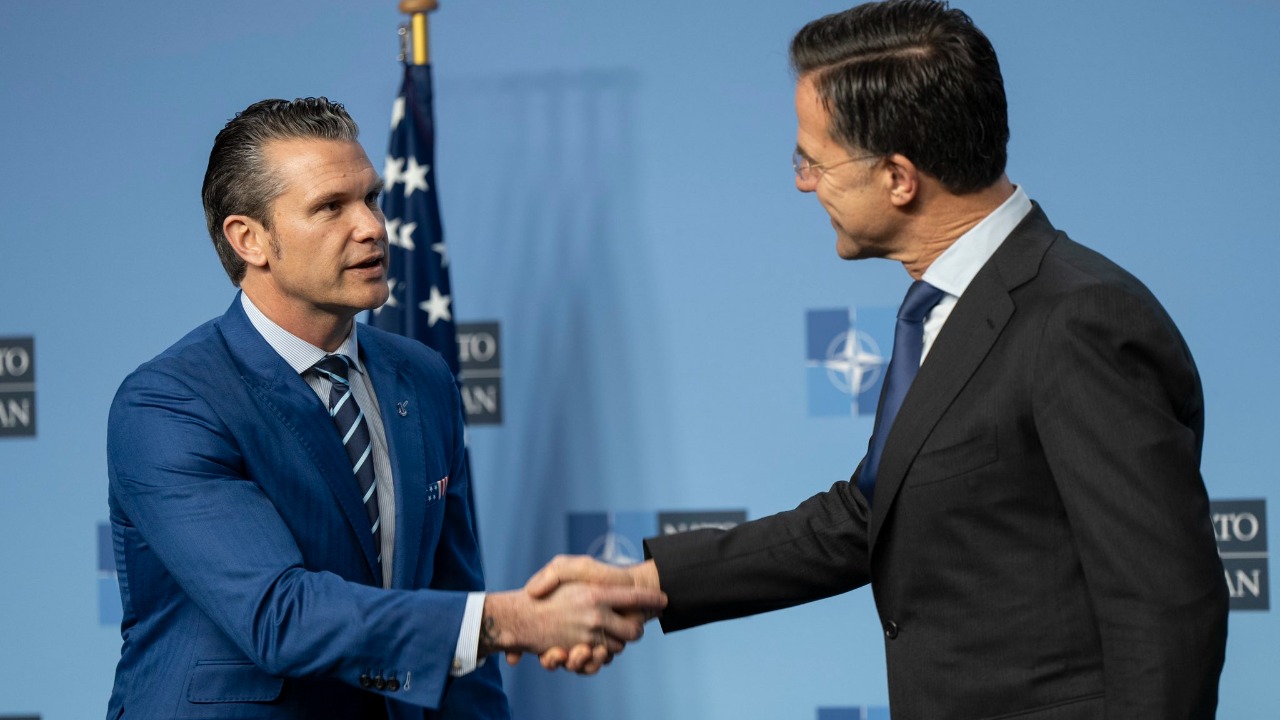
The Pentagon is pressing European governments to treat the United States security guarantee as a backstop rather than the foundation of their defense. Senior officials now speak openly about a future in which NATO’s European members shoulder far more of the military and nuclear burden on their own continent. The shift reflects both Washington’s changing priorities and a growing conviction in Europe that American protection can no longer be taken for granted.
At the heart of this debate is a question of balance. United States planners want to preserve NATO’s deterrent power while freeing American forces and resources for other theaters, especially in Asia, without inviting aggression in Europe. That tension is driving new strategy documents, contentious ministerial meetings, and a renewed argument inside Europe over how far it is prepared to go in building autonomous capabilities, including nuclear ones.
Washington’s new defense hierarchy and the NATO spending squeeze
The Pentagon’s latest strategic guidance makes clear that defending the United States homeland now comes first, followed by deterring China, then dealing with other regional threats, and only after that sustaining broader alliance commitments. The 2026 National Defense Strategy, or NDS, lists four priorities in that order and speaks of deterring China “through strength” while also “supercharging” America’s defense industrial base, a framing that leaves little doubt where Washington expects to focus its finite attention and resources. That hierarchy is echoed in a Pentagon document that sets out how the United States will concentrate mostly on its own territory and on priorities closer to home, while signaling that allies should expect less routine military support from Washington in the future.
This strategic reframing is not occurring in a vacuum. At the 2025 NATO Summit in The Hague, Allies agreed that the longstanding target of spending 2 percent of gross domestic product on defense should be treated as a floor rather than a ceiling, and committed to invest more in deployable forces, high-readiness units, and other defense- and security-related spending. That political signal was reinforced when members of the North Atlantic Treaty Organization endorsed a new national spending benchmark that aligns with this higher ambition and reflects pressure from Washington for Europeans to field more capable forces of their own. The message from the Pentagon is that a stronger European pillar inside NATO is no longer a long-term aspiration but an operational requirement.
From advisory seats to shared burdens inside NATO
The pressure for change is also visible inside NATO’s own machinery. Earlier this year, the Pentagon moved to cut United States participation in some NATO advisory groups that focus on emerging domains of warfare, a step that officials described as part of a broader adjustment of how Washington allocates personnel and attention. The Pentagon’s decision to scale back in these specialist bodies, rather than in frontline commands, is a pointed signal that Europeans will be expected to generate more of the intellectual and policy heavy lifting that shapes alliance doctrine. It also reflects political instructions from Washington to reduce lower-priority NATO engagements so that senior officers and civilians can be reassigned to tasks more directly tied to the United States national priorities.
United States officials are pairing these bureaucratic shifts with more direct messages to their counterparts. Elbridge Colby, a Pentagon strategist who serves as the Defense Department undersecretary for policy, told NATO defense ministers that he saw a “reframing and a real, genuine commitment” in 2025 as Europeans began to internalize that many of the risks in their neighborhood now “belong to Europeans” themselves. That argument is reinforced by the 2026 National Defense Strategy document itself, which formalizes the four-tier priority list and sets out how the Pentagon intends to resource those goals over time. In practice, NATO capitals can no longer assume that the United States will automatically fill every capability gap or chair every working group.
Europe’s nuclear debate moves from taboo to agenda item
Nowhere is the call for a less United States–dependent NATO more sensitive than in the nuclear field. Elbridge Colby, who is also identified as the US undersecretary of defense for policy at the Pentagon and a key architect of the United States defense strategy, has urged European allies to think more seriously about how nuclear deterrence on their continent could be organized if Washington were less directly involved. His comments land in a context where several European leaders have already begun to float ideas about a European nuclear deterrence arrangement that would sit alongside, or potentially one day partially replace, the current system of United States nuclear sharing. Those proposals range from closer integration of French and British forces with NATO planning to more ambitious suggestions of a jointly governed European nuclear capability.
The debate is no longer confined to think tank seminars. With the war in Ukraine about to enter its fifth year and Moscow viewed as an increasing threat by its European neighbors, political leaders from the continent have been speaking more openly about the need to rely less on United States defense guarantees and to consider new arrangements, including discussions about a European nuclear deterrence. At the same time, NATO Secretary General Mark Rutte has insisted that “nobody” is contemplating fully replacing the American role as the “ultimate guarantor” of allied security, warning that any move toward independent nuclear forces would raise serious concerns about proliferation and instability. The result is a delicate balancing act, in which European governments seek more agency without triggering a destabilizing nuclear arms race inside their own alliance.
From spending targets to real capabilities
For Washington, the ultimate test of whether NATO can function with a lighter United States footprint will be measured not in communiqués but in hard capabilities. The alliance’s own data on defense expenditures show that while some European members have met or exceeded the 2 percent of gross domestic product benchmark, others still lag despite the political commitment to treat that figure as a minimum. Meeting that target in accounting terms is only the starting point. The Pentagon wants more investment in munitions stockpiles, air and missile defenses, and the logistics networks that would allow European forces to move quickly across borders in a crisis, so that fewer American units need to be permanently stationed on the continent.