
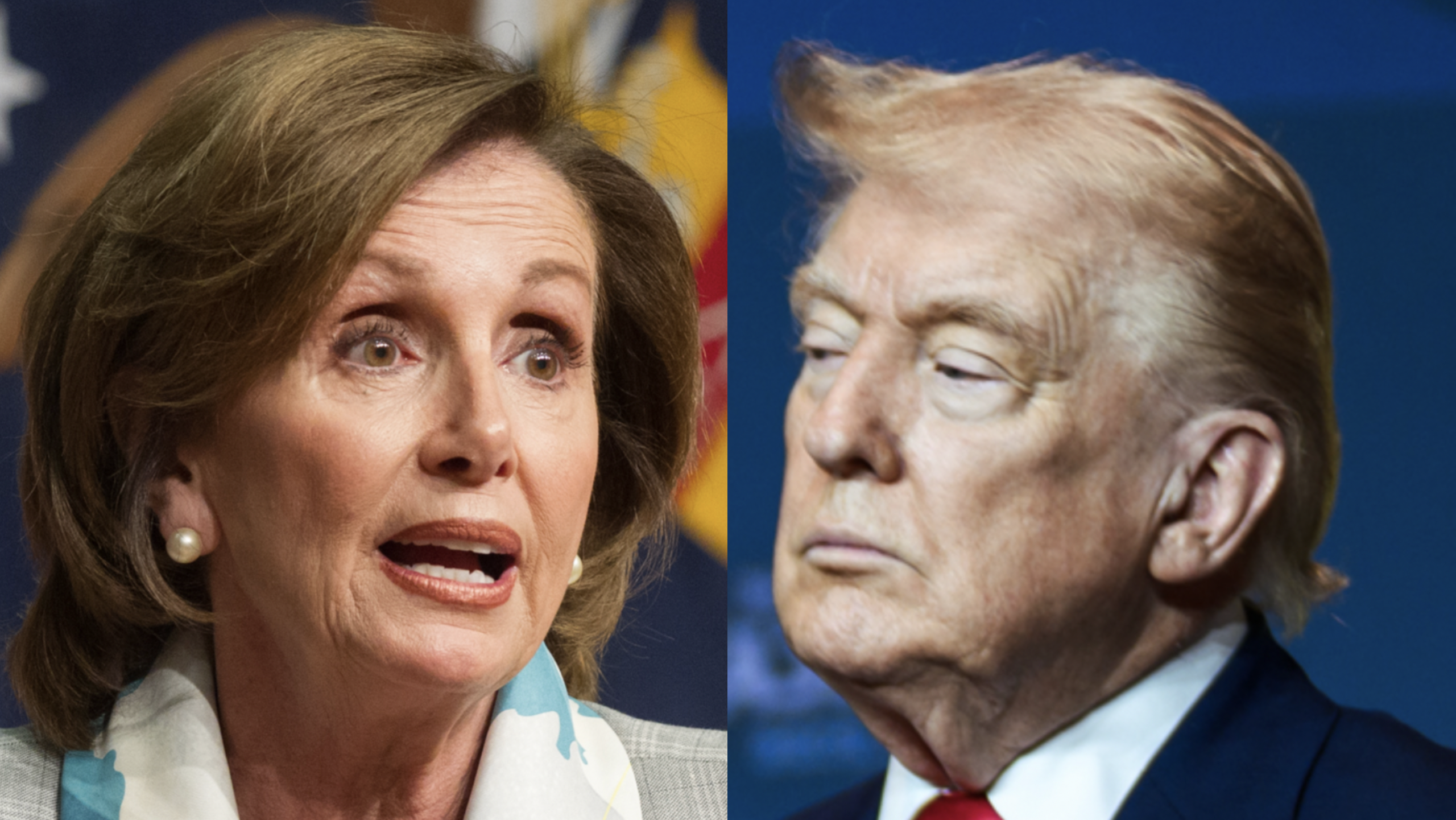
House Speaker Nancy Pelosi on Sunday accused the Trump administration of running a “corrupt” scheme to reward political allies and punish opponents through the federal budget, days after court filings showed the administration admitted it canceled billions of dollars in grants to states based solely on how they voted in the 2024 election.
In a post on X published at 9:03 a.m. on July 26, 2026, Pelosi wrote in full: “Every American deserves a government that serves the people, not one that deprives them of resources based on how they voted. Punishing Americans for their political views is a cruel and corrupt abuse of the public’s trust.” The post was published on Pelosi’s official X account, @SpeakerPelosi.
Responding to a Court Admission
Pelosi’s statement came in direct response to a New York Times investigation published July 24, which revealed that federal officials had conceded in court documents that the administration terminated more than 280 Biden-era clean energy grants “based solely” on political criteria — specifically, whether the recipient state was represented by Democrats and had voted for Kamala Harris in 2024.
The cancellations, totaling more than $7.5 billion, were first announced in October and publicly framed by the administration as a cost-cutting measure targeting wasteful spending. Office of Management and Budget Director Russell T. Vought characterized the move at the time as eliminating “Green New Scam funding to fuel the Left’s climate agenda,” according to the Times’ reporting on his social media statement.
But the newer court filings tell a different story. A lawyer for the Energy Department reportedly conceded that, “with one exception,” every one of the 284 terminated grants had a recipient location in a state that backed Harris in 2024 and is represented by two Democratic senators — and that none were cut for “any programmatic, statutory, cost-reduction or performance-based factor,” according to the court documents cited by the Times.
Grants Left Untouched in Republican States
The Times reporting also found that the Energy Department had originally recommended canceling more than 600 grants across states represented by both parties, but the administration ultimately spared hundreds of similar grants in states that had voted for Trump — even when those grants had been flagged for the same cost or performance reasons cited elsewhere.
Affected projects reportedly included electrical grid upgrades in California and Oregon, methane-leak reduction efforts in Colorado, and clean hydrogen fuel hubs spanning California and the Pacific Northwest. Several grant recipients have since sued the administration in an effort to have their funding restored, setting up the broader legal fight that produced this month’s court admissions.
A Pattern of Statements on Government “Weaponization”
Sunday’s post is consistent with statements Pelosi and other Democratic leaders have made throughout Trump’s second term accusing the White House of using federal spending as a political weapon rather than a neutral function of government. House Democratic leadership has repeatedly framed grant cancellations, funding freezes, and agency restructuring as efforts to reward loyalty and punish dissent rather than genuine fiscal reform.
Senator Patty Murray of Washington and Representative Marcy Kaptur of Ohio, the top Democrats on their chambers’ respective energy appropriations panels, issued a joint statement addressing the same court filings, calling the politically driven cuts “outright un-American” and stating that the administration had “corruptly abused their power to kill good jobs and punish hard-working families because of their political views,” according to the Times.
Contradicting Sworn Testimony
The court filings also appear to conflict with earlier congressional testimony from Energy Secretary Chris Wright, who told a House hearing in June that no cancellation decisions were politically motivated. A department spokesman, Ben Dietderich, defended Wright’s testimony to the Times, arguing that Wright had been distinguishing between the agency’s initial review process and the separate decision of when to publicly announce specific cancellations, and denied any contradiction existed.
The Energy Department had previously conceded in two separate federal court cases that politics served as a “primary reason” for other grant terminations, according to the Times. In those earlier cases, U.S. District Judge Amit P. Mehta ruled that the agency had improperly canceled more than a dozen grants. The latest admission, however, is described as more detailed and far-reaching than those prior rulings.
Broader Regulatory Push Raises Stakes
The controversy arrives as the administration finalizes new federal rules that would give Trump’s political appointees expanded authority over more than $1 trillion in annual federal grant funding, with the power to block or revoke money that does not align with administration priorities. The rules, expected to be completed by October, would also impose new restrictions on grant recipients’ political activities and public statements.
Devin O’Connor, a senior fellow at the left-leaning Center on Budget and Policy Priorities and a former Biden administration official, told the Times that the willingness to be “that blatant” in the court filing should raise concern about how the administration would apply a rule granting it even broader discretion over federal grant-making nationwide.
The proposed regulation has drawn opposition from antipoverty organizations, arts groups, city governments, law enforcement officials, and scientific researchers, who have submitted thousands of public comments warning it could jeopardize critical government services. The White House has defended the changes as necessary to ensure, in Vought’s words during recent congressional testimony reported by the Times, “democratic control of the spending that is going out.”
What a House Flip Would Mean
Pelosi’s statement also lands amid a shifting political landscape ahead of the November 2026 midterms. As of Sunday, Kalshi prediction markets place Democrats’ odds of retaking the House at 84%, compared with roughly 14% for Republicans retaining control — among the largest margins prediction markets have shown for either chamber this cycle.
A Democratic-controlled House would give the party subpoena power and committee chairmanships needed to investigate the grant cancellations more aggressively, including the authority to compel testimony from officials like Wright and Vought and to demand the full discovery record the administration avoided turning over in the current litigation. It would also give Democrats leverage to block or reshape the administration’s pending grant-oversight rule through the appropriations process, rather than relying solely on the courts to check it.
Republicans currently hold a narrow majority in the chamber, and control of the House will determine whether oversight of federal spending decisions like the ones described in the Times’ reporting continues to run primarily through litigation, or shifts into the more direct realm of congressional investigations and hearings.
Background
The dispute traces back to last October’s government funding standoff, during which Trump publicly threatened to cut funding to what he described as “Democrat agencies” while Vought announced a series of additional cuts targeting Democratic-led states, according to the Times’ account of that period. The energy grant cancellations were part of that broader pressure campaign.
The White House did not respond to the Times’ request for comment on the court filings. Pelosi’s office had not issued additional statements beyond the July 26 X post as of publication.