
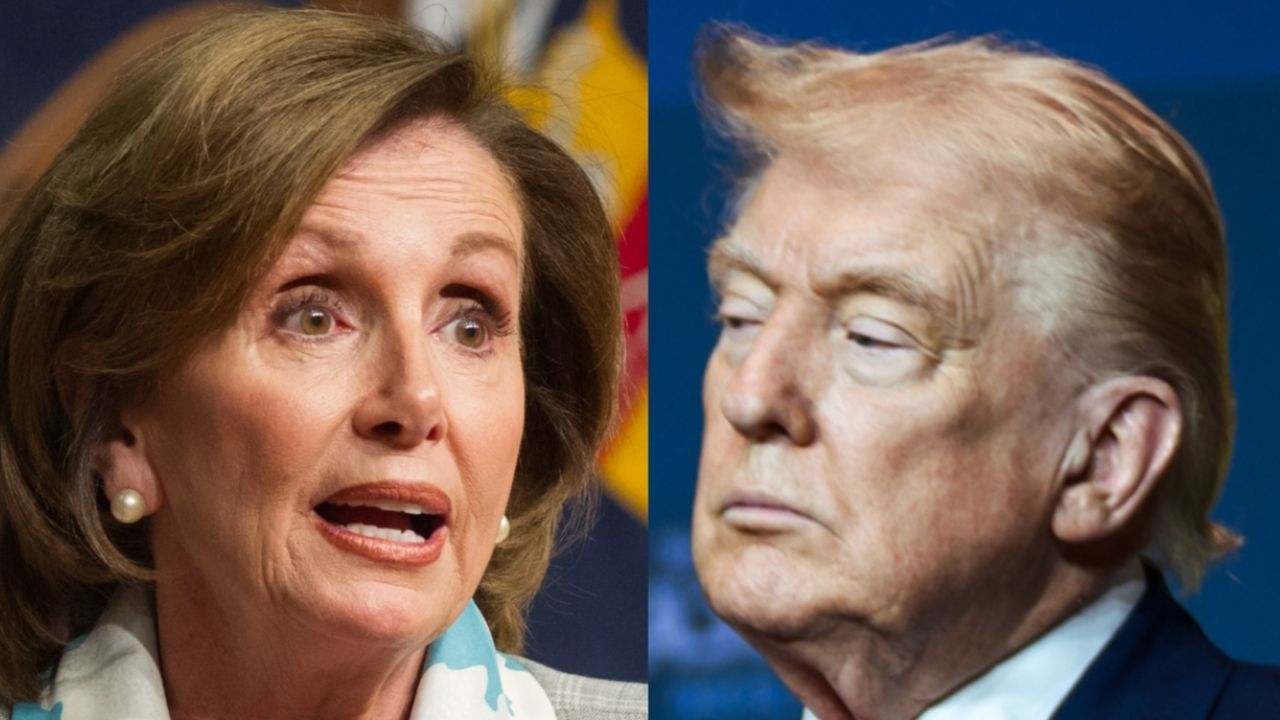
Rep. Nancy Pelosi (D-Calif.), the former House Speaker and one of the most prominent Democratic voices on national security, accused President Donald Trump on Wednesday of breaking his promise to lower costs and of driving up prices through a war with Iran she called illegal. She also accused congressional Republicans of enabling it. The post came on the day new federal data showed inflation accelerating, fueled largely by war-driven energy costs, less than three weeks before the midterm elections.
The Full Post
Pelosi published her message on X at 3:57 p.m. ET on Wednesday, October 14, 2026. Her complete post reads:
“Trump promised lower costs. Instead, inflation is climbing and working families are struggling to make ends meet.
His illegal war in Iran and his reckless tariffs are driving up prices while spineless Republicans in Congress rubber-stamp his disastrous agenda.”
The post is aimed at three targets at once: the president’s pledge on affordability, his military campaign against Iran, and the Republican-controlled Congress that has not stopped it. It also links each of them to prices households pay.
The Inflation Report Behind the Post
Pelosi attached a New York Times report on the day’s Consumer Price Index release, which carried the headline “Soaring Energy Prices Push Inflation Higher.” The Bureau of Labor Statistics reported that the Consumer Price Index for All Urban Consumers rose 0.6 percent in September on a seasonally adjusted basis, after a 0.4 percent increase in August. Over the 12 months ending in September, the all-items index rose 3.7 percent, up from 3.4 percent in the 12 months ending in August.
Gasoline Drives the Increase
The federal data pointed squarely at fuel. The gasoline index rose 9.1 percent in September, accounting for more than half of the monthly increase in the all-items index. The overall energy index climbed 5.2 percent for the month after a 2.1 percent gain in August, and it is up 20.4 percent over 12 months. Gasoline alone is up 34.2 percent over the past year. Airline fares are up 22.4 percent over the same period, and the cost of fuel oil, used to heat many homes in the Northeast, has surged as well.
Core Prices, Wages and the Federal Reserve
Excluding food and energy, the index rose 0.3 percent in September, the same as in August, and 2.6 percent over the year. Food prices were unchanged for the month and are up 2.5 percent over the year. Analysts note that real average hourly earnings have fallen on a year-over-year basis for six straight months, leaving typical workers roughly where they were when Trump returned to office. The Federal Reserve also faces pressure to tighten policy further: the 2-year Treasury yield rose 0.1 percentage point to 4.88 percent after the report. The central bank meets twice more before year’s end, with the next meeting set for late October, days before the midterms. The Fed’s New York president, John C. Williams, said in an interview Tuesday that he still sees one more rate increase as appropriate this year.
How the War Began
The conflict Pelosi references began on February 28, 2026, when Trump announced “major combat operations” against Iran in joint U.S.-Israeli strikes on military, government and infrastructure targets. A ceasefire was later announced and then extended, but talks have not produced a peace agreement. The war has also disrupted global energy markets, which is the channel through which it reaches American gas pumps and, by extension, the inflation figures released Wednesday.
Pelosi’s Early Warning on Congress
Pelosi’s objection to the military action predates the current war. After the June 2025 U.S. strikes on Iran, she said Trump “ignored the Constitution” by acting without congressional authorization, and demanded answers on an operation she said endangered American lives and risked further escalation. Days later she announced her cosponsorship of H.Con.Res.40, a war powers measure to remove U.S. forces from hostilities with Iran. She said the administration had to fulfill the constitutional requirement that a president come to Congress before going to war.
War Powers Fights on the House Floor
When the current war began, Pelosi took the argument to the House floor. On March 5, 2026, ahead of a House vote on an Iran war powers resolution, she delivered remarks defending the separation of powers, and her office titled the speech with the line that “The Constitution Should Not Be A Casualty” of a shortcut to war. On April 16, ahead of another vote on the resolution, she said Article One of the Constitution gives Congress the power to declare war. She accused Trump of going to war “without a plan, without a strategy, without an exit plan,” and she said the cost of the war was running into the billions of dollars while the president argued that child care could not be funded.
The 25th Amendment Statement
In a separate statement, Pelosi responded to Trump’s threat to eliminate Iranian civilization. She quoted the president’s words: “A whole civilization will die tonight, never to be brought back again.” She said Trump’s instability was “more clear and dangerous than ever.” She said that if the Cabinet was unwilling to invoke the 25th Amendment and “restore sanity,” Republicans had to reconvene Congress to end the war.
Pelosi on the Iran Nuclear Deal
Pelosi has also tied the current crisis to Trump’s first-term decision to withdraw from the 2015 nuclear agreement. In a statement on May 8, 2026, marking eight years since that withdrawal, she described the move as a “misguided and uninformed campaign promise.” She praised the Joint Comprehensive Plan of Action as a multilateral agreement that verifiably prevented Iran from obtaining a nuclear weapon.
Prices at the Pump
Gas prices have been central to the political fallout. Federal data show gasoline up 34.2 percent over the past year, and the national average has been reported near the high-$4 range at points this year. In May, Trump said he would seek to suspend the federal gas tax to ease the burden. Pelosi’s post puts the blame on the war and tariffs rather than on any single policy lever.
Tariffs and Other Price Pressures
The inflation data show a mixed picture on tariffs, which Pelosi also names. Toy prices rose 4.2 percent in September, while apparel rose 0.3 percent and household furnishings fell 0.2 percent. Computer and related equipment prices are up 9.7 percent over the year, and software prices are up 28.4 percent, which analysts connect partly to the boom in artificial intelligence spending. The report shows tariffs are one of several forces behind price growth, alongside energy costs and the AI buildout.
The Midterm Stakes
The midterm elections are scheduled for November 3, 2026, and affordability has been a central theme of the campaign. On the prediction market Polymarket, traders currently put the odds of Democrats winning the House at 91 percent. Pelosi’s reference to “spineless Republicans in Congress” fits a broader Democratic strategy of tying GOP lawmakers to the president’s war and economic record ahead of the vote.
What Comes Next
The next Consumer Price Index release is scheduled for November 10, one week after the election, so voters will head to the polls with Wednesday’s figures as the latest read on prices. Trump has said the war could end before or shortly after Election Day, though no deal has been reached. For now, Pelosi’s post frames the choice for voters in blunt terms, with a president she says broke his promise on costs and a Republican Congress she says is not stopping him.