
Pakistan’s new “SMASH” anti-ship ballistic missile has arrived wrapped in superlatives, from claims of Mach‑8 speed to talk of a game changing threat to aircraft carriers in the Indian Ocean. The test has clearly raised the stakes in South Asia’s naval competition, but the real impact depends less on the headline word “hypersonic” and more on what the system can reliably do in combat conditions. Early evidence suggests a meaningful boost to Pakistan’s deterrence at sea, yet not the decisive technological leap some online commentary suggests.
What SMASH already changes is the psychology of operating large surface ships near Pakistan’s coast, especially for India’s navy. What it does not yet do, based on available data, is overturn the regional balance of power or guarantee a carrier killing capability at long range. That gap between perception and proven performance is where the strategic story now sits.
What Pakistan says SMASH can do
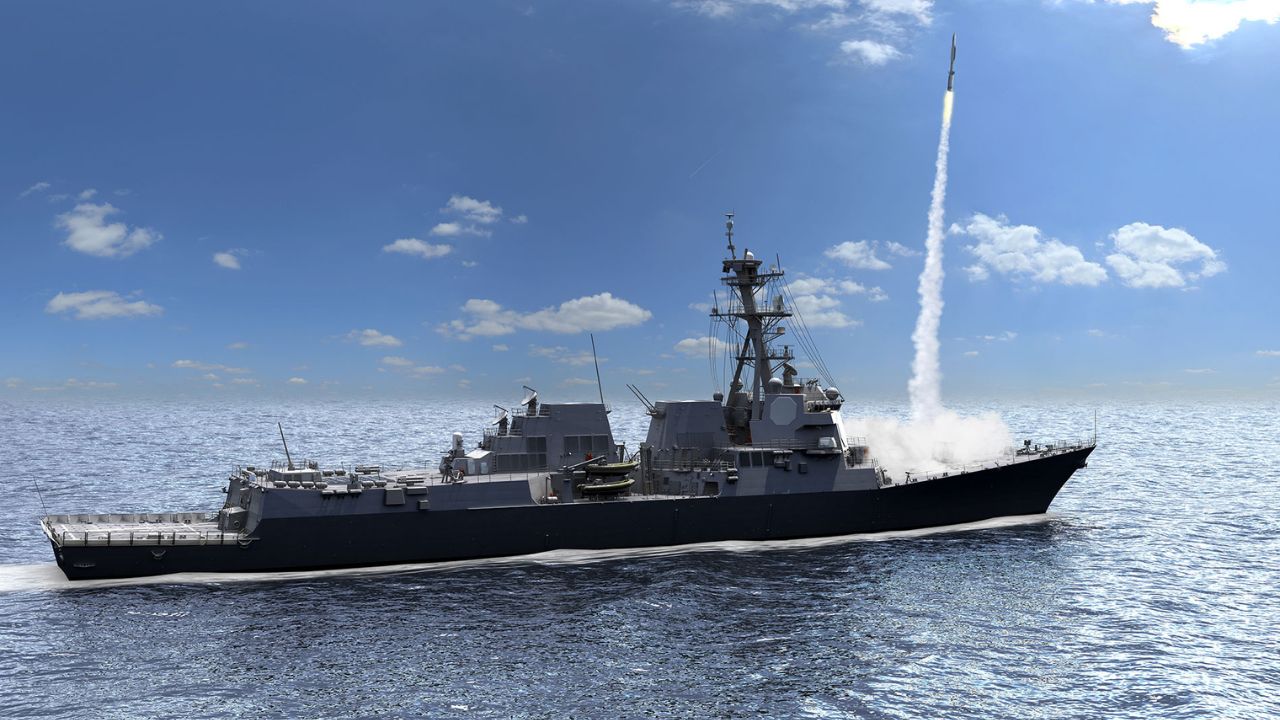
Pakistan presents SMASH as a fast, sea launched anti ship ballistic missile that can threaten high value surface targets at significant range. Official descriptions frame it as an indigenously developed system that gives the Pakistan Navy a way to strike enemy ships from its own vessels rather than relying only on aircraft or shore based batteries, a shift that extends naval reach and complicates an adversary’s planning. Reporting on the latest test notes that the missile is explicitly designed for anti ship use and that the Pakistan Navy Conducts New Test of SMASH Ship Launched Anti Ship Ballistic Missile as part of a broader effort to strengthen maritime strike options.
Supportive analysis describes SMASH as a Mach‑8 class weapon, placing it firmly in the hypersonic bracket if those figures are accurate. One detailed study of Pakistan Navy’s SMASH argues that the missile can reach around Mach in its terminal phase, that it follows a ballistic path rather than a low flying cruise profile, and that it is intended to hold major surface combatants at risk in the Indian Ocean. In this telling, SMASH is not just another missile but a tool for Anti Access and Area Denial, giving Pakistan a way to threaten ships that might otherwise feel secure operating at distance from its coastline.
What the tests actually showed
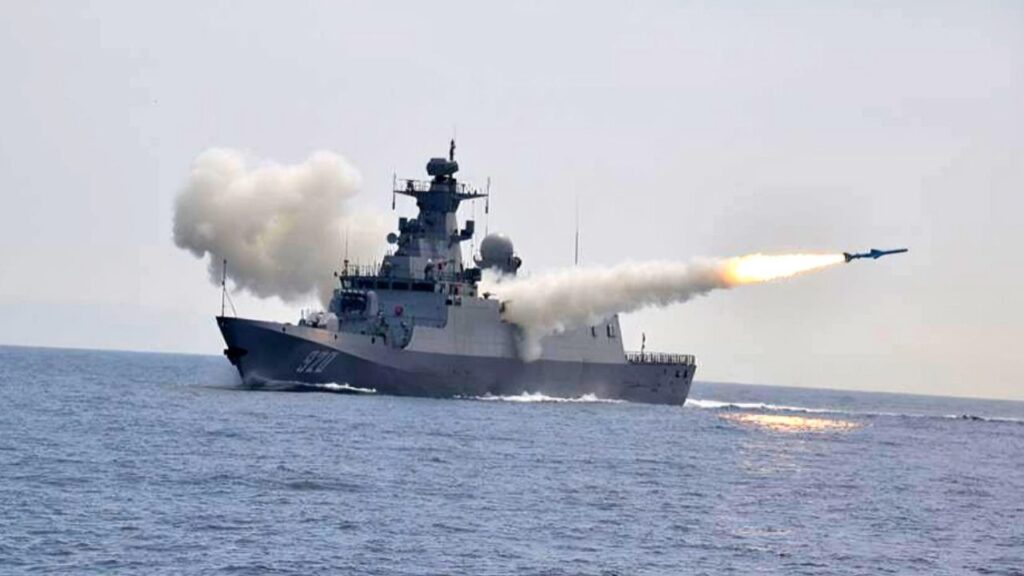
The public test footage and official statements have been enough to demonstrate that Pakistan can fire a ballistic type anti ship weapon from a surface Ship, but they have not settled the debate over its true performance. Video of the launch and impact, circulated widely after the Pakistan Navy Conducts New Test of SMASH Ship Launched Anti Ship Ballistic Missile, confirms a successful firing sequence and a hit on a target at sea. It also shows a classic ballistic arc rather than the low altitude, sea skimming profile associated with many anti ship cruise missiles, which aligns with descriptions of SMASH as an ASBM.
However, independent analysts caution that the available imagery and telemetry do not prove the more ambitious claims. One technical breakdown of Pakistan tests new hypersonic anti ship missile notes that while Pakistan and its supporters describe SMASH as hypersonic, the evidence in open sources is not sufficient to verify sustained Mach‑8 flight or advanced maneuvering in the terminal phase. Another skeptical assessment, titled SMASH‑2 or Smokescreen? Pakistan’s New Missile Test, points out that the missile’s baseline appears to be a known ballistic design with a range around 350 kilometers, and that there is no public data confirming the longer ranges or sophisticated seeker performance sometimes mentioned in social media posts.
Hype, skepticism and the “hypersonic” label
The word “hypersonic” has become a powerful political and psychological tool, and SMASH sits squarely in that narrative. Pakistani commentators and some regional outlets have described the missile as a Mach‑8 carrier killer that instantly redefines the naval balance in South Asia, with one enthusiastic account arguing that the test has “instantly redefined South Asia’s naval power balance” by giving Pakistan a capability that can threaten large warships across the northern Indian Ocean. That framing leans heavily on the idea that any weapon labeled hypersonic is inherently unstoppable and strategically decisive.
Other analysts push back hard on that storyline. A detailed review under the heading Pakistan’s ASBM Claim Dismissed as Overstatement argues that Social Media Claims Are Overblown and Not Supported by Official Data, stressing that Multiple online videos and social media commentary have extrapolated far beyond what the test actually showed. A companion piece, Pakistan’s ASBM Claim Sparks Debate, traces The History and Technical Context of the SMASH System and concludes that while Pakistan has likely fielded a credible ASBM, the available evidence does not support the most dramatic claims of a fully mature hypersonic carrier killer. In this view, SMASH is an evolutionary step that fits within known ballistic missile technology rather than a revolutionary leap into the class of highly maneuverable hypersonic glide vehicles.
Deterrence and A2/AD in the Indian Ocean
Where there is more consensus is on the deterrent effect of SMASH, even if its top speed and range remain contested. Strategic analysis focused on How SMASH affects regional stability argues that such weapons Compresses defenders’ decision timelines by reducing the warning time between launch and impact, especially if fired from ships that can maneuver closer to an adversary’s operating areas. That compression forces navies like India’s to invest more in early warning, layered missile defense, and dispersed formations, all of which raise the cost and complexity of operating near Pakistan’s waters.
Broader commentary on detterence and the Indian Ocean notes that the public rollout and tests of SMASH, as reported, mark a notable step for Pakistan’s maritime strike capabilities and add to Pakistan’s A2/AD toolkit. One Bottom line assessment argues that SMASH raises the cost and complexity of any attempt to project power into Pakistan’s near seas and the wider northern Arabian Sea, even if it falls short of the most ambitious performance claims. In practical terms, that means Indian planners must now assume that surface groups approaching Pakistan’s coast could face a fast ballistic threat in addition to existing cruise missiles and submarines, which complicates any scenario involving coercive naval pressure.
Does SMASH really change the balance of power?
On paper, a ship launched ASBM that can reach hypersonic speeds and strike at several hundred kilometers would be a major shift in South Asia’s naval equation. In practice, the impact of SMASH looks more incremental than transformational. The Google AI Mode research notes that SMASH is part of a growing integrated system for Pakistan’s navy, not necessarily a sudden technological leap, and that while it adds a credible, fast attack threat, it does not by itself overturn India’s overall naval advantage. Even if SMASH reaches the lower end of the claimed range spectrum, around 350 kilometers, it primarily strengthens Pakistan’s ability to contest waters relatively close to its coastline rather than dominate the wider Indian Ocean.
Where SMASH does matter is in the realm of risk and perception. The same research highlights that analysts generally agree on increased deterrence and strategic signaling: the missile’s existence, and the publicity around its tests, signal Pakistan’s intent to challenge maritime dominance and to raise the stakes for any adversary contemplating operations near its shores. That effect is already visible in commentary that describes the test as having redefined South Asia’s naval power balance and in Pakistani discussions that frame SMASH as a key part of a layered maritime defense. Yet the most dramatic claims of hypersonic, carrier killing power remain unverified based on available sources, and several technical reviews suggest that some of the rhetoric around SMASH is inflated strategic messaging rather than a precise reflection of its capabilities.
What to watch next
The real test of SMASH’s significance will come not from slogans but from how Pakistan integrates it into doctrine, training and deployments. If the Pakistan Navy routinely embarks SMASH on frontline ships, conducts realistic exercises against simulated carrier groups, and pairs the missile with reliable targeting networks, then even a modest range and speed profile could pose a serious operational challenge. Analysts who study Pakistan Navy’s SMASH emphasize that Pakistani defense planners are focused on raising deterrence levels from seaborne threats, and that SMASH is intended to work alongside submarines, cruise missiles and coastal defenses as part of a broader A2/AD posture.
For India and other regional navies, the response will likely involve a mix of technical and tactical adaptation. That could include more emphasis on ballistic missile defense for key ships, greater use of dispersed and unpredictable operating patterns, and investment in intelligence and surveillance to track any Pakistan Navy Conducts New Test of SMASH Ship Launched Anti Ship Ballistic Missile deployments. As with other hypersonic labeled systems, the danger is less that SMASH instantly rewrites the rules of naval warfare and more that misperceptions about its power could fuel arms racing or crisis instability. For now, SMASH looks like a potent signal and a meaningful addition to Pakistan’s deterrent posture, but not yet the region shattering weapon some of its loudest boosters claim.