
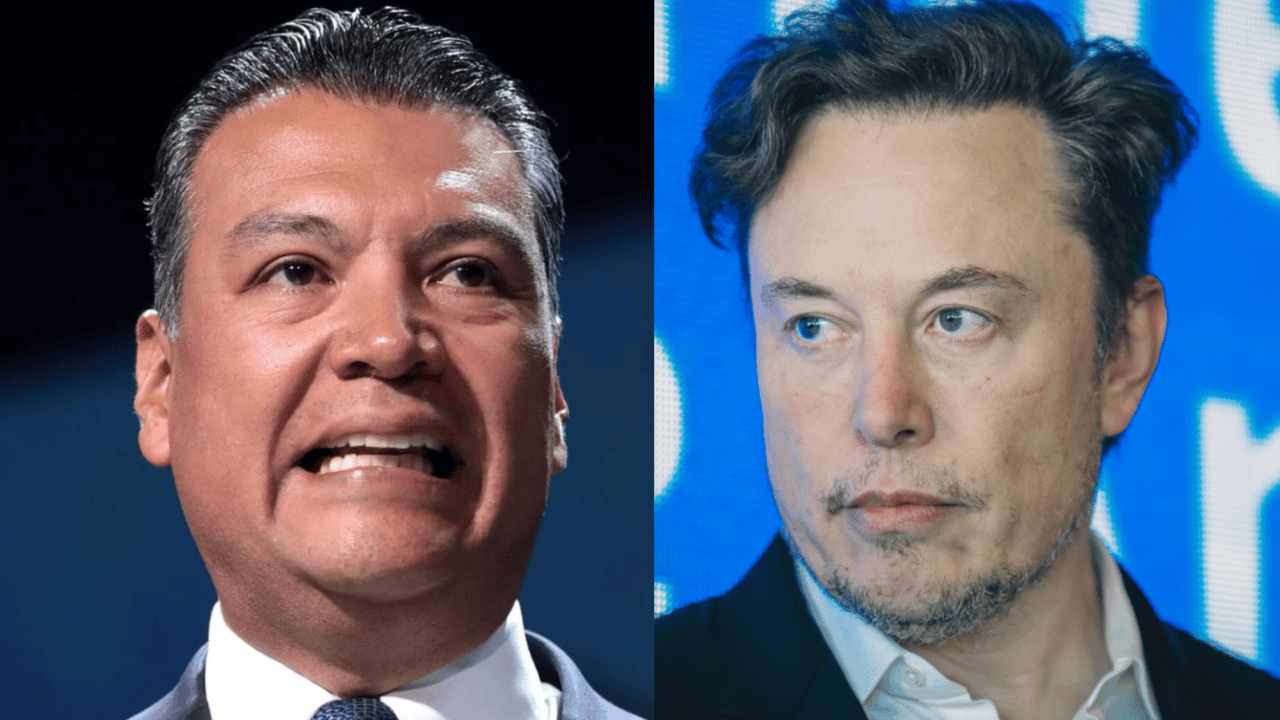
Senator Alex Padilla said Friday that Elon Musk “ADMITTED SpaceX throttled Starlink internet access in Ukraine” and that “new reporting raises serious questions about whether the Starlink outage was used to squeeze more money out of U.S. taxpayers.”
“If true, we’re talking about a trillionaire potentially committing a federal crime to enrich himself,” Padilla wrote. “Worth an inquiry, don’t you think?” The federal-crime allegation is Padilla’s characterization; neither the Justice Department nor any prosecutor has publicly charged Musk or SpaceX over the Ukraine outage.
Padilla’s reference to an admission points to Musk’s own posts. On Oct. 24, Musk wrote on X that Ukraine’s military “violated Starlink terms of service and used it for offensive drone strikes to kill people,” that “that loophole was closed last week,” and that Starshield “is controlled by the US government.” He added that turning Starlink off would collapse Ukraine’s front line “immediately,” calling the line “NOT a threat” but “a statement of fact,” and said SpaceX had “done more to defend Ukraine than any private company on Earth BY FAR.”
On Oct. 14, answering Ukraine’s digital minister, Musk wrote that Starshield systems “are owned and controlled by the US government” and that “[a]ny limits on speed or usage are decided by the US military and ultimately POTUS,” while commercial Starlink “cannot be used for offensive military action.”
Those posts followed mid-October disruptions. The Wall Street Journal reported Oct. 22 that Trump called Musk to personally ask for Starshield capabilities to be restored, and lawmakers have cited public reporting that Musk himself suggested to Trump slowing Ukrainian communications through SpaceX’s systems. Musk’s Oct. 14 and Oct. 24 posts place Starshield limits with the U.S. government and describe the commercial change as closing a terms-of-service “loophole.”
Padilla’s “new reporting” line tracks The Atlantic, which reported that “when U.S. military officials asked SpaceX about the outages in Ukraine, the company advised switching to an upgraded contract to restore Ukraine’s access,” according to U.S. officials who spoke to the magazine. The Atlantic also wrote that in posts on X, Musk “admitted to causing last week’s outages.” Starshield, the military service SpaceX launched at the end of 2022, “costs far more to use than Starlink,” and the U.S. government has paid for much of Ukraine’s service, the magazine reported.
Congressional oversight was already underway. On Oct. 19, Senators Jeanne Shaheen, Richard Blumenthal, Sheldon Whitehouse and Chris Coons wrote SpaceX Vice President of Legal Christopher Cardaci seeking answers about any SpaceX involvement in restricting Ukraine’s Starshield access for devices moving faster than 100 mph, and about the company’s role in Ukraine’s ongoing Starlink access, with answers due by Nov. 2.
On Oct. 22, Blumenthal, ranking member of the Senate Permanent Subcommittee on Investigations, opened a congressional inquiry into Starlink and Starshield, seeking who ordered restrictions, whether Ukraine was notified, and the Defense Department contracts governing the service.
On Oct. 23, Senator Peter Welch and Representative Gregory Meeks led a bicameral letter to Musk demanding answers by Oct. 31 on whether SpaceX throttled access, on whose orders, whether President Donald Trump sought restoration, and who now controls operational decisions. Welch’s office published the letter, joined by Senators Adam Schiff and Michael Bennet and Representatives Jim McGovern and Jason Crow. The lawmakers wrote that while Musk has said limits are “decided by the U.S. military and ultimately POTUS,” public reporting indicates Musk personally brought the slowdown suggestion to Trump, and they cited the Journal’s account of Trump’s restoration call.
Separately, Defense Department Inspector General Platte Moring declined a bipartisan request led by Senators Thom Tillis and Jeanne Shaheen to investigate the Starshield and Starlink slowdowns, directing the senators’ questions to the Air Force and Space Force, according to a letter described by CNN Politics, which said the Associated Press first reported the letter. CNN quoted Shaheen saying it is “concerning that the inspector general has apparently decided not to investigate satellite communication disruptions that Ukraine relies on to protect its civilians,” and quoted inspector general spokesperson Mollie Halpern saying the office “carefully considered the congressional request and determined that the matters raised were best addressed by the Department” and “may reconsider” if new information emerges.
CNN also quoted Serhiy Sternenko, an adviser to Ukrainian President Volodymyr Zelenskyy and a former Ukrainian Ministry of Defense adviser, disputing Musk’s accusation that Ukraine used commercial Starlink for offensive strikes, saying speed restrictions and the service’s unavailability over Russian territory made Ukraine “physically unable to use commercial Starlink” for medium- and long-range strikes into Russia and that Musk’s claim was “not true.”
Padilla framed Musk’s posts and The Atlantic’s upgraded-contract reporting as grounds to ask whether an outage affecting a taxpayer-funded service was leveraged for commercial gain. The Atlantic’s account rests on unnamed U.S. officials, and Musk has said the commercial change closed a terms-of-service loophole and that Starshield is controlled by the U.S. government; Padilla’s “federal crime” language remains his allegation alone.