
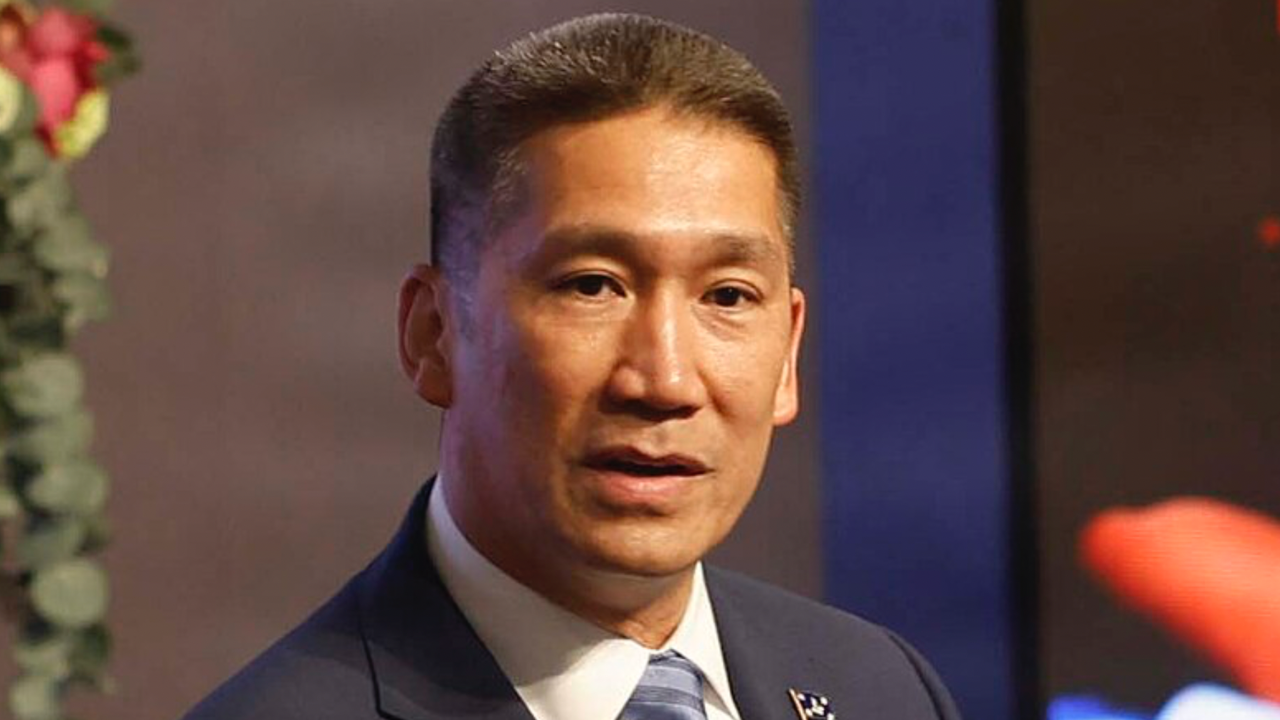
Acting United States Secretary of the Navy Hung Cao issued a lengthy statement on Friday, August 14, 2026, announcing that the USS Abraham Lincoln will soon return home following one of the longest carrier deployments in modern U.S. Navy history, while sharply rejecting media coverage that he said has unfairly portrayed the ship’s sailors and Marines as victims of the extended mission. The statement, posted to X from the official @SECNAV account at 2:39 p.m., came as the nuclear-powered carrier’s nearly nine-month deployment has drawn mounting scrutiny from lawmakers and military families over reports of strained conditions aboard the ship.
The Full Statement
Cao’s post was published in full under the header “Statement from Acting Secretary of the Navy Hung Cao,” and read as follows: “The USS Abraham Lincoln crushed their deployment and will return home soon as part of a planned rotation. Details will come but let me be clear: the safety and security of our Sailors and Marines always comes first. Mission accomplishment. Troop Welfare. This is how we lead. The Lincoln was extended because the mission demanded it. Deployments are hard. Combat operations make them harder. War is hell and normal routines are disrupted. One of the hardest aspects about warfighting beyond knowingly placing our service members in harm’s way is that even with the best planning and communication, change and uncertainty will always be in play. Our success depends on how we adapt. Sailors and Marines are expected to dig deep—and they always do. A leader’s responsibility is to take care of their people the best they can while balancing mission requirements. During this deployment we have seen both: the job is getting done and our leaders are taking care of their people. Unfortunately, the media are trying to paint our warriors as victims. Not only is that dishonest but it takes away the focus on the enemy and the threat it poses against our nation, people, and way of life. Here is the truth— 266 days deployed. 200 days in a combat zone. 10,000+ sorties. 1.5M lbs. of ordnance dropped. And retention rates on the ABE are amongst the highest of all carriers. It is also true— A small number of mental health cases were treated with no loss of life. Meal plans were adjusted when fresh resupply was unavailable, without a single meal being missed. Calls home were limited when the operational threat was too high. There is no question our young men and women have been pushed to their limits—but they have never broken. They are rightly tired—but have never been out of the fight. However, it is clear, knowing the whole story, our force and their families are not victims. They are the epitome of American strength and resilience. So, when the USS Abraham Lincoln pulls into the pier, join me and stand proudly with a grateful heart and give our Sailors and Marines the Hero’s Welcome they deserve. Semper Fi and Hooyah.”
A Deployment Measured in Records
Cao’s statement leaned heavily on numbers to make his case that the Lincoln’s deployment, though extended well beyond its original schedule, should be remembered as a mission success rather than a story of hardship. According to the acting secretary, the carrier and its strike group logged 266 total days deployed, with 200 of those days spent operating inside an active combat zone. During that stretch, air wings assigned to the Lincoln flew more than 10,000 combat and combat-support sorties and released over 1.5 million pounds of ordnance. Cao also pointed to retention figures aboard the ship, saying they rank among the highest of any carrier in the fleet — a statistic he presented as evidence that morale had held up despite the length of the mission.
The USS Abraham Lincoln departed Naval Base San Diego on November 21, 2025, and its deployment has since stretched past nine months, making it one of the longest carrier deployments since the Cold War era.
Rejecting the “Victims” Narrative
The core of Cao’s message centered on his objection to how national media outlets have characterized the crew’s experience. “Unfortunately, the media are trying to paint our warriors as victims,” Cao wrote, arguing that such coverage “is dishonest” and “takes away the focus on the enemy and the threat it poses against our nation, people, and way of life.” He went on to draw a distinction between acknowledging hardship and framing the crew as casualties of Navy mismanagement, writing that “our force and their families are not victims” and instead calling them “the epitome of American strength and resilience.”
At the same time, Cao did not dispute that difficulties had occurred aboard the ship. He acknowledged that “a small number of mental health cases were treated,” though he emphasized there was “no loss of life.” He also confirmed that meal plans “were adjusted when fresh resupply was unavailable” but maintained that “not a single meal” was missed, and that calls home to families “were limited when the operational threat was too high.”
Sailor Overboard Incident and Reported Conditions
Cao’s statement arrived amid a wave of reporting on conditions aboard the Lincoln, including accounts from crew members’ families describing supply shortages, spoiled food and mold in shipboard living spaces. At least one sailor reportedly went overboard during the deployment and was recovered roughly an hour later, prompting the Navy to open an investigation; other outlets have reported additional incidents involving crew members going overboard during the extended mission. Those accounts helped fuel the congressional and public scrutiny that Cao’s statement was widely seen as responding to.
Trump Says Deployment Wasn’t Long Enough
Speaking to reporters on Friday, President Donald Trump addressed the controversy directly and offered a notably different emphasis than the concerns raised by lawmakers and families. Trump said he did not believe the Lincoln had been deployed “nearly long enough,” and he disputed suggestions that family members of the more than 5,000 crew members aboard the carrier were worried about their loved ones’ well-being. Trump also confirmed that the USS George Washington is being sent to relieve the Lincoln in the Middle East, telling reporters, “It’s being replaced with another very similar ship.”
Trump echoed Cao’s criticism of the press coverage, telling reporters that outlets “are trying to paint our warriors as victims. Not only is that dishonest, but it takes away the focus on the enemy and the threat it poses against our nation, people, and way of life” — language that closely mirrored the acting Navy secretary’s own statement released later that day.
Hegseth Calls Reports “Completely Misrepresented”
Defense Secretary Pete Hegseth had previewed the administration’s response a day earlier, telling reporters on Thursday that conditions aboard the carrier had been “completely misrepresented” by the press. “Some deployments are longer than others, and I have more respect and gratitude for those sailors than anybody,” Hegseth said. “What they do in those high seas and those austere conditions with less port calls, it’s incredible.”
Congressional Scrutiny Intensifies
The Lincoln’s deployment has drawn bipartisan attention on Capitol Hill. On August 12, lawmakers sent a formal letter to Hegseth and Cao raising what they described as serious concerns about the increasing length of carrier strike group deployments and requesting detailed information about the Lincoln’s mission. The letter argued that the carrier’s extended time at sea “raises broader questions about the Navy’s ability to sustainably generate carrier forces while preserving servicemember well-being, maintenance schedules, fleet readiness, and the capacity to respond to future contingencies.”
Lawmakers from both parties have separately called for investigations into how conditions aboard the ship deteriorated over the course of the deployment, and Navy families have pressed service leaders directly over what they describe as inadequate communication about mental health resources available to the crew.
Cao’s Background and Rise to Acting Secretary
Cao, a Vietnamese-born former Navy captain who served from 1989 to 2021, including deployments during the Afghan War, Iraq War and Somali Civil War, became acting secretary of the Navy on April 22, 2026, succeeding John C. Phelan. He had been serving as the 35th under secretary of the Navy since October 2025 after his Senate confirmation. Cao was previously the Republican nominee for Virginia’s 10th congressional district in 2022 and ran for the U.S. Senate in Virginia in 2024.
What Comes Next for the Lincoln
Cao’s statement did not provide a specific date for the Lincoln’s return, saying only that “details will come” and that the ship would return “soon as part of a planned rotation.” Previous reporting has indicated the carrier and its crew will ultimately be homeported in Bremerton, Washington. In the meantime, the USS George Washington is en route to the Middle East to take over the Lincoln’s role in the U.S. Central Command area of responsibility, according to a U.S. official who spoke to reporters Friday.
Closing his statement, Cao called on Americans to greet the returning crew with fanfare rather than sympathy framed around hardship, writing, “when the USS Abraham Lincoln pulls into the pier, join me and stand proudly with a grateful heart and give our Sailors and Marines the Hero’s Welcome they deserve.” He signed off with the traditional Navy and Marine Corps phrases “Semper Fi and Hooyah.”