

In the winter darkness of occupied Norway, a small team of resistance fighters set out to cripple a single industrial plant and, in doing so, helped reshape the nuclear balance of the Second World War. Operation Gunnerside, the Allied sabotage of the Vemork heavy water facility, has since become a case study in how a handful of specialists can alter the trajectory of a global conflict. The raid did not end the war on its own, but it decisively undercut Germany’s most plausible path to an atomic weapon.
The story of Gunnerside is not just a tale of daring on skis. It is also a lesson in how intelligence, science and special operations converged around one strategic target, and how the destruction of barrels of heavy water in a remote valley in Telemark County rippled forward into the nuclear age.
Why heavy water at Vemork mattered to Hitler’s bomb project
By the early 1940s, physicists on both sides of the conflict understood that an atomic weapon would require either highly enriched uranium or a reactor that could breed plutonium. Germany’s nuclear effort, centered on figures such as Werner Heisenberg, explored reactor designs that depended on heavy water as a moderator to slow neutrons and sustain a chain reaction. That made the Norsk Hydro plant at Vemork, which produced heavy water as a byproduct of fertilizer production, a uniquely valuable asset for Germany’s program. According to accounts of the Norwegian heavy water sabotage, once Germany occupied Norway, the Vemork output was effectively commandeered for the Nazi nuclear effort.
Allied intelligence gradually concluded that if Adolf Hitler was to obtain an atomic bomb, Vemork’s heavy water would almost certainly be involved. Analyses of the German program, including later technical reconstructions, have emphasized that heavy water was one of the few materials Germany could realistically scale up under wartime conditions. That assessment drove London and Washington to treat the plant as a strategic target, on par with major industrial facilities in Germany itself. Detailed histories of Operation Gunnerside describe how Allied planners saw the destruction of the Vemork stockpile as a way to delay, or even derail, any German reactor that might produce weapons-grade material.
From failed attempts to a Norwegian-led commando plan
Before Gunnerside, the Allies tried and failed to neutralize Vemork. An earlier British-led mission, Operation Freshman, ended in disaster when gliders crashed in bad weather and surviving commandos were captured and executed. That failure underscored both the difficulty and the importance of the target. In response, planners shifted toward a Norwegian-led approach that would rely on local knowledge, skis and stealth rather than large airborne insertions. A small advance team, later known as the Grouse group, was inserted into the mountains to reconnoiter the area and prepare for a follow-on strike, as detailed in accounts of sabotaging the Nazi bomb.
The second attempt, Operation Gunnerside, built directly on Grouse’s groundwork. Lieutenant Fenrik Ronneberg, a young Norwegian officer, selected a small team of specialists for the mission, including men such as Joachim Rønneberg, Knut Haukelid, Fredrik Kayser and Birgr Strømsheim, who combined military training with deep familiarity with the Norwegian terrain. As later described in a review of audacious raids, the plan called for the new arrivals to ski in, link up with the Grouse team, and then infiltrate the plant on foot. The shift from a large, British-heavy force to a compact Norwegian unit reflected a hard lesson: success would depend on blending into the landscape and moving with the speed and discretion of local resistance fighters.
The night infiltration into Vemork
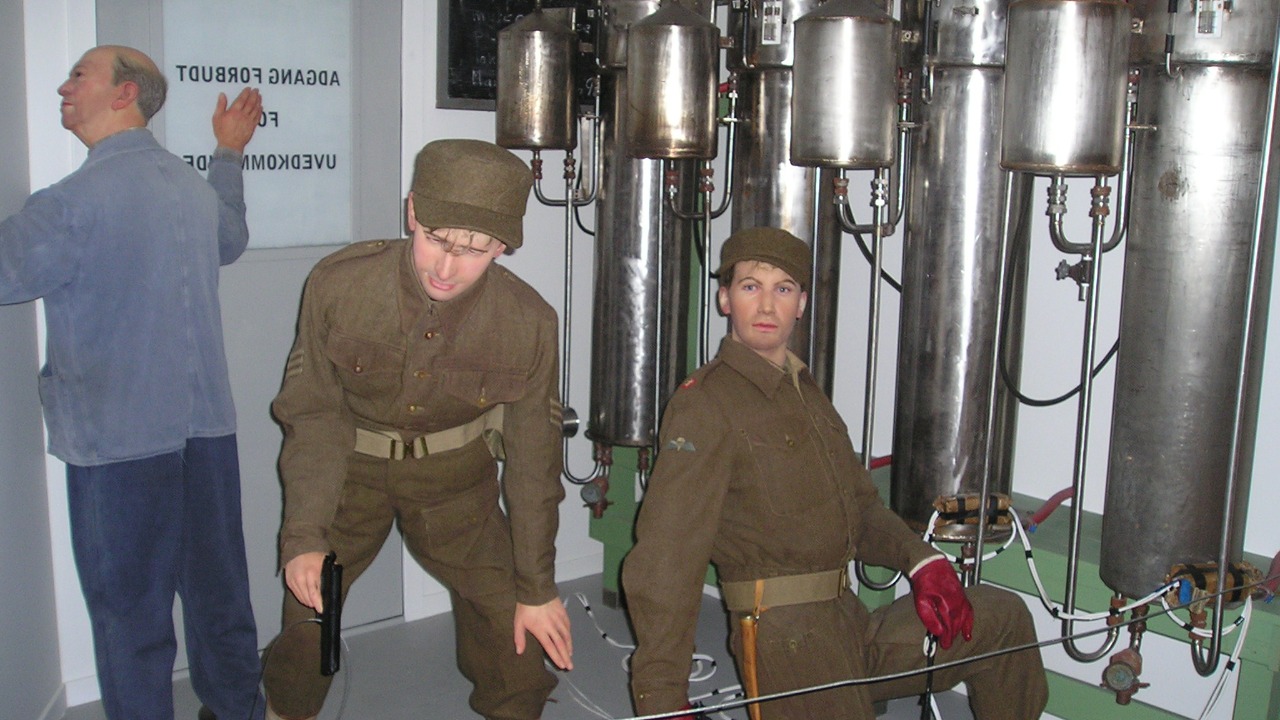
On the evening of February 27, 1943, nine Norwegian commandos infiltrated the German-held Vemork plant under cover of darkness and deep snow. Rather than attempt a frontal assault across the heavily guarded bridge, they descended into the ravine below, crossed an icy river, and climbed up the far side to reach a less protected access point. Detailed narratives of On the Vemork raid describe how the team cut through a fence, slipped into the basement and navigated by memory and dim light to the heavy water electrolysis cells. The operation relied on precise timing and quiet movement, since German guards were stationed throughout the complex.
Once inside the target room, the saboteurs placed explosive charges on the critical equipment and set time fuses, taking care to avoid civilian casualties. They left a British-made submachine gun at the scene to signal that the attack was an Allied military operation, not an act of local terrorism that might provoke reprisals against Norwegian workers. According to reconstructions of the heavy water war, the explosions destroyed key cells and spilled heavy water, rendering the plant’s production capability unusable in the short term. Remarkably, the team accomplished this without firing a shot, a point emphasized in later coverage of the daring Norwegian commando raid.
Escape on skis and a manhunt by 3,000 Nazis
After the charges detonated, the saboteurs faced a second, equally perilous phase: escape. The team split up, with some skiing hundreds of kilometers across the Hardangervidda plateau toward neutral Sweden and others remaining in Norway to continue resistance work. German forces reacted with fury, launching a massive search effort through the snowbound countryside. One detailed account of Operation Gunnerside describes how the Men Pursued by 3,000 Nazis used their superior skiing skills, local contacts and winter survival training to evade capture in conditions that would have killed less prepared soldiers.
The scale of the manhunt reflected how seriously the German command took the attack. Yet despite checkpoints, patrols and harsh reprisals in occupied areas, none of the Gunnerside saboteurs were caught in the immediate aftermath. Their survival preserved a core of experienced operatives who could continue to support the Norwegian resistance and provide first-hand accounts of the raid to Allied intelligence. Later retellings, including video features on how 11 men on skis may have prevented Adolf Hitler from getting the atomic bomb, have highlighted the escape as a feat of endurance that matched the audacity of the infiltration itself.
How the raid reshaped Germany’s nuclear prospects
The immediate effect of Gunnerside was to halt heavy water production at Vemork and destroy existing stocks, forcing Germany to rebuild equipment and reconsider its logistics. Technical assessments of the Norwegian attack on heavy water argue that the sabotage deprived the Nazis of the quantities needed to bring a reactor to criticality within the war’s timeframe. Even when the plant resumed limited operations, subsequent Allied bombing and pressure on transport routes kept production and shipment below what German scientists had originally envisioned. A later Allied air raid, for example, saw about 145 bombers drop more than seven hundred 1,000-pound high explosive bombs on the facility and surrounding area, as described in a detailed analysis of the real heroes of Telemark, further complicating any German attempt to restore full capacity.
When Germany eventually tried to move remaining heavy water stocks out of Norway, Norwegian resistance fighters struck again, sinking the ferry SF Hydro on Lake Tinn and sending barrels of the precious liquid to the bottom. The sequence of operations, from Gunnerside’s basement charges to the ferry sabotage, effectively closed off the heavy water route for Hitler’s scientists. Meanwhile, the United States pushed ahead with the Manhattan Project, which successfully tested a weapon on July 16, 1945, as noted in retrospectives on How Norwegian commandos kept the Nazis from a bomb. Historians continue to debate exactly how close Germany ever came to a working device, but the consensus in these sources is clear: without reliable access to heavy water from Vemork, the Nazi atomic project never had a realistic chance to catch up.
The legacy of Operation Gunnerside in nuclear history
In the decades since the war, Operation Gunnerside has been memorialized in films, television dramas and popular histories that emphasize its cinematic elements: skis cutting across moonlit snow, explosives wired in a humming plant, a silent escape into the mountains. Yet its deeper legacy lies in how it demonstrated the strategic value of targeting enabling technologies rather than finished weapons. By focusing on the heavy water that reactors required, Allied planners struck at a bottleneck in Germany’s nuclear infrastructure. Analyses of the sneak attack by Norway’s skiing soldiers underline how a single, well-chosen industrial target can have outsized effects on a technologically complex weapons program.
That lesson continues to resonate in contemporary debates over nuclear proliferation and counterproliferation strategy. Modern efforts to slow or stop nuclear programs, from sanctions on specialized materials to cyber operations against enrichment facilities, echo the logic that guided the saboteurs at Vemork: it is often more effective to disrupt the supply chain and infrastructure than to wait for a weapon to appear. The Norwegian heavy water sabotage, including Operation Gunnerside, stands as an early and striking example of that approach, showing how a small group of Norwegians operating in Telemark County helped shape the nuclear landscape that followed.