
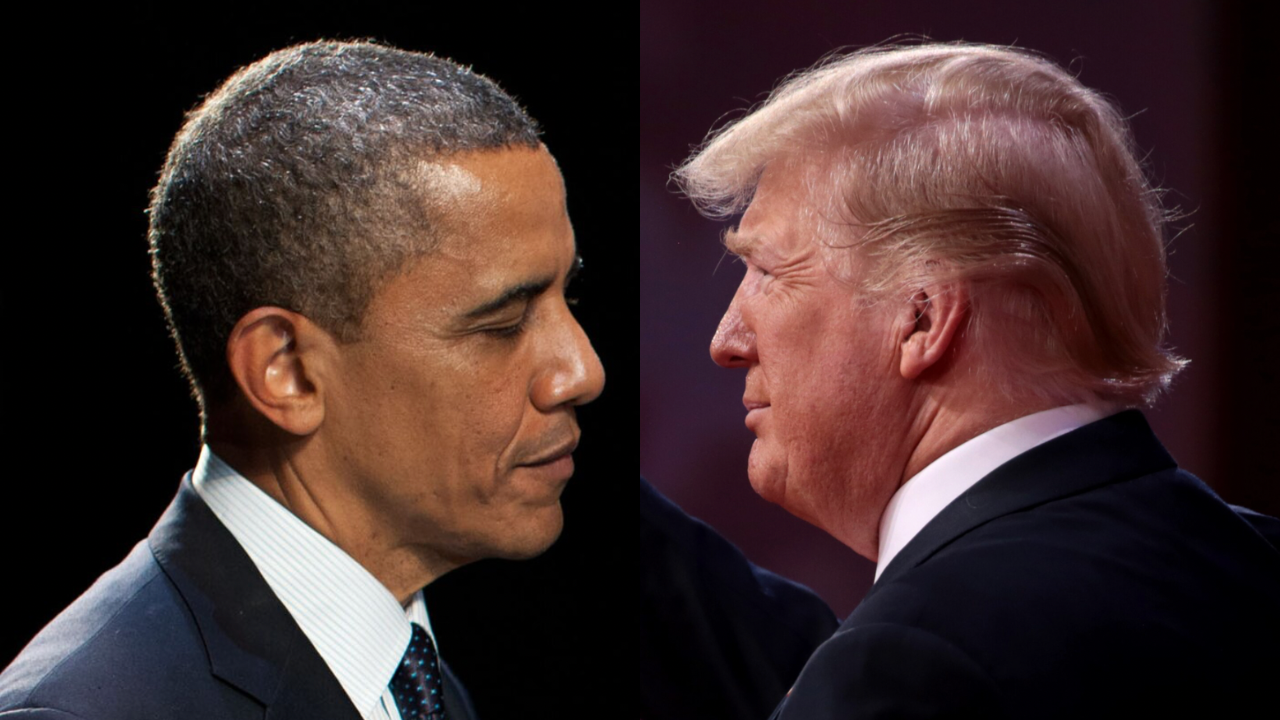
Former President Barack Obama said the next administration will face a significant task in reversing the expansion of executive power under the current presidency, telling Stephen Colbert that norms which once governed how the White House interacted with the Justice Department, the military, and the broader federal government have eroded to a point where codifying them into law may now be necessary.
“There are a couple that I followed even though they weren’t law,” Obama told Colbert during a pre-taped interview at the Obama Presidential Center that aired May 5, 2026 on CBS. “I want us — we’re going to have to do some basic work to return to this basic norm, and now we probably have to codify it.”
The Interview
The remarks came during a nearly 25-minute conversation taped in April at the Obama Presidential Center in Chicago, which opens to the public on Juneteenth. Colbert, whose final Late Show episode is set for May 21, 2026, asked Obama directly what powers he believed the president should not have — a question that drew a methodical and pointed response.
Obama did not mention President Donald Trump by name throughout the interview. But his concerns were aimed squarely at what critics have described as an accelerating consolidation of power in the executive branch under the current administration — across the Justice Department, the Pentagon, and the president’s personal finances.
The Attorney General Is Not the President’s Consigliere
Obama opened his answer on executive power with the Justice Department, describing the norm of prosecutorial independence as one of the foundations of democratic governance that he followed — and that he now believes must be written into law.
“The White House shouldn’t be able to direct the attorney general to go around prosecuting whoever the president wants to prosecute,” Obama said. “The idea is that the attorney general is the people’s lawyer. It’s not the president’s consigliere.”
He described his own working relationship with Attorney General Eric Holder as an example of how the boundary should be maintained. “I would consult with Eric Holder, my Attorney General, all the time around broad policy issues,” he said. “But that’s different than, ‘Who do you charge? What case do you bring?'”
According to CBS News, the Trump Justice Department has attempted to prosecute several of the president’s adversaries, including former FBI Director James Comey and New York Attorney General Letitia James.
The Military Must Answer to the Constitution — Not the President
Obama’s second area of concern was the politicization of the armed forces. He argued that while a president is constitutionally the commander-in-chief, a long-standing set of unwritten norms has historically prevented the White House from demanding personal loyalty from military officers.
“Don’t politicize our military,” Obama said. “There had been a whole series of norms that were in place to ensure that you weren’t trying to make that military loyal to you as opposed to the Constitution and the people of the United States. We’re going to have to find mechanisms to restore that.”
The warning arrived against the backdrop of a sweeping purge of senior Pentagon leadership. The Trump administration and Defense Secretary Pete Hegseth removed a string of four-star officers, service chiefs, and judge advocates general beginning in early 2025 — including General Charles Q. Brown Jr., the Chairman of the Joint Chiefs, who was fired less than two years into his term. Critics described the moves as an effort to install officers who would prioritize loyalty to the president over independence and constitutional obligation.
Pardons and Personal Enrichment
Obama identified two additional areas where he believes executive norms have broken down — pardons and presidential conflicts of interest — and called for both to be addressed by whoever follows the current administration.
“Maybe don’t pardon people who’ve given you a bunch of campaign contributions,” Obama said. “Or invested in your businesses.”
On financial conflicts, he was equally pointed. “A good policy that I’d like to see followed is that the president of the United States shouldn’t have a bunch of side hustles that various companies and foreign entities can invest in,” he said.
Codifying What Was Once Assumed
The through-line of Obama’s argument was that the American democratic system was built on the assumption that presidents would observe certain limits voluntarily — and that those limits have now been tested to the point where voluntary observance can no longer be relied upon.
“We can survive a lot — bad policy, funky elections, there’s a bunch of stuff that, you know, we can overcome,” Obama said. “We can’t overcome the politicization of our justice system, the awesome power of the state.”
As one post-interview analysis noted, Obama’s argument was not simply that norms had been broken — it was that relying on norms alone was no longer sufficient. His call to codify them into law reflected a broader conclusion that the informal architecture of democratic restraint had proven more fragile than anticipated.
Obama made the remarks during one of Colbert’s final broadcasts before The Late Show concludes its eleven-year run. The Obama Presidential Center, built on the South Side of Chicago, opens to the public on June 19, 2026.