
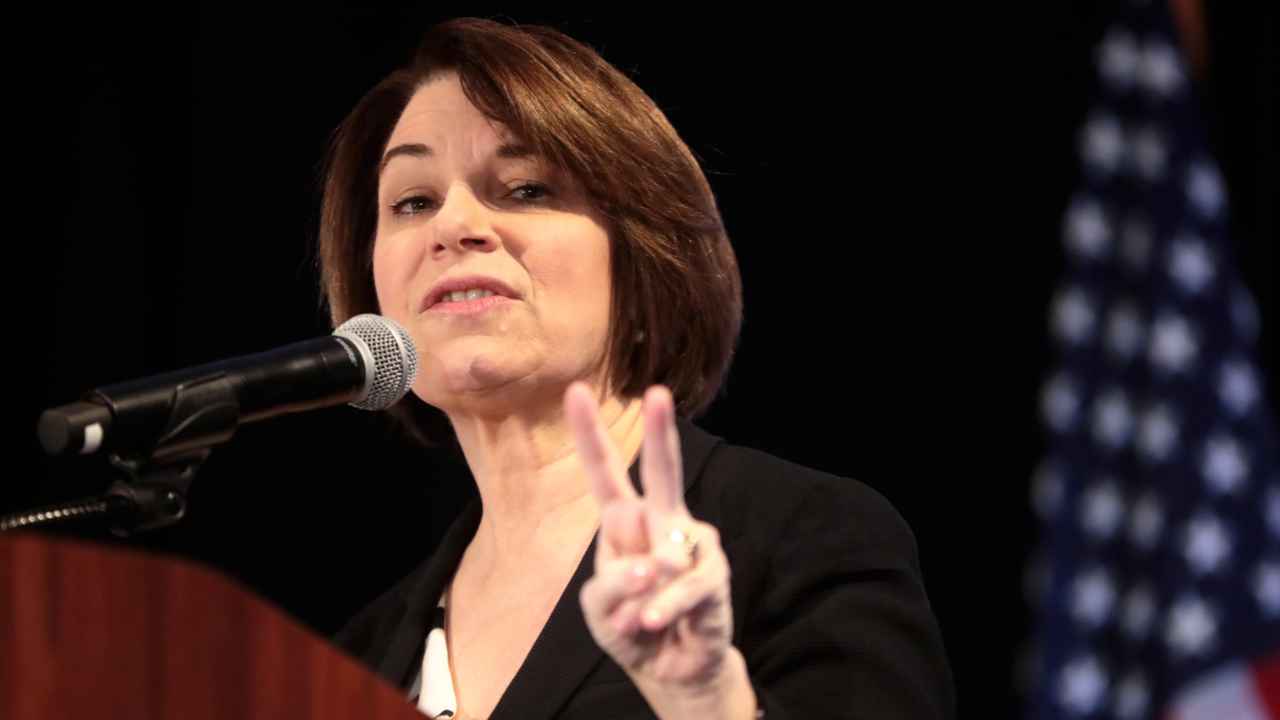
The National Rifle Association accused Minnesota Gov.-elect Amy Klobuchar of seeking to restrict firearm ownership after the Democratic senator pledged to make gun-safety legislation a priority of her incoming administration, renewing a dispute over semiautomatic firearms, ammunition magazines and Second Amendment rights.
In a November 6 post on X, the organization criticized Klobuchar’s remarks at a post-election news conference, accusing her of pursuing firearms restrictions under the justification of public safety.
“In one of her first acts as governor-elect, Sen. Amy Klobuchar affirmed that she will go after Minnesotans’ firearms under the guise of ‘safety,'” the NRA wrote.
The post included an 11-second video of Klobuchar discussing her legislative priorities following her November 3 election victory.
“Well, I think the gun safety bill is going to get passed, and I am so excited to be working with the leaders on this, and it certainly should be one of our top priorities,” Klobuchar said.
The NRA’s statement represents its characterization of the governor-elect’s intentions. Klobuchar has described the legislation as an effort to prevent gun violence, strengthen school safety and protect children.
The disagreement concerns a firearms package that passed the Minnesota Senate in May 2026 but failed to become law after stalling in the state House of Representatives.
NRA Opposes Proposed Restrictions on Semiautomatic Firearms
The NRA’s criticism follows its opposition to Minnesota Senate File 4067, a comprehensive public-safety proposal containing restrictions on certain semiautomatic firearms and ammunition magazines.
The organization’s lobbying arm previously criticized the legislation, arguing that its restrictions would affect firearms commonly possessed by law-abiding Americans.
In a May 4 statement, NRA Institute for Legislative Action opposed the Senate package, including its proposed restrictions on semiautomatic rifles, ammunition magazines and privately manufactured firearms.
The NRA has long opposed bans on commonly owned semiautomatic firearms and limits on ammunition magazine capacity, arguing that such regulations burden constitutionally protected conduct.
Its November 6 post placed Klobuchar’s promise to advance the legislation within that broader dispute over the rights of firearm owners.
The organization did not identify a newly enacted law in its post. Klobuchar’s comments concerned legislation she expects lawmakers to consider after she takes office.
What Minnesota’s 2026 Gun Safety Proposal Would Have Done
The legislation at the center of the debate is Senate File 4067, which the Minnesota Senate approved on May 4, 2026, by a vote of 34–33.
The proposal would have expanded the state’s definition of semiautomatic military-style assault weapons to include certain rifles, pistols and shotguns meeting specified operating and design criteria.
It also would have regulated large-capacity ammunition magazines, defined as devices capable of accepting more than 17 rounds, subject to specified exceptions.
Under the Senate-approved version, federally licensed firearms dealers generally would have been prohibited from selling covered semiautomatic military-style assault weapons and large-capacity magazines.
Private transfers could continue under specified conditions, including documentation showing that the item had been legally acquired and certified as required.
The proposal would also have required people possessing covered firearms or magazines to request certification of ownership from the Minnesota Bureau of Criminal Apprehension.
Certification would need to be renewed every three years. The Bureau of Criminal Apprehension would be authorized to charge a fee for certification and renewal.
Under the proposed enforcement provisions, possession of an uncertified covered firearm or magazine could constitute a gross misdemeanor, with felony penalties for subsequent violations.
The requirements and exceptions are detailed in the Minnesota Senate’s official bill summary and the Senate-approved legislative text.
The proposal would not have required every existing owner to surrender a covered firearm immediately. It would, however, have imposed new requirements for continued lawful possession and restrictions on sales and transfers.
Those provisions are central to the NRA’s opposition because they would regulate both future firearm transactions and weapons already lawfully owned by Minnesota residents.
SF 4067 did not become law during the 2026 legislative session. The provisions described above are not new legal requirements resulting from Klobuchar’s election.
Minnesota Gun Owners Caucus Warns of Renewed Legislative Fight
The Minnesota Gun Owners Caucus separately criticized the prospect of renewed firearms legislation following the November elections.
In a November 5 statement, the organization warned that Democratic control of the governor’s office and Legislature would make it easier for lawmakers to advance restrictions resembling those proposed in 2026.
“An election does not change the Constitution or diminish the rights of law-abiding Minnesotans,” said Bryan Strawser, chairman of the Minnesota Gun Owners Caucus.
Strawser said Klobuchar had signaled her intention to pursue major gun-control legislation less than 24 hours after her election victory.
He pledged that the organization would advocate for firearm owners during the upcoming legislative session and urged supporters to become involved before lawmakers begin considering new proposals.
Rob Doar, president of the Minnesota Gun Owners Law Center, also criticized the prospect of new restrictions and said his organization would continue pursuing legal challenges.
“The Legislature has repeatedly demonstrated little regard for the constitutional limits on its authority to restrict Second Amendment rights,” Doar said.
“We’ve successfully challenged those restrictions in court, and we’ll continue to do so.”
The group’s statement specifically identified the proposed restrictions on rifles, the 17-round magazine threshold and certification requirements for existing owners as matters of concern.
Its opposition reflects the position that the proposed measures would interfere with lawful firearm ownership and could exceed constitutional limits on state regulation.
Klobuchar Says Gun Safety Legislation Should Be a Priority
Klobuchar’s comments came during her first news conference after winning the Minnesota gubernatorial election.
She expressed confidence that lawmakers would approve gun-safety legislation, while acknowledging that the previous Senate package might be revised.
“I’m sure that we’ll make some changes and work with them on it,” Klobuchar said during the broader news conference. “But the basics of that bill, I hope, will remain in place.”
Her published campaign platform supports legislation intended to prevent gun violence, improve school safety and keep firearms away from people considered dangerous.
The platform also emphasizes due process and the rights of lawful gun owners.
The governor-elect’s support for firearms restrictions predates her election. During her tenure in the U.S. Senate, she backed federal legislation addressing background checks, domestic violence and assault weapons.
Her November remarks therefore reflected an existing policy position rather than a newly announced change in her approach to firearms regulation.
Annunciation School Shooting Remains Central to Debate
The proposed legislation emerged amid renewed demands for gun violence prevention measures following the August 27, 2025, shooting at Annunciation Catholic Church and School in Minneapolis.
Two children, Harper Moyski and Fletcher Merkel, were killed in the attack, and 17 other people were injured.
Families affected by the shooting urged Minnesota lawmakers to strengthen firearm restrictions and invest in school safety measures.
The 2026 Senate package included provisions beyond restrictions on semiautomatic firearms and magazines.
It proposed changes to firearm storage requirements, restrictions on certain privately manufactured firearms, revisions to extreme risk protection orders and additional funding for school safety and mental health services.
The Senate’s legislative analysis identified approximately $19 million in proposed school safety aid as part of the package.
Supporters argue that the combination of firearm restrictions, prevention programs and school safety investments could reduce the likelihood and consequences of future attacks.
Opponents argue that the restrictions would burden lawful firearm owners and question whether limits on particular weapons or magazines would prevent such crimes.
These competing assessments remain central to the policy debate. Neither the NRA’s accusation nor Klobuchar’s stated public-safety rationale establishes the effectiveness or constitutionality of the proposed measures by itself.
Earlier Bill Passed Senate but Stalled in House
SF 4067 passed the Minnesota Senate on May 4 by a single vote, according to the official legislative record.
The proposal was supported by Democratic lawmakers and opposed by Republicans, reflecting a narrow partisan divide over the package.
It subsequently stalled in the Minnesota House, where the parties were evenly divided during the 2026 session.
Republican House leader Lisa Demuth opposed the proposed restrictions, and the legislation did not receive final House approval before the session ended.
Demuth later became the Republican gubernatorial nominee but lost to Klobuchar in the November election.
Democratic gains in the same election gave the party control of both legislative chambers beginning in 2027.
That change creates a more favorable political environment for the legislation, but it does not guarantee passage.
Lawmakers must introduce a new bill, consider its provisions through the legislative process and secure approval from both chambers before Klobuchar can sign it.
The precise contents of any 2027 legislation have not been finalized. Changes could affect which firearms are covered, how existing owners are treated and what requirements would apply to transfers and possession.
Second Amendment Questions Could Lead to Litigation
The NRA and Minnesota Gun Owners Caucus have framed their opposition partly around the Second Amendment, which protects an individual right to keep and bear arms.
Supreme Court decisions including District of Columbia v. Heller and New York State Rifle & Pistol Association v. Bruen established important principles governing that right and the historical basis for firearms regulations.
However, those decisions do not automatically establish whether every restriction on semiautomatic firearms or ammunition magazines is constitutional or unconstitutional.
Any challenge to a future Minnesota law would depend on its final wording, the legal arguments presented and the judicial precedents applicable to the specific restrictions.
Gun-rights organizations maintain that restrictions on commonly owned firearms and magazines violate constitutional protections. Supporters contend that states retain authority to regulate firearms within constitutional limits to protect public safety.
The constitutional dispute would therefore remain separate from the political question of whether Minnesota lawmakers have enough votes to enact the legislation.
Gun Rights Groups Prepare for 2027 Legislative Session
Minnesota’s next legislative session is scheduled to begin January 12, 2027, when lawmakers can begin considering new firearms proposals.
The Minnesota Gun Owners Caucus has urged its members to contact legislators and prepare for renewed debate over restrictions on semiautomatic firearms and ammunition magazines.
Klobuchar, meanwhile, has made clear that she intends to work with Democratic legislative leaders to advance a gun-safety package.
The coming debate will determine whether lawmakers retain the principal restrictions in the 2026 Senate proposal, modify them or pursue a different legislative approach.
For the NRA, the governor-elect’s comments provided an early indication that the organization would face another legislative fight in Minnesota.
For Klobuchar, passage would fulfill a campaign commitment to pursue additional measures intended to prevent gun violence.
“I think the gun safety bill is going to get passed,” she said.