
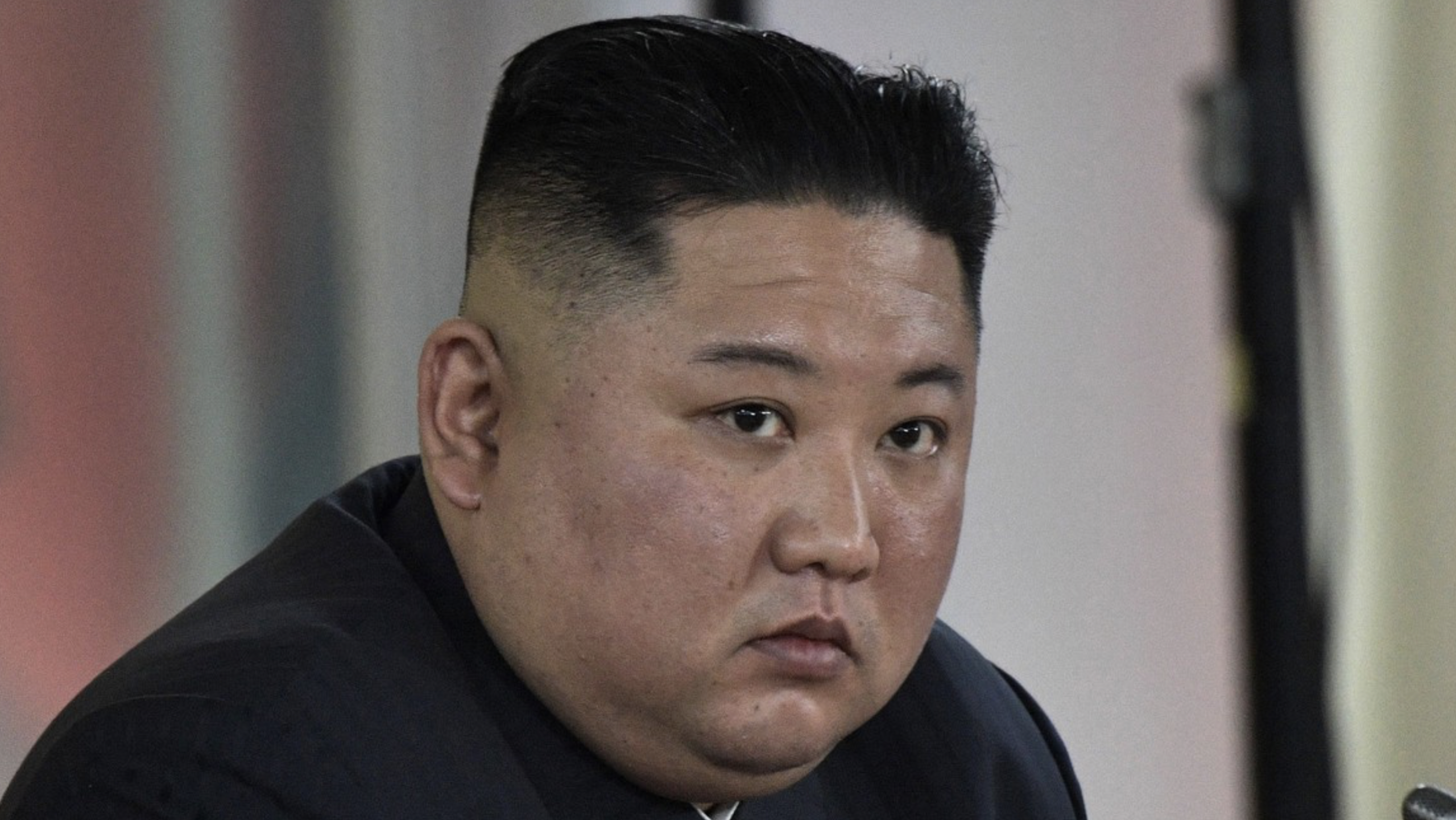
North Korea has revised its constitution to require an automatic nuclear response if leader Kim Jong Un is killed or incapacitated during an attack by a foreign adversary, according to South Korea’s National Intelligence Service. The move comes as Pyongyang closely studies recent military operations targeting senior leadership figures in Iran, while continuing to expand its nuclear and conventional military capabilities amid heightened tensions on the Korean Peninsula.
The constitutional revision was reportedly adopted during the first session of the 15th Supreme People’s Assembly, which opened on March 22 in Pyongyang. Details of the amendment were later disclosed during a briefing by South Korea’s National Intelligence Service to senior government officials. According to the briefing, Kim Jong Un remains the sole commander of North Korea’s nuclear arsenal, but the updated legal framework establishes procedures for retaliatory action should the country’s leadership structure come under attack.
Under the revised Article 3 of North Korea’s nuclear policy law, the state would automatically authorize a nuclear launch if the command-and-control system overseeing the country’s nuclear forces is threatened. The text states: “If the command-and-control system over the state’s nuclear forces is placed in danger by hostile forces’ attacks … a nuclear strike shall be launched automatically and immediately.”
The changes reportedly followed the deaths of Iranian Supreme Leader Ali Khamenei and several senior advisers during the opening stages of coordinated US-Israeli military strikes against Tehran. Analysts believe North Korean officials viewed the operation as a warning about the vulnerability of centralized leadership structures during modern warfare.
Andrei Lankov, a professor of history and international relations at Kookmin University in Seoul, said the constitutional change appears intended to reinforce deterrence by removing uncertainty over retaliation. “This may have been policy before, but it has added emphasis now it has been enshrined in the constitution,” he said.
Lankov also argued that the military campaign against Iran likely intensified security concerns inside Pyongyang. “Iran was the wake-up call,” he said. “North Korea saw the remarkable efficiency of the US-Israeli decapitation attacks, which immediately eliminated the greater part of the Iranian leadership, and they must now be terrified.”
Military analysts have long noted that North Korea’s leadership is significantly more insulated from outside infiltration than many other states. The country remains largely closed to foreign visitors, with diplomats, aid workers and business representatives subjected to extensive surveillance and restrictions while inside the country. That isolation sharply limits the type of human intelligence gathering that reportedly played a major role in operations targeting Iranian officials.
Reports surrounding the Iran strikes indicated that Israeli intelligence agencies had allegedly used hacked traffic camera systems and surveillance infrastructure in Tehran to track the movements of senior officials. Such methods would be considerably harder to replicate in North Korea, where internet access is tightly controlled and surveillance systems are largely disconnected from global networks.
Kim Jong Un has also maintained extensive personal security measures throughout his rule. He is frequently surrounded by heavily armed bodyguards, rarely travels by aircraft and often uses armored trains for domestic and international trips. Observers say those precautions reflect longstanding concerns inside the North Korean leadership about assassination attempts or precision military strikes targeting the regime’s command structure.
Lankov said North Korea’s leadership is likely most concerned about advances in satellite reconnaissance and modern intelligence-gathering technology. “Their biggest fear is going to be information from satellite technology,” he said. “And, on balance, their concerns are not unfounded as taking out the leadership at the outset of any conflict is likely to be decisive.”
He also suggested that North Korea’s military leadership would probably carry out retaliatory launch orders if the country’s command structure were attacked. “With the military loyal to the leadership and viewing any attack on the nation as an existential threat, officers charged with launching a retaliatory nuclear attack would carry it out,” he said. Lankov added that he does not believe North Korea views South Korea as the likely source of such an operation, saying any retaliation would more likely target the United States.
The constitutional changes come as Pyongyang continues to expand both its strategic and conventional military capabilities. North Korean state media reported this week that Kim Jong Un visited a munitions factory overseeing production of a new 155-millimeter self-propelled gun-howitzer intended for deployment near the border with South Korea.
According to the Korean Central News Agency, the artillery system has a range exceeding 37 miles and is expected to be deployed later this year to long-range artillery units positioned near the Demilitarized Zone. The reported range would place central Seoul and large parts of Gyeonggi Province within striking distance.
KCNA quoted Kim as saying the new artillery system would “provide significant changes and advantages to our military’s ground operations.” The development adds to growing military tensions between North and South Korea, despite periodic diplomatic outreach efforts from Seoul.
Relations between the two Koreas have continued to deteriorate in recent years, with North Korea increasingly abandoning previous references to reconciliation and reunification. Pyongyang recently removed longstanding language related to Korean unification from its constitution, while continuing missile tests, weapons development programs and military modernization efforts.
North and South Korea remain technically at war because the 1950-1953 Korean War ended with an armistice agreement rather than a formal peace treaty. The heavily fortified border separating the two countries remains one of the most militarized regions in the world.