
WASHINGTON, July 13 — President Donald Trump said Monday that a preliminary agreement with Iran collapsed within days after Tehran demanded further negotiation, using the episode to argue that no American president before him had been willing to confront Iran militarily over nearly five decades of strained relations.
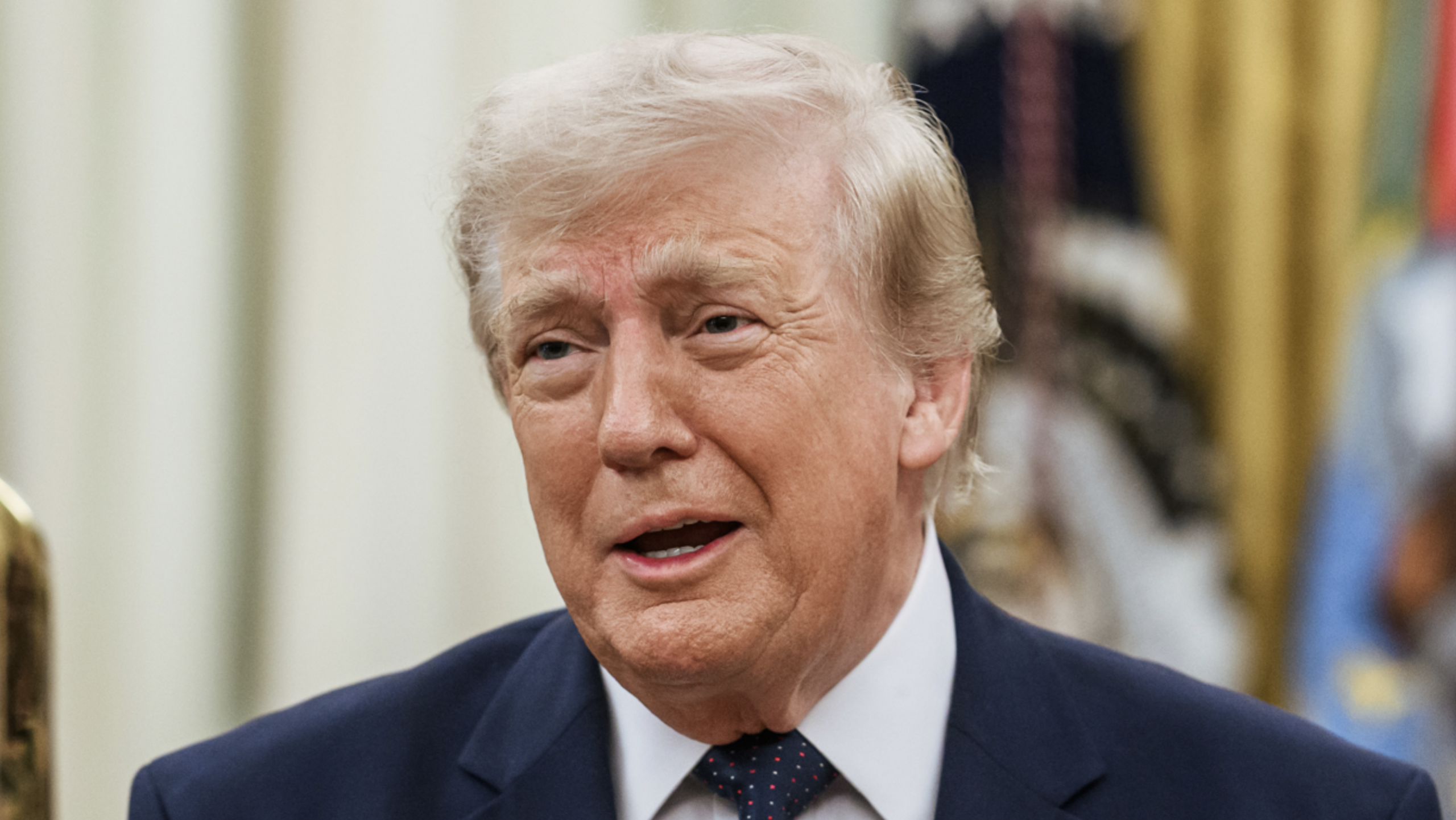
Speaking to reporters in the Oval Office following the signing of executive orders on two Utah national monuments, Trump described a deal reached with Iran that unraveled almost immediately. “We had a deal with them two days ago, and then they said, ‘Oh, we can’t make that deal. We have to negotiate it further,'” Trump said.
He characterized the pattern as long-standing Iranian strategy rather than a one-off setback. “This is what they’ve done for 47 years,” Trump said, dating the friction to Iran’s 1979 revolution and the rupture in U.S.-Iran relations that followed. “The difference is nobody negotiated like I do.”
Trump extended the criticism to a string of his predecessors, saying the confrontation he has pursued should have happened decades earlier. “This should have been done by Bush and Obama and Biden and people before them,” he said. “Frankly, it’s 47 years they’ve been ripping off everybody and really hurt again, killing thousands of people.”
The remarks came in response to a reporter’s question about whether the United States bombing Iran for months now amounted to a “new normal” for American foreign policy, a framing Trump rejected by favorably comparing the four-month campaign to the 19-year U.S. involvement in Vietnam. He argued that in a fraction of that time, American forces had eliminated Iran’s navy, rendered its air force “non-existent,” and destroyed the large majority of its drone and missile manufacturing capacity.
Trump connected the collapsed deal directly to what he described as a broader pattern of Iranian aggression, invoking Qassem Soleimani, the Iranian military commander killed in a U.S. drone strike Trump ordered during his first term in January 2020. “They killed 52,000 protesters, but they killed many, many people with Soleimani,” Trump said, describing the late commander as “an evil genius” who he said had targeted American military installations in Iraq.
The president’s account of a deal reached and then abandoned tracks with the broader timeline his administration laid out in a formal war-powers notification sent to Congress the same day. In a letter dated July 10, reviewed by Reuters, Trump told lawmakers that hostilities with Iran resumed on July 7 after Tehran violated a memorandum of understanding signed on June 17, which Trump said Iran broke by attacking commercial vessels transiting the Strait of Hormuz.
That collapse prompted the administration to reinstate a naval blockade of Iranian ports, alongside a proposed 20% surcharge on cargo passing through the strait — steps Trump has framed as consequences for Iran’s refusal to honor negotiated terms.
Trump’s framing of the conflict as a corrective to decades of failed diplomacy echoes arguments he made in his first term, when he withdrew the United States from the 2015 nuclear agreement negotiated under the Obama administration, calling it insufficient to curb Iran’s regional behavior. Monday’s comments extended that critique to the Bush and Biden administrations as well, though Trump did not detail specific policy actions by each of those presidents that he considered failures.
Independent accounts of the state of nuclear talks and Iran’s compliance with prior agreements have varied throughout the conflict, and Trump’s specific figures — including the claim that Iran had been “ripping off” the world for 47 years and had killed “thousands” in that period — could not be independently verified.
The Oval Office appearance also touched on Iran’s internal unrest. Trump reiterated a claim, made repeatedly during the briefing, that Iranian authorities had killed 52,000 protesters, a figure he said he had personally reviewed evidence of. “Have you ever seen any of the burial lots where they’re doing where they’re burying the protesters?” he asked reporters.
Trump’s comments arrived one day after he ordered flags flown at half-staff nationwide following the death of Senator Lindsey Graham, a longtime advocate of a harder line against Iran, and on the same afternoon Trump signed orders reducing the Bears Ears and Grand Staircase-Escalante national monuments in Utah by roughly 90%.
Asked directly whether a negotiated settlement with Iran remained possible despite the collapsed deal, Trump said he believed one still was. “Yeah, I think a deal is possible,” he said, even as he described plans for “another very major attack tonight” against Iranian targets.
The administration had not, as of Monday evening, released additional details about the terms of the deal that collapsed or outlined conditions under which renewed negotiations might proceed.