
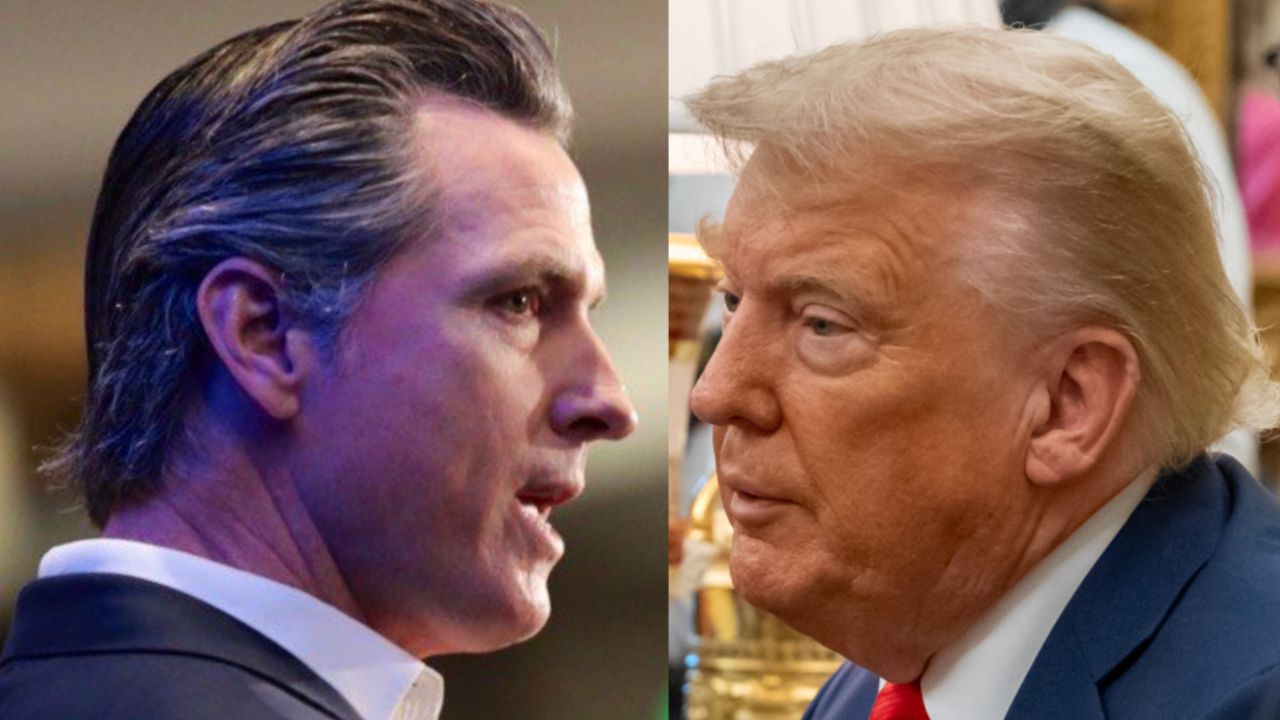
LOS ANGELES — Gov. Gavin Newsom said Saturday that President Donald Trump has treated the National Guard as “his political weapon” and that California has “seen enough,” after he signed a law barring military personnel from other states from entering California to perform military or law-enforcement duties without the governor’s permission.
Newsom posted the statement on X at 9:46 a.m. Pacific on Sept. 19, the same day he signed Senate Bill 1354. The measure is Chapter 329 of the Statutes of 2026.
For the last year, Donald Trump has treated the National Guard as his political weapon — deploying troops into American cities and trampling over states’ rights.
California has seen enough.
I just signed a bill PROHIBITING other state militaries from entering California unless they have explicit permission from the Governor.
The official signing notice is on the Governor’s Office website. Newsom said the law “secures the rule of law by affirming our right to defend ourselves against military intrusions against our state.” The author is Sen. Bob Archuleta, a Pico Rivera Democrat.
What SB 1354 does
SB 1354 adds Part 3, beginning at section 570, to Division 2 of the California Military and Veterans Code. Section 570(a) states that “Military personnel of another state, territory, or district shall not enter, or cause something to enter, the state to perform military duty or law enforcement functions for another state without the permission of the Governor.”
Section 570(b) says the prohibition does not apply to three categories: personnel “called into active federal service under Title 10 of the United States Code” and “acting under the authority of the President of the United States or the United States Secretary of Defense”; “a military compact entered into between one or more states prior to January 1, 2027”; and “an educational course or training exercise” in California. Section 570(c) lets the governor delegate permission to the adjutant general. The chaptered statute does not set a criminal penalty.
The Governor’s Office said the law “does not apply to federal active-duty personnel operating under federal Title 10 authority” and was written to close what it called a “legal loophole where other states could have deployed their military under Title 32 — even at the President’s suggestion.” Under Title 32, Guard members generally remain under a governor’s command while the federal government may fund the mission. Under Title 10 they are in federal service.
Prior deployments and the limit of the new law
On June 7, 2025, the president issued a memorandum calling members and units of the National Guard into federal service under 10 U.S.C. § 12406 to protect ICE and other federal personnel and federal property, directing “at least 2,000 National Guard personnel.” Section 12406 allows the president to call the Guard into federal service when the United States is invaded or in danger of invasion, when there is a rebellion or danger of rebellion, or when the president “is unable with the regular forces to execute the laws of the United States.” Orders under that section “shall be issued through the governors of the States.”
California sued over the Los Angeles deployment. A later Governor’s Office summary of the litigation said a federal judge found the deployment violated the Posse Comitatus Act and that the ruling was on hold pending appeal. The Act, 18 U.S.C. § 1385, makes it a crime to willfully use the Army, Navy, Marine Corps, Air Force or Space Force as a posse comitatus to execute the laws except where the Constitution or an act of Congress expressly authorizes it. In May 2026 Newsom’s office said Department of Defense records produced under a FOIA request put the Los Angeles federalization cost at an estimated $111.2 million across fiscal 2025 and 2026.
SB 1354 does not bar a future Title 10 federalization. It regulates other states’ personnel entering California for military or law-enforcement functions without the California governor’s permission. How that state rule would be enforced against a covered deployment, and how it would interact with federal command authority, is not tested in the chaptered text. The midterm election is Nov. 3.