
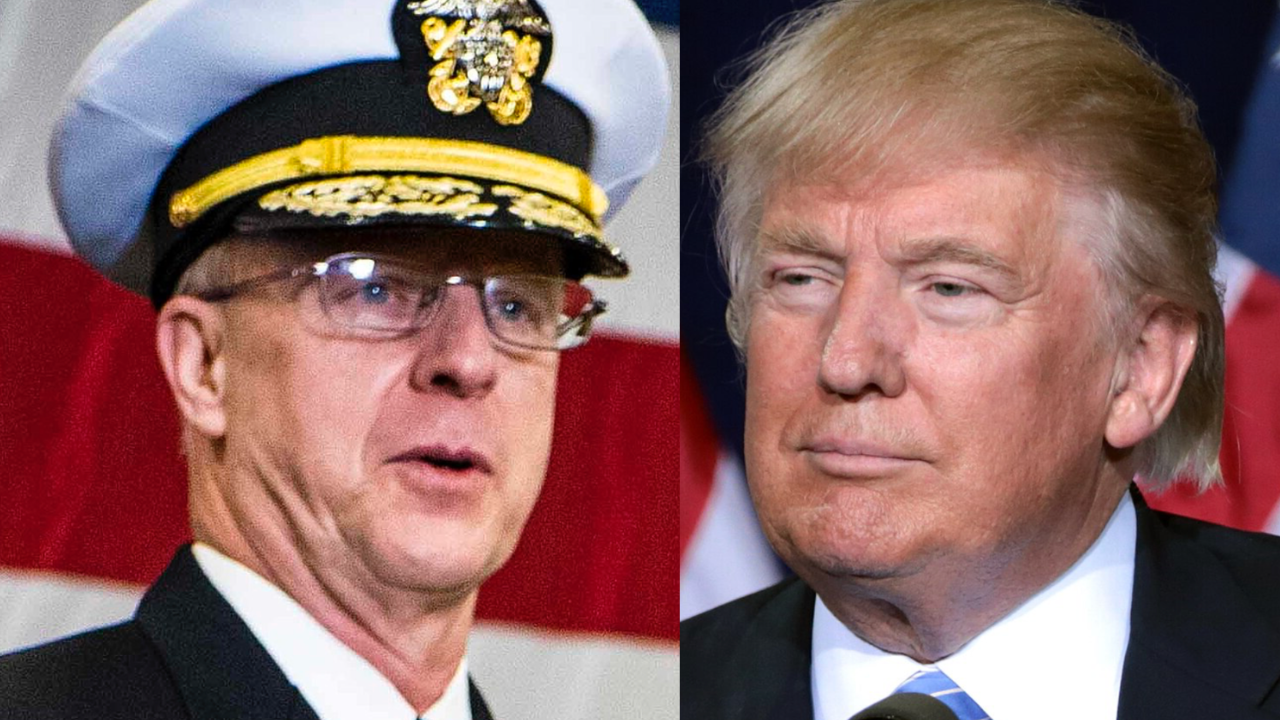
Chief of Naval Operations Adm. Daryl Caudle and Acting Secretary of the Navy Hung Cao issued public warnings to the fleet Sunday that online misconduct by sailors carries consequences under military law, following reports that an active-duty Navy member posted content on social media appearing to wish for President Trump’s death — content that went viral and triggered a formal investigation.
“The conduct expected of our Sailors does not end when they log on,” Caudle wrote in a three-part thread on X. “Online misconduct undermines our values, professionalism, and the trust placed in the United States Navy.”
Acting Secretary Cao amplified the CNO’s statement directly on X, adding that leaders at every level are required to enforce professional standards both online and off. “Americans place their trust in our Sailors and Marines to uphold the highest standards of conduct at all times,” Cao wrote. “Leaders at all echelons must enforce those standards.”
The Incident Behind the Statements
The statements came after the conservative social media account Libs of TikTok posted content on July 6 highlighting a Navy member’s social media posts that appeared to express hope that Trump would die, according to the Libs of TikTok post. The content spread widely across conservative social media platforms in the days that followed. The Navy has not publicly identified the service member involved or released details of the investigation, but confirmed that a review is underway.
The episode fits a pattern that has accelerated significantly since CNO Caudle issued a formal September 2025 memo providing guidance to commanders on how to identify, track and report cases of unprofessional social media use by sailors, according to Navy Times. Under the memo, reports of unprofessional online behavior are forwarded through the chain of command with periodic status updates reaching the CNO level, institutionalizing oversight of sailors’ personal online conduct in a way that has no direct civilian parallel.
What Military Law Says About Online Conduct
Active-duty service members are subject to the Uniform Code of Military Justice around the clock, including when off duty and online. The Navy Social Media Handbook confirms that “improper or inappropriate online behavior” can trigger UCMJ consequences regardless of whether it occurred on or off duty or on a personal device, according to a legal analysis of the CNO’s September 2025 memo.
UCMJ Article 88 specifically bars commissioned officers from using contemptuous words against the president, the vice president, Congress or senior cabinet officials — with violations punishable by court-martial. Article 134, the UCMJ’s “general article,” covers conduct prejudicial to good order and discipline or likely to bring discredit upon the armed forces, and has been applied to online speech. The Navy’s core values of honor, courage and commitment are explicitly incorporated into the service’s standards for online behavior, per the Navy’s official All Hands guidance on online conduct.
A Growing Pattern of Social Media Enforcement
The Navy has moved aggressively to regulate sailors’ online conduct since the start of Trump’s second term. The most high-profile prior case involved Navy Cmdr. Janelle Marra, a physician who was removed from her leadership position at Expeditionary Medical Facility 150-Bravo in San Diego in September 2025 after Defense Secretary Pete Hegseth reposted a Libs of TikTok post highlighting her LinkedIn profile, which listed her title as “Navy Deputy Medical Director for Transgender Health Care.” Hegseth captioned his repost “Pronouns UPDATED: She/Her/Fired.”
As of September 30, 2025, a total of 128 service members and 158 non-uniformed Defense Department personnel had been investigated for online comments related to a single high-profile case. The scale of those investigations prompted legal experts to raise First Amendment concerns about the breadth of command authority being used to police personal speech.
What Caudle and Cao Said in Full
In the second post in his thread, Caudle stated that an investigation into the specific incident is underway and that the Navy takes all allegations of online misconduct seriously. In the third post, he reaffirmed that accountability under the UCMJ and Navy regulations applies to all sailors at all times, including their personal social media activity, and that command leadership is responsible for enforcing those standards consistently.
Cao’s reinforcement of the CNO’s message was notable given his role. Hung Cao, a Vietnamese-American retired Navy captain and Republican congressional candidate who lost a Virginia Senate race in 2024, was named Acting Secretary of the Navy in June 2026 following the departure of the previous acting secretary. His post amplifying Caudle’s statement signals top-level civilian leadership alignment with the Navy’s enforcement posture on online conduct at a politically sensitive moment.
The Broader Context
The July 13 statements came against a backdrop of elevated political tension within the military. The Iran war, now in its 136th day, has been the subject of congressional debates over authorization and civilian casualties. The Air Force officer arrested at the Capitol earlier this month for protesting in uniform calling for Trump’s impeachment — Maj. Jason Watson — remains under investigation by the Air Force, which issued its own statement warning that service members’ conduct obligations do not end off duty. The Navy’s statements Sunday closely mirrored the Air Force Secretary’s July 2 statement on Maj. Watson’s arrest, using nearly identical framing about professional conduct and public trust, per the Air Force Secretary’s official X post from July 2.