
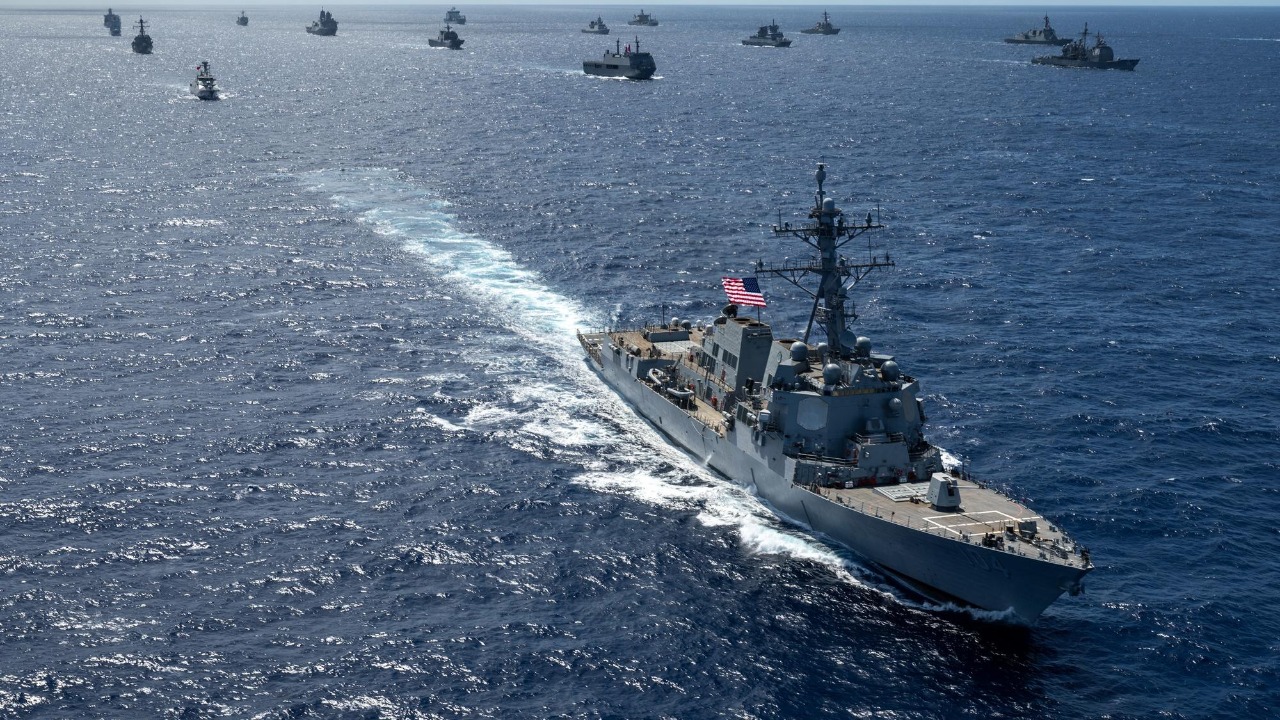
A routine resupply at sea in the Caribbean turned hazardous when a Navy destroyer and a support ship made contact while maneuvering side by side. The collision injured two sailors and damaged both vessels, raising fresh questions about risk management during complex replenishment operations that keep deployed ships on station for long stretches.
The incident, which involved the guided missile destroyer USS Truxtun and the fast combat support ship USNS Supply, occurred as the ships were attempting to transfer fuel and supplies in close formation. Early imagery and official statements suggest the damage is repairable and the injuries are minor, yet the mishap has already become a case study in how quickly precision seamanship can give way to sudden impact.
How a routine replenishment turned into a collision
Replenishment at sea is meant to appear almost uneventful, with ships holding a steady course and speed while hoses and transfer rigs bridge the gap between hulls. In this case, the guided missile destroyer USS Truxtun and the fast combat support ship USNS Supply closed to a narrow separation in the Caribbean Sea, then lost that delicate balance when their hulls touched during the evolution. Video from a close-quarters collision shows how little margin existed between the ships before contact, with the destroyer’s bow swinging toward the larger support vessel.
Officials with the Navy’s Southern Command, often shortened to SOUTHCOM, described the event as occurring during a replenishment at sea, the standard method by which deployed combatants receive fuel and stores without returning to port. According to Navy and SOUTHCOM statements cited in early reports, the ships were operating in support of missions around South America when the collision occurred, and both remained afloat and under their own power afterward, indicating that watertight integrity held despite visible hull scraping.
Injuries, damage, and the immediate response
The priority after the impact was the condition of the crews, and early information pointed to limited physical harm. Two US Navy sailors sustained minor injuries on Wednesday while on board the destroyer and the support ship, and they were treated by medical staff already embarked for the underway mission. Reporting on the mishap noted that two personnel reported, a relatively light toll given the tonnage and momentum involved when large steel hulls meet at sea.
Damage control teams moved quickly to assess the structural impact and secure any compromised fittings along the ships’ sides. Imagery and official accounts indicate that the most visible harm involved crushed lifelines, dented plating, and scraped paint along the destroyer’s bow and the supply ship’s flank. According to the US Navy’s guided report, both vessels were able to continue under their own power, which suggests that propulsion, steering gear, and critical combat systems remained functional even as commanders weighed whether to send either ship to port for inspection.
What investigators will be looking for next
Any collision involving Navy ships triggers a formal inquiry, and this case will be no exception. Investigators will reconstruct the sequence of events that brought the destroyer and the support ship into contact, from course and speed changes to helm orders, bridge communications, and the state of replenishment gear at the moment of impact. Early coverage citing a collision occurred when ships were conducting a replenishment evolution suggests that the mishap unfolded while both hulls were already committed to a tight formation, which will focus attention on relative motion and whether an unexpected yaw or roll set the contact in motion.
Human factors will sit alongside mechanical and environmental data in that review. Investigators are likely to examine crew experience on both bridges, fatigue levels during the evolution, and the clarity of the command relationships between the combatant and the logistics ship. Analysts will also study whether sea state, visibility, or equipment behavior affected the ships’ ability to maintain separation while fuel and supplies moved across the gap. A video clip shared with the tag #US Navy ships has already circulated widely, and while public footage does not replace technical data, it will likely be compared with sensor logs and bridge recordings as part of the broader reconstruction.
Strategic context and public scrutiny
The collision did not occur in isolation, but against a backdrop of active operations in the Caribbean Sea and South American approaches. Navy officials have described a large maritime presence in the region aimed at countering drug trafficking, and the destroyer and support ship were part of that effort when they came together during the replenishment. Coverage of the incident in the Caribbean Sea navy reports highlighted that the mishap took place amid an ongoing military buildup, which increases the tempo of operations and the frequency of complex ship-handling events such as refueling at sea.
Public attention has been sharpened by high-quality footage and by detailed broadcast coverage that walked viewers through how a destroyer and a resupply ship could collide while under tight procedural control. One segment opened with the line “a US Navy destroyer and a resupply ship somehow collided in the Caribbean,” framing the event as both surprising and troubling in light of the Navy’s training standards. That framing echoed in follow-up reporting by Eleanor Watson, CBS, who emphasized that the injuries were minor, but the questions for leadership are significant. A separate video titled Two US Navy captured the same tension between relief at the limited damage and concern about what the episode reveals about risk during high-tempo operations.