
The International Space Station is facing its first true medical evacuation, a moment that tests every assumption about how far human spaceflight has come and how fragile it remains. NASA has outlined how it will rush an ailing astronaut back to Earth while keeping the rest of the crew safe and the orbiting laboratory functioning.
I see in this plan not only a crisis response but a revealing snapshot of how space agencies now balance ambition with duty of care, treating the station less as a distant outpost and more as a workplace that must meet the same basic standard: everyone comes home.
How a “serious medical issue” triggered an unprecedented evacuation
The chain of events began when NASA officials reported that one crew member on the International Space Station had suffered a serious medical issue that required a full diagnostic workup on the ground. The agency has not disclosed the nature of the condition, but it has stressed that the problem is significant enough that the astronaut must return to Earth for detailed evaluation and treatment, a step that goes far beyond routine in orbit care and reflects the gravity of what NASA is facing. I read that as a clear signal that the onboard medical capability, while robust for minor injuries and short term issues, still has hard limits when confronted with complex or potentially life threatening symptoms.
For the first time in the history of the station, the agency has activated what it describes as a significant medical evacuation from orbit, a phrase that captures both the urgency and the novelty of the response. Officials have framed this as the first occasion in which a crewed spacecraft will undock from the complex primarily to rush a patient home, rather than to complete a scheduled rotation or respond to a technical emergency, and they have emphasized that the health of the astronauts will remain the agency’s highest priority as There unfolds. When I weigh that language, I see NASA drawing a firm line, making clear that no experiment, no schedule and no political pressure outweighs the obligation to protect the people who accept the risks of living in orbit.
NASA’s step by step plan to bring Crew-11 home
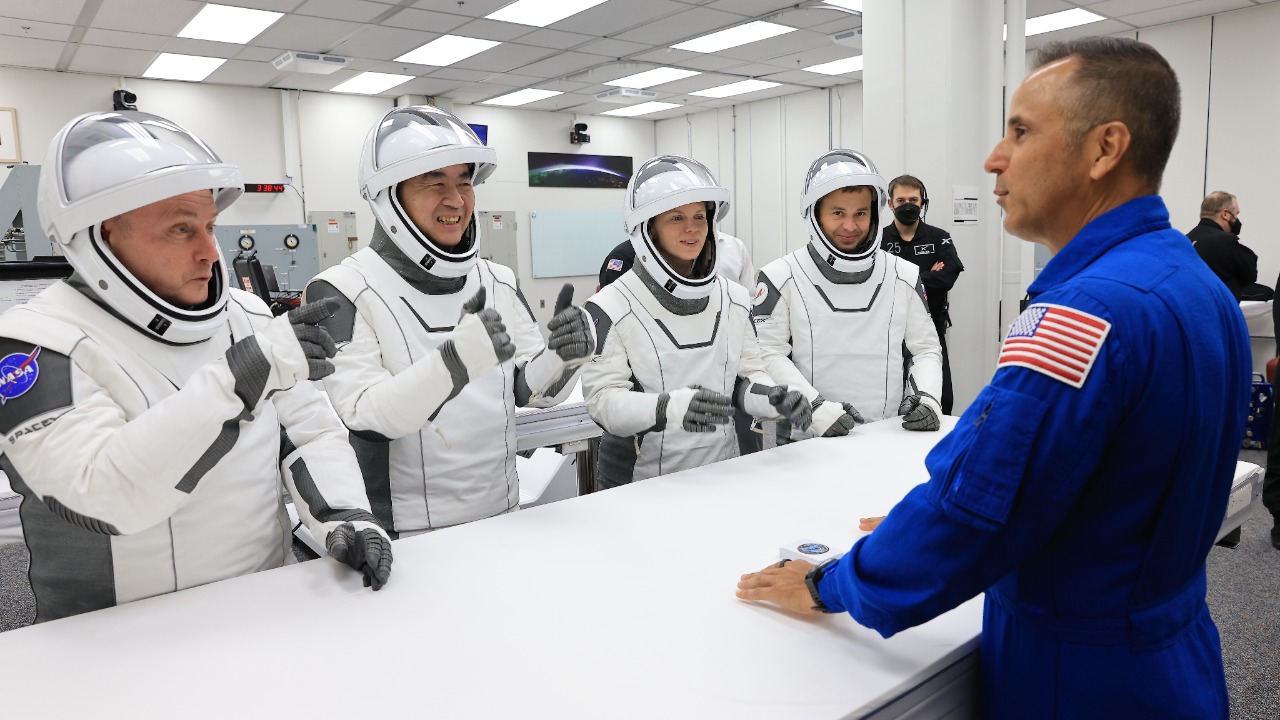
To carry out the evacuation, NASA has decided to bring four astronauts home early from the International Space Station, even though only one of them is known to be affected by the medical issue. That choice reflects a conservative philosophy that I find telling, since it avoids leaving a partially depleted team on board and instead treats the current visiting crew as a single unit that will depart together for Earth. Officials have confirmed that these Four astronauts will ride a SpaceX Dragon capsule back to Earth, cutting short their planned stay so that the patient can reach terrestrial doctors as quickly as possible while the rest of the group supports the demanding return sequence to Earth.
The American space agency has cancelled the remaining objectives of the mission and triggered what it describes as the first ever medical evacuation of the International outpost, a move that instantly reshaped the flight plan for both NASA and its commercial partner. In practical terms, that means retargeting the Crew Dragon spacecraft for an unscheduled departure, coordinating with recovery teams near the designated splashdown zones and confirming that weather and sea conditions will allow a safe landing, all while keeping close contact with the Russian segment and with Russian cosmonaut Oleg Platanov who remains part of the broader station crew as The American teams adjust. I see in that choreography a reminder that even in crisis, every maneuver in orbit is slow, deliberate and deeply interdependent.
SpaceX Dragon, ground support and the role of remaining crew
The evacuation hinges on the readiness of the SpaceX Dragon spacecraft that carried the current Crew to the station and is now being prepared for an accelerated return. NASA has said it will undock a SpaceX capsule from the ISS, then guide it through a series of burns that will line up a reentry corridor and a splashdown in the ocean, with recovery ships and medical teams waiting nearby to receive the patient and the rest of the crew as soon as the hatch opens, a sequence that matches how NASA will undock and recover the vehicle according to When NASA. I view Dragon here not just as a transport but as a lifeboat, one that must function as an intensive care ambulance during the fiery plunge through the atmosphere.
Once Dragon departs, the station will not be empty, and that continuity is central to NASA’s risk calculus. After Dragon leaves, American astronaut Chris Williams, who arrived on a Russian Soyuz spacecraft in November, will remain on board with Russian colleagues, a configuration that preserves a mixed crew and keeps the laboratory running even as the emergency unfolds, a detail that aligns with the description of how operations continue After Dragon. I read that as a quiet vote of confidence in the resilience of the partnership between American and Russian programs, which must hold steady even when one side is focused on getting a sick colleague home.
Weather, risk management and what this means for future missions
NASA has been explicit that it will not rush the return if conditions on the ground are unsafe, even with a medical emergency in play, and that balance between urgency and caution is where I see the agency’s culture most clearly. Officials have said that the weather forecast currently looks favorable for the capsule’s journey back to Earth, but they have also stressed that both NASA and Spa, a shorthand for the commercial partner involved, will keep monitoring the drop zones and will delay if necessary to avoid compounding a health crisis with a landing hazard, a stance reflected in the latest NASA updates. In my view, that approach underscores a hard lesson from decades of flight: the worst outcome would be to trade one emergency for another by forcing a landing into marginal conditions.
The decision to bring the crew home early also highlights how much planning for such contingencies has matured since the early days of the station. NASA has explained that it will bring four astronauts back ahead of schedule due to the medical issue, a move that compresses what was meant to be a longer stay into a rapid turnaround and that has been framed as a necessary deviation from the planned departure, a point captured in the agency’s description of why it acted on Thursday. I interpret this as a proof of concept for evacuation protocols that have long existed on paper but have never been tested in full, and I suspect that every step, from the initial report of symptoms to the final splashdown, will now be studied as closely as any science experiment that has ever flown.
Behind the scenes, specialists are tracking every phase of the operation in real time, from the moment Jan controllers first flagged the problem to the instant the capsule hits the water, and that scrutiny extends to the public narrative as well. Space commentators such as Tariq Malik, identified as Space.com Editor in Chief, have been relaying how the Crew Dragon is being readied for undocking and how Russian cosmonaut Oleg Platanov will coordinate with the remaining team, a level of detail that shows how even a figure like 48 minutes in a timeline can matter when describing the pacing of events that unfold in orbit, as reflected in the live coverage by Tariq Malik. As I watch this story develop, I am struck by how the first medical evacuation from the station is both a sobering reminder of human vulnerability and a quiet affirmation that the systems built to protect these explorers can, when needed, pivot from exploration to rescue.