
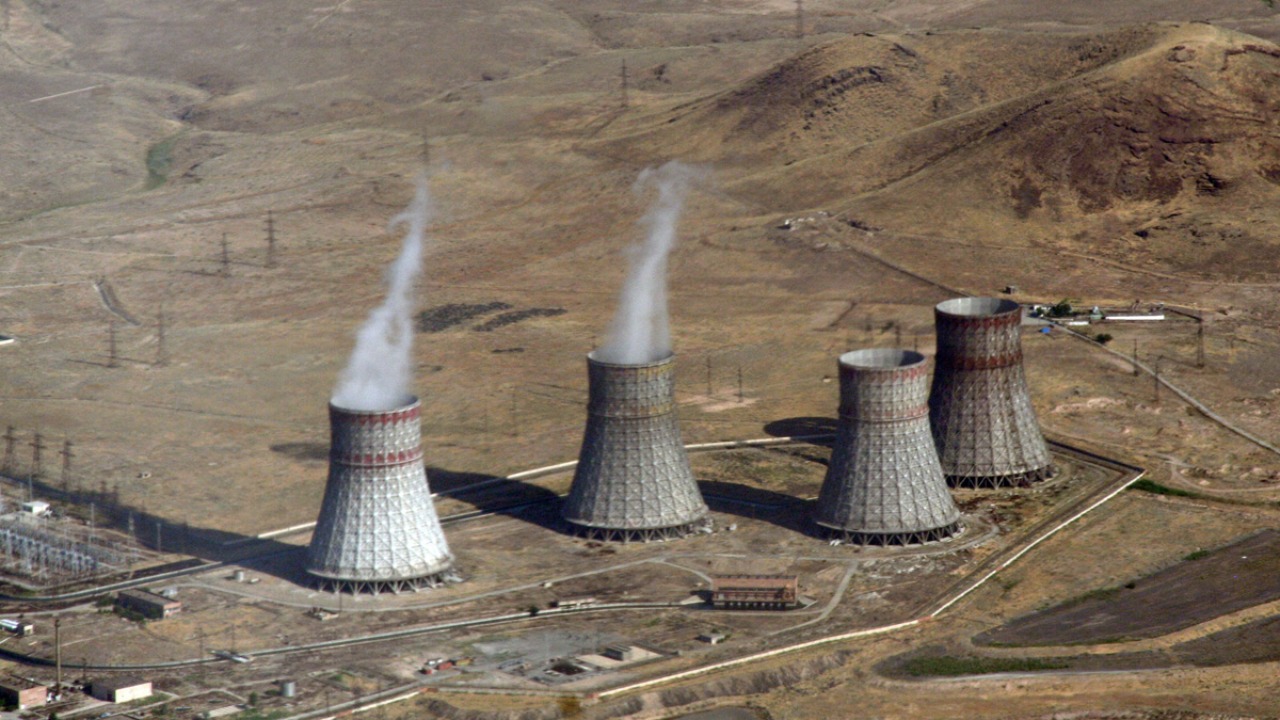
Moscow’s sharp objection to a potential United States-built nuclear power plant in Armenia has turned a technical energy project into a test of influence in the South Caucasus. The dispute centers on Yerevan’s decision to deepen civil nuclear cooperation with Washington as it plans for life after its aging Soviet-era reactor.
Armenia’s effort to diversify partners away from traditional reliance on Russia and Iran has collided with the Kremlin’s insistence that it should retain a central role in the country’s nuclear sector. The argument over who will build Armenia’s next reactor now doubles as a public measure of how far Yerevan is prepared to distance itself from Moscow’s orbit.
The US–Armenia nuclear deal and what it promises
The immediate trigger for Moscow’s protest is a civil nuclear cooperation agreement between the United States and Armenia, establishing a framework for a new power plant to replace the Metsamor facility. During a visit to Yerevan, Vice President J.D. Vance and Armenian Prime Minister Nikol Pashinyan signed a Section 123 accord allowing up to $9 billion in U.S. nuclear investment to retire the Metsamor plant and reduce Armenia’s dependence on Russian energy. That commitment, described in a detailed Russia review, signals Washington’s readiness to anchor Armenia’s long-term power supply.
United States officials frame the agreement as a way to modernize Armenia’s grid, expand peaceful nuclear cooperation and align safety standards with Western practice. The accord, formalized through U.S.-Armenia nuclear collaboration, includes support for new reactor technology and regulatory capacity. A companion description of the signing ceremony notes that Vice President Vance and Armenian Prime Minister Nikol Pashinyan personally presented signed copies of the agreement, highlighting how both governments see the deal as a strategic partnership rather than a narrow commercial contract.
Why Armenia wants a new reactor and new partners
Armenia’s leadership argues that the choice is driven by energy security rather than symbolism. The Metsamor nuclear power plant, built with Soviet-era technology, is scheduled to be decommissioned in 2036, leaving the country with a narrowing window to secure a replacement that can cover a large share of its electricity demand. Armenian officials have been reviewing options that include a new large-scale reactor as well as smaller modular designs and have been explicit that they are looking to reduce long-standing dependence on Moscow and Tehran for energy supplies.
Recent geopolitical events highlighting the risks of overreliance on a single supplier have influenced Yerevan’s decision-making. As Russia’s confrontation with the West has intensified, Armenian policymakers have sought alternative partners in areas ranging from gas imports to electricity transmission, and nuclear power is now part of that broader diversification strategy. Reports on the new civil nuclear agreement stress that the planned facility would replace Metsamor and that Armenian leaders want to move very quickly with the project, reflecting both the ticking clock on decommissioning and a desire to lock in Western financing and technology before political winds shift.
Moscow’s objections and the fight over influence
Russia’s reaction has been swift and unusually blunt, reflecting the political stakes it attaches to Armenia’s nuclear sector. Senior Russian figures have publicly challenged the prospect of a United States-built reactor in a country where the existing infrastructure is Soviet-designed and historically serviced by Russian engineers. Kremlin spokesman Dmitry Peskov argued that Armenia’s nuclear facilities rest on Soviet-era foundations and insisted that Russia has “great experience” in operating such plants, warning that excluding Russian expertise would raise safety risks and cost concerns over the long term.
Russian officials framed the U.S. project as a geopolitical intrusion into what they consider a traditional sphere of influence. Coverage of Moscow’s response describes how Russia has pushed back hard against the idea of a United States-built plant in Armenia, with Russian representatives questioning both the safety and the economic rationale of the plan and hinting that Armenia could face consequences for drifting away from Russian-backed projects. The same accounts note that Russian state nuclear company Rosatom is a major source of revenue for the Kremlin, which helps explain why the loss of a potential contract in Armenia is seen not only as a diplomatic setback but also as a threat to an important commercial channel.
Regional stakes and what comes next
The dispute over Armenia’s next nuclear plant is playing out against a wider contest over energy infrastructure across Eastern Europe and the Caucasus. Russian-backed projects such as the Paks II Nuclear Power Plant in HUNGARY, built by Russia’s Rosa-affiliated entities, show how Moscow uses long-term nuclear construction and fuel contracts to lock in political and economic ties with partner states. A U.S.-financed reactor in Armenia would counter that pattern, giving Yerevan greater foreign policy flexibility and providing Washington a long-term foothold in the region’s energy system.