
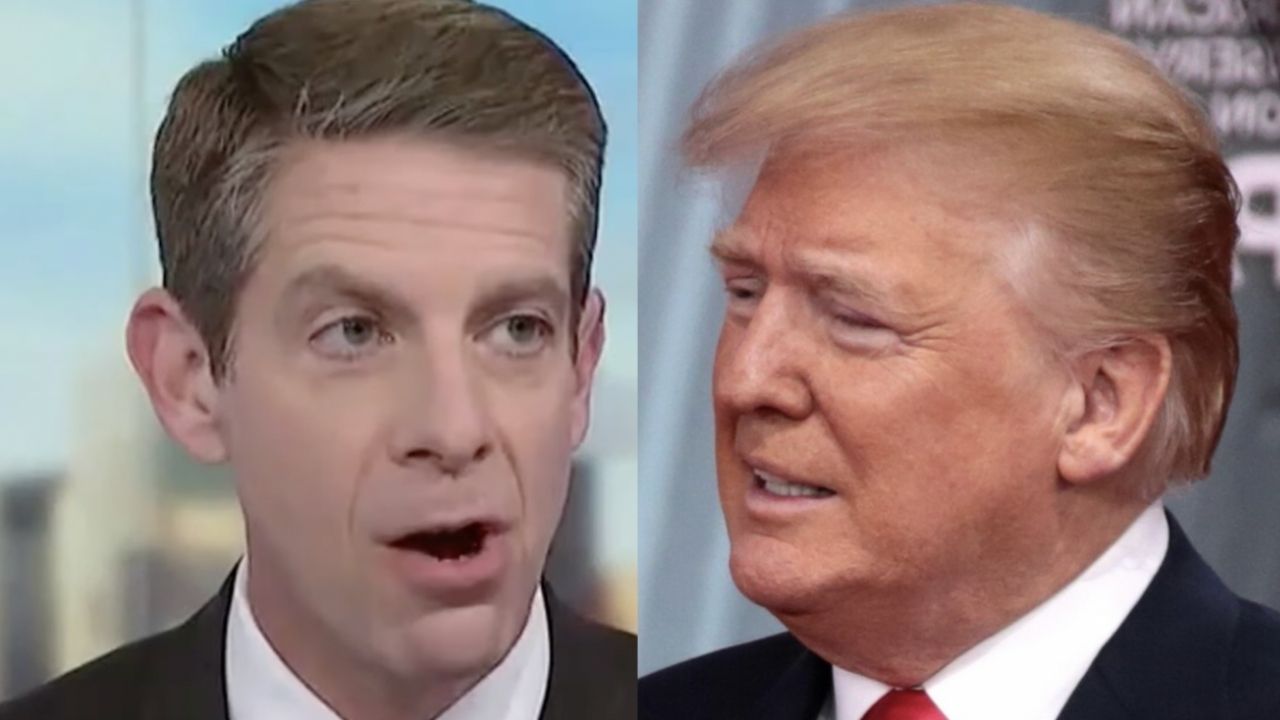
Rep. Mike Levin (D-CA) accused President Donald Trump of treating the hometowns of American servicemembers as expendable. The accusation came after Trump said at a Nebraska rally that Iran could “take out” Los Angeles or San Diego, two cities that host some of the most important military installations in the country. Levin posted his response on X late Monday night, saying a commander in chief “should never talk this way about the people he swore to protect.” He also called on every Republican who represents Southern California to say so publicly that same night.
The Post
Levin published the statement at 10:59 PM on October 5, 2026, hours after the rally. His full post read:
“Today at his rally, the President of the United States said this about Iran. “Let them take out Los Angeles or San Diego. This is a very small price to pay.”
No American city is a small price to pay.
No American life is.
Whatever he meant, a Commander in Chief should never talk this way about the people he swore to protect.
Our servicemembers sacrifice everything for us, and he just told the world their hometowns are expendable.
Protecting Americans should unite all of us. Every Republican who represents Southern California should say so tonight.”
Levin’s post condenses remarks Trump made Monday at a Republican political rally in Nebraska. There, Trump defended the Iran war as necessary to keep the country and the world safe. In the longer remarks, he said: “It’s a small price to pay for keeping the world safe, keeping our country safe. They can take out a city. Let them take out Los Angeles, let them take out San Diego.” Sections of the audience cheered as the comments about the two California cities were made.
Levin’s reply is built around two short sentences: “No American city is a small price to pay. No American life is.” He then set aside the question of what Trump intended, writing “Whatever he meant,” and focused on the effect of the words. In his view, a president who swore to protect Americans should not speak this way about them, whatever the intent behind the line.
Servicemembers and Hometowns
The sharpest part of the post concerns the military. “Our servicemembers sacrifice everything for us,” Levin wrote, “and he just told the world their hometowns are expendable.” Both cities Trump named are deeply tied to the armed forces. San Diego is home to Naval Base San Diego, the home port of the U.S. Navy’s Pacific Fleet, and to Naval Amphibious Base Coronado, the main West Coast training center for Navy SEALs. The area also includes Marine Corps Base Camp Pendleton in San Diego County, where about 70,000 service members and civilians work. Los Angeles hosts the Los Angeles Air Force Base and the headquarters of U.S. Space Force’s Space Systems Command.
Levin has long framed Iran policy through the families of those bases. In a January 2020 statement on a War Powers Resolution, he described himself as “the representative for Marine Corps Base Camp Pendleton.” He added that “the military families I represent – like all Americans – do not want another endless war in the Middle East.”
His closing line was aimed at his colleagues across the aisle: “Protecting Americans should unite all of us. Every Republican who represents Southern California should say so tonight.” One Republican-aligned candidate had already broken with the president. Jim Desmond, a San Diego County supervisor whom Trump endorsed in the race for California’s 48th Congressional District, said he “vehemently” disagreed with Trump. “No American city is expendable, and no American family should ever be treated as collateral damage,” Desmond wrote on social media. His Democratic opponent, San Diego City Councilmember Marni von Wilpert, called it “indefensible” that Desmond “continues to support Trump’s war and continues to be backed and funded by a President who jokes about the 1.4 million people in San Diego being ‘taken out’ by a foreign adversary.” A response from Southern California’s Republican members of Congress to Levin’s specific call was not immediately available.
California Leaders Respond
Levin was one of several California officials to respond. Gov. Gavin Newsom called the president “deranged and dangerous.” He wrote, “After sending the National Guard and Marines to occupy California, Donald Trump is now saying our foreign enemies should ‘take out’ Los Angeles and San Diego.” San Diego Mayor Todd Gloria wrote that his city was not “collateral damage” and not “expendable,” and added, “Keep our city out of your reckless war talk.” Los Angeles Mayor Karen Bass said the comments were “dangerous” and could “potentially compromise” the city’s safety. “The role of a president is to protect the country, not to actively threaten it and encourage attacks on American lives,” she said.
The governor also took a concrete step. Newsom said the remark, which he described as “dangerous – if not treasonous,” led him to direct California’s State Threat Assessment Center to “monitor the situation in the event that foreign actors interpret the remarks as an invitation” to target California. The agency is designed to detect and prevent security threats in the state.
The White House Defends the Remark
The White House pushed back hard. White House Communications Director Stephen Cheung described the “media freakout” over the comments as “not rooted in reality.” “He was clearly stating US cities would have been threatened if a nuclear Iran hadn’t been stopped,” Cheung wrote on X. “America is safer because of the President. Iran has no nuclear, no navy, no air force, and no money.”
A separate post from the official White House rapid response account called journalists covering the comments “buffoons” and rejected the characterizations offered by Newsom and others. “He was saying the US is fighting to STOP Iran from having the ability to take out LA and San Diego with a nuclear weapon — which they would if they had the chance,” the account wrote. Trump had not personally responded to the California officials as of Tuesday.
Levin’s Record on the Iran War
Tuesday’s post continues a line of criticism Levin has held since the war began. On February 28, 2026, the day Trump announced “major combat operations,” Levin issued a statement saying that language did not describe “a limited strike to repel an imminent threat or a sudden attack.” “They describe sustained warfare,” he said. He also argued that “Article I of the Constitution gives Congress, not the President, the power to declare war.” He called for “a prompt War Powers vote” and pledged: “When we take that vote, I will oppose a sustained war in Iran.” Levin also noted that this was “the type of war that Donald Trump explicitly said he was opposed to during his presidential campaign.”
On March 5, 2026, he voted for the War Powers Resolution to end what he called the Trump administration’s “unauthorized military campaign in Iran.” In his statement after the vote, he said Trump launched the operation “in the middle of night, without a declaration of war, without an authorization from Congress, and without a coherent explanation to the American people of what he intends to achieve or how it ends.” He added, “I voted today to reassert what the Constitution has always required: that in this democracy, no one person decides when this nation goes to war.”
Levin’s criticism has not been a rejection of the goal of stopping Iran’s nuclear program. In June 2025, after the earlier U.S. strikes, he said “Iran must never obtain a nuclear weapon,” while warning that “we cannot allow any president to entangle the United States in another deadly and open-ended war without constitutional authority.” After a classified briefing the same month, he said the strikes “significantly disrupted aspects of Iran’s nuclear program” but that the military’s success “does not absolve the President of his constitutional obligations.” In the same statement, he said that “dropping a dozen 30,000-pound bombs on multiple hardened targets is an act of war.” Those earlier statements show the line he has held on the war: support for the nuclear objective, with consistent opposition to proceeding without Congress.
What Comes Next
The remark comes as the war’s end remains unclear. At the Nebraska rally, Trump suggested the war was “going to end very soon” but gave no details on how. Last week, he turned down Iran’s latest cease-fire proposal, which would have reopened the Strait of Hormuz and restarted talks on Iran’s nuclear program in exchange for U.S. concessions. Preventing Iran from developing a nuclear weapon was among the key justifications Trump gave for launching the war this year.
The exchange also adds to a long-running conflict between Trump and Newsom, who may run for president in 2028. Newsom accused Trump of a “brazen abuse of power” after military personnel were deployed to secure federal buildings during last year’s Los Angeles protests over immigration enforcement. Whether Southern California’s Republican lawmakers answer Levin’s call, and whether the White House’s explanation settles the controversy, will determine how long the remark stays at the center of the debate over the war.