
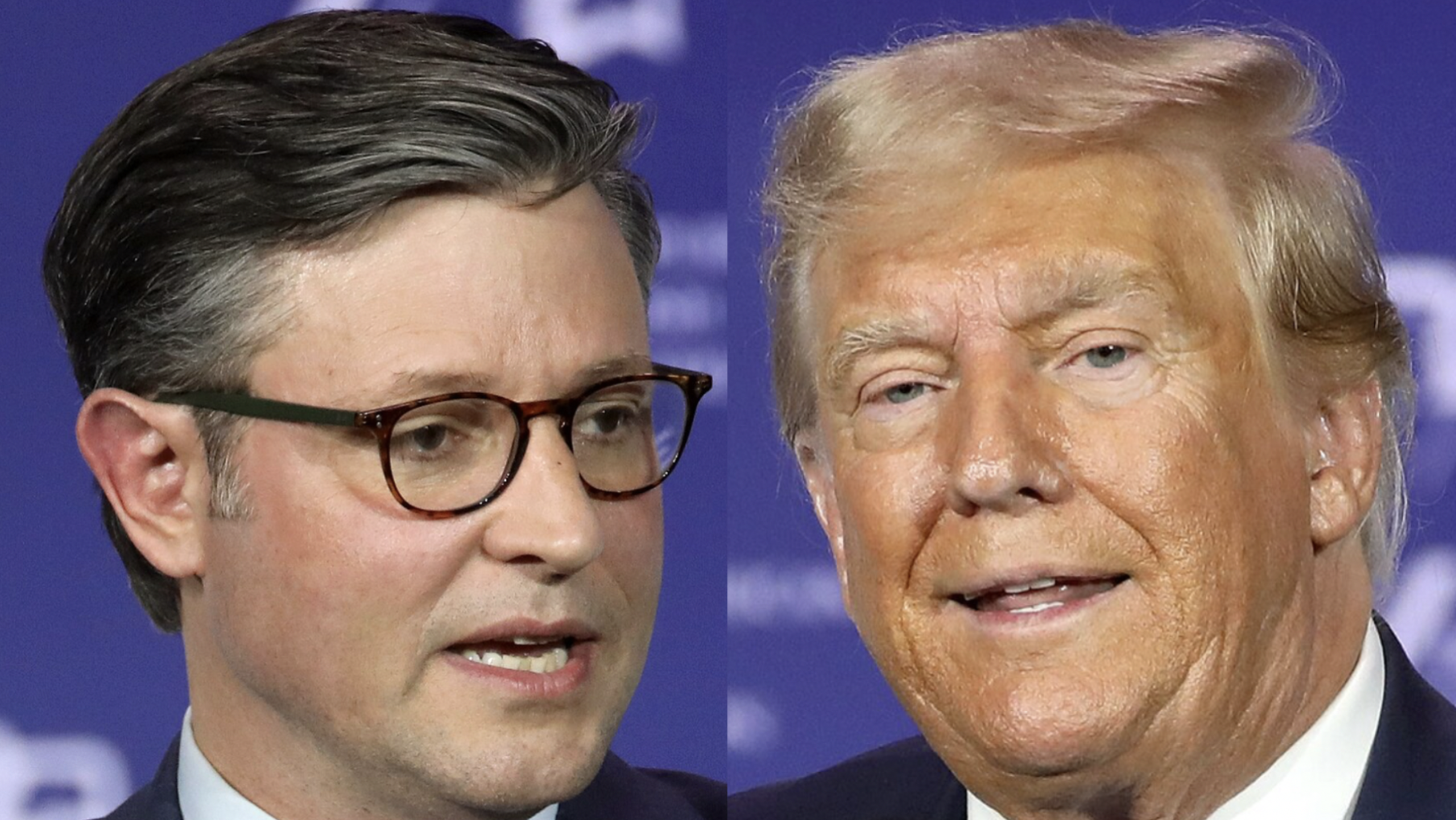
House Speaker Mike Johnson took to X on Saturday, May 24, 2026, delivering an unambiguous declaration of support for President Donald Trump as word spread that a peace agreement between the United States and Iran was within reach. “President Trump is the ONLY one who could have gotten Iran — the world’s largest state sponsor of terrorism — to the negotiating table,” Johnson wrote. “We are greatly encouraged to learn a PEACE DEAL in Iran is underway — and look forward to learning more about the specifics. Under President Trump’s leadership, our nation is stronger, more respected on the global stage, and safer than ever before.” The Speaker’s words reflected a conviction he has expressed consistently throughout the Iran conflict — that only this particular commander-in-chief possessed the combination of resolve, credibility, and strategic clarity needed to force a result that had eluded every predecessor.
Johnson’s post came in response to a Truth Social announcement by President Trump the day prior, in which the president declared the outlines of a deal had largely been secured. Trump stated that “An Agreement has been largely negotiated, subject to finalization between the United States of America, the Islamic Republic of Iran, and the various other Countries,” signaling that the United States was in the final stages of negotiations to extend the ceasefire and reopen the Strait of Hormuz. For Johnson, a speaker who has backed every stage of the administration’s Iran strategy, the announcement was a vindication of what he had been arguing for months.
Speaker Mike Johnson is the 56th Speaker of the U.S. House of Representatives and a Republican member of Congress representing Louisiana’s Fourth District — the first person from Louisiana ever elected to the position and the highest-ranked government official in the history of the state. He practiced constitutional law for nearly 20 years before entering politics, litigating high-profile cases in district and appellate courts nationwide, and served in the Louisiana Legislature from 2015 to 2017 before winning his congressional seat. Since ascending to the speakership in October 2023, Johnson has been a central figure in rallying House Republicans behind the Trump administration’s national security agenda — Iran included.
His support for the administration’s Iran approach did not begin with the current peace negotiations. When U.S. and Israeli forces conducted strikes on Iran’s nuclear enrichment facilities in June 2025 — sites at Fordow, Natanz, and Esfahan — Johnson released a statement declaring that the military operations “should serve as a clear reminder to our adversaries and allies that President Trump means what he says,” and that Trump had “been consistent and clear that a nuclear-armed Iran will not be tolerated” — a posture now “enforced with strength, precision, and clarity.” Johnson at the time called it “America First policy in action,” arguing that Trump’s decisive action had prevented “the world’s largest state sponsor of terrorism, which chants ‘Death to America,’ from obtaining the most lethal weapon on the planet.”
That June 2025 strike campaign set the conditions for the broader military conflict. According to the White House, President Trump laid out clear objectives in what became known as Operation Epic Fury — and in just 38 days, U.S. forces met those objectives with what the administration described as overwhelming strength and lethal precision, with Iran subsequently agreeing to a ceasefire and the reopening of the Strait of Hormuz as the Trump administration moved toward negotiating a broader peace agreement. Johnson, throughout that campaign, was consistent in backing the president’s decisions and rebuking any suggestion that Congress should move to constrain the commander-in-chief.
When Democratic lawmakers sought to weigh in through a War Powers resolution, Johnson voiced opposition to any such debate or vote, telling reporters, “I don’t think this is an appropriate time for a War Powers resolution. And I don’t think it’s necessary,” and noting that Democratic presidents Barack Obama and Joe Biden had similarly exercised commander-in-chief authority in ordering Middle East operations without objection from their own party — calling Democratic opposition to Trump “all politics.”
Now, with a peace deal taking shape, Johnson’s posture has shifted from defending military action to celebrating diplomatic results — while crediting the same man for both. The argument embedded in his May 24 post is one that Johnson has been making, in various forms, since Trump returned to the White House: that Iran had spent decades running out the clock on American presidents who lacked the will to impose real consequences, and that Trump broke that pattern. When the June 2025 nuclear strikes were launched, Johnson stated directly that “the President gave Iran’s leader every opportunity to make a deal, but Iran refused to commit to a nuclear disarmament agreement.”
That framing — Trump as the president who exhausted every diplomatic option before acting and who refused to be played — is consistent with the White House’s own narrative. White House press secretary Karoline Leavitt stated after the initial ceasefire was announced that Iran had backed down to President Trump, crediting his “tough rhetoric” and negotiating style for leading the Iranian regime to agree to a halt in hostilities.
Johnson also spoke with President Trump directly on Saturday night, with the Speaker adding he is “very confident” that the deal will be successful in preventing Iran from developing a nuclear weapon, and predicting that a deal would bring gas prices down and be “a big thing” for the U.S. midterm elections. The Strait of Hormuz’s closure had contributed to a severe global energy disruption since the conflict began, making its reopening one of the most consequential near-term stakes of the negotiations.
The agreement under negotiation involves a 60-day ceasefire extension during which the Strait of Hormuz would be reopened, Iran would be able to freely sell oil, and negotiations would be held on curbing Iran’s nuclear program. However, no mention has been made of the fate of Iran’s nuclear stockpile of highly enriched uranium, a long-term sticking point in stalled negotiations. Johnson indicated he was awaiting the specifics — a detail that looms large for a speaker who has repeatedly framed the elimination of Iran’s nuclear threat as the non-negotiable bottom line.
Trump himself wrote on Sunday that negotiations were “proceeding in an orderly and constructive manner,” though he noted he had instructed his negotiators “not to rush into a deal” because “time is on our side,” and that the Strait of Hormuz blockade would remain in full force “until an agreement is reached, certified, and signed.” That posture — confident but deliberate — mirrors the patience Johnson has long attributed to Trump as a strategic asset rather than a weakness.
For Johnson, the moment carries a significance that goes beyond the immediate deal. The Speaker has long argued that peace through strength is not a slogan but a doctrine, and that decades of American administrations failed Iran policy by treating negotiation and military credibility as mutually exclusive. As recently as December 2025, Johnson framed the administration’s National Defense Authorization Act as advancing “President Trump and Republicans’ Peace Through Strength Agenda,” citing its codification of 15 of Trump’s executive orders and its effort to restore what Johnson called the “warrior ethos” at the Pentagon. That doctrine — build unmistakable military strength, and adversaries will come to terms — is precisely what Johnson argued in his May 24 post produced the result now unfolding.
Whether a final, comprehensive agreement is signed in the days ahead or negotiations extend further, Speaker Johnson’s message on May 24, 2026, was unambiguous: what is happening at the negotiating table is the direct product of one president’s willingness to do what no one else did or would. In Johnson’s telling, the peace deal underway is not a diplomatic coincidence — it is proof of a theory of American strength that he and the Republican conference have staked their credibility on alongside Donald Trump.