
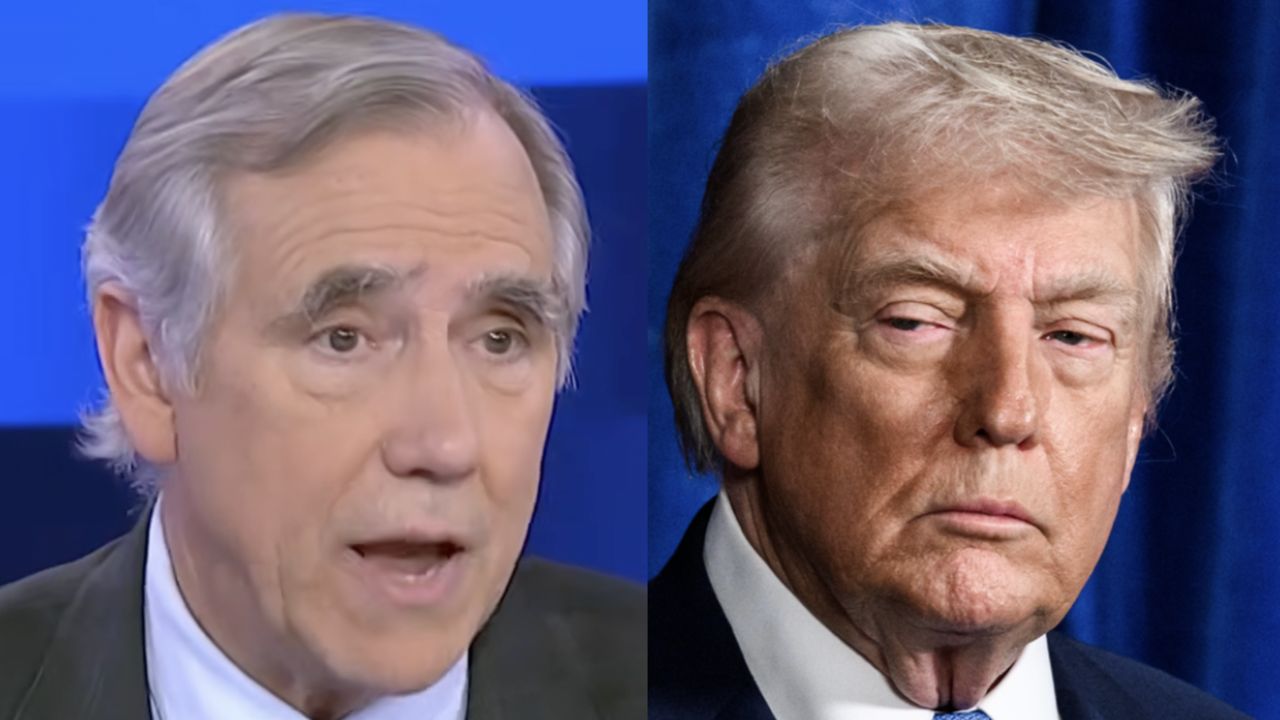
Sen. Jeff Merkley, D-Ore., said the war with Iran is driving up costs for American families and renewed his call to end what he has repeatedly described as an unauthorized conflict. Merkley made the comments on X.
Merkley: “Past Time We Reined In This Illegal War”
“Trump’s war of choice in Iran is sending costs through the roof for folks here at home,” Merkley wrote. “It’s past time we reined in this illegal war and focused on bringing down costs for families in Oregon and across the country.”
Oregon Gas Prices Hit Record High for Labor Day
Merkley’s post came as Oregon’s average price for regular gasoline reached $4.89 a gallon over the Labor Day weekend, according to AAA Oregon/Idaho, the highest Labor Day price on record for the state. AAA spokesperson Marie Dodds attributed much of the increase to the Middle East conflict, saying “the conflict has sent crude oil prices dramatically higher” and that rising crude costs directly raise the price of gasoline and diesel. Oregon’s gas prices rose 7.2% over the preceding month, the largest monthly increase of any state, according to separate tracking by Choose Energy using AAA and U.S. Department of Energy data.
Merkley Has Called War “Illegal” Since Its Opening Days
Merkley, a senior member of the Senate Foreign Relations Committee, issued a statement the day the war began in late February arguing Trump’s strikes were unconstitutional. “The Constitution is clear: Congress has the power to declare war, not the president,” Merkley said, quoting James Madison’s warning that the executive branch is “most prone” to war and citing the toll of the Iraq and Afghanistan wars, in which he said more than 7,000 American service members were killed and more than 50,000 wounded over two decades at a cost exceeding $8 trillion. Those figures are broadly consistent with Pentagon casualty data and the Costs of War Project’s estimate that post-9/11 conflicts in Iraq, Afghanistan and elsewhere have cost approximately $8 trillion when veterans’ future care and other long-term expenses are included.
Senate Republicans Have Twice Blocked War Powers Resolutions
Merkley criticized Senate Republicans in a statement after they voted to block a War Powers Resolution led by Sen. Tim Kaine, D-Va., aimed at ending the conflict, calling the war “a total failure” and noting the Strait of Hormuz “remains closed, choking off vital supplies and raising costs for working families.” Senate Republicans had blocked an earlier version of the resolution in March as well.
Merkley and Colleagues Pressed CBO for Independent Cost Estimate
In May, Merkley, the ranking Democrat on the Senate Budget Committee, joined Sen. Elizabeth Warren, D-Mass., and then-Senate Democratic Leader Chuck Schumer in a letter urging the nonpartisan Congressional Budget Office to independently determine the war’s true cost, writing that “the American people deserve to know the true costs of this conflict, and they deserve transparency and honesty when their government commits the nation to war.” The senators cited testimony from acting Pentagon comptroller Jay Hurst, who told Congress on April 29 that Operation Epic Fury’s cost through that point was about $25 billion, a figure the lawmakers said had since been contradicted by other, higher administration and outside estimates.
Academic Research Estimates Iran War Has Cost Households More Than $300 Each
The Costs of War Project at Brown University’s Watson Institute, an independent academic research initiative, has separately estimated that the Iran war’s disruption to oil markets has added more than $40 billion in extra fuel costs for U.S. consumers since the conflict began, or more than $300 per household, a finding it described as a cost distinct from the Pentagon’s own estimated $29 billion in direct military spending on the operation.
Merkley Says War Is Costing More Than $1 Billion a Day
In a May op-ed, Merkley wrote that gas prices in Oregon had climbed above $5 a gallon and diesel above $6, calling the increases “unaffordable for working families already struggling with high grocery prices, higher housing costs, and sky-high health care costs.” He wrote that the war was “costing taxpayers more than $1 billion a day,” driven substantially by the rapid consumption of expensive munitions that will eventually need to be replaced through additional congressional funding.
Merkley Opposed $88 Billion Supplemental Request
When Trump formally requested nearly $88 billion in supplemental funding in June, largely to cover war costs and replenish depleted munitions, Merkley said the administration should first spend $105 billion in already-appropriated but unspent defense funds before seeking new money, adding: “At a time when Americans are pressed to the wall with high costs … the President of the United States is refusing to lift a finger to help.”
Merkley Has Acknowledged Iran’s Human Rights Record While Opposing War Authorization
In his initial February statement opposing the strikes, Merkley said “the Iranian regime’s human rights abuses and its support for violent proxies across the region are unacceptable,” while maintaining that concern did not justify bypassing Congress’s constitutional war-declaration authority.
War Has Continued Into Its Seventh Month
The conflict, which began Feb. 28 with strikes Trump ordered without congressional authorization, has continued intermittently since, including a ceasefire that later collapsed and renewed strikes in early September, with the Strait of Hormuz remaining a central point of disruption to global oil markets throughout.
Merkley Sits on Foreign Relations and Budget Committees
Merkley, in his third Senate term representing Oregon, serves on the Senate Foreign Relations Committee and is the ranking Democrat on the Senate Budget Committee, positions that have placed him at the center of both the war-powers and war-funding debates throughout the conflict.
National Gas Prices Have Also Climbed Since the War Began
Nationally, the average price of regular gasoline reached $4.15 a gallon as of Sept. 4, up from $2.83 at the start of 2026, according to Choose Energy’s tracking of AAA and Department of Energy data, with the increase attributed substantially to sustained disruptions in the Strait of Hormuz since the conflict began.