
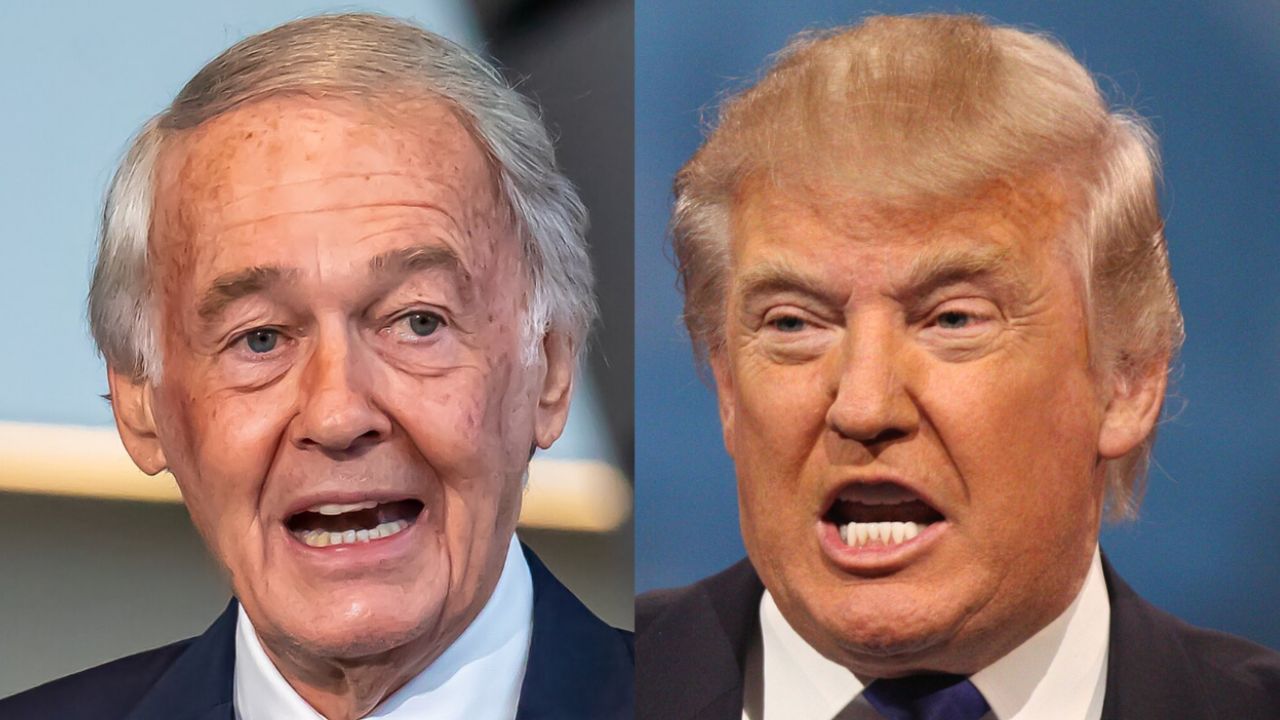
Sen. Ed Markey (D-Mass.) used the eighth anniversary of Washington Post columnist Jamal Khashoggi’s killing on Friday to deliver one of his sharpest warnings yet about President Donald Trump’s civil nuclear agreement with Saudi Arabia. Markey said the kingdom’s leaders cannot be trusted and urged Congress to block a pact he says would let Riyadh enrich uranium usable in nuclear weapons. The post landed as the deal sits before Congress under a 90-day review, with the war against Iran and a closely watched midterm election as its backdrop.
The Post
In a post on X at 11:38 a.m. on Friday, October 2, 2026, Markey wrote the following in full:
“Today’s the 8th anniversary of the brutal slaying of Washington Post columnist Jamal Khashoggi, ordered by Saudi Prince Mohammed bin Salman. We cannot trust Saudi leaders, yet Trump wants to allow them to enrich uranium that could be used for nuclear bombs. Stop the deal.”
Markey attached a link to a Washington Post editorial published Thursday evening, titled “The shadow of Jamal Khashoggi looms over Trump’s flawed nuclear deal.” The Post’s editorial board argued that Riyadh’s conduct after the killing is a central reason to doubt the agreement and that Congress should not extend the kingdom the benefit of the doubt.
The Anniversary
Khashoggi, a Post contributing columnist and prominent critic of the crown prince, was killed and dismembered inside the Saudi Consulate in Istanbul in 2018. According to the Post, U.S. intelligence agencies concluded that Crown Prince Mohammed bin Salman personally approved the operation. Saudi Arabia held a closed trial in 2019 and announced convictions of eight unnamed men, but the editorial says the two top officials said to have directed the operation escaped trial or punishment, and no high-level accountability has followed.
The Deal at Issue
The United States and Saudi Arabia signed a Section 123 civil nuclear cooperation agreement on July 22, 2026, with both countries’ energy ministries announcing the signing. The administration sent the text to Congress in August, starting a 90-day review under the Atomic Energy Act. Under that process, Congress can adopt a joint resolution of disapproval or let the agreement take effect.
The pact omits two safeguards found in the 2009 agreement with the United Arab Emirates. That deal bars the UAE from enriching or reprocessing on its territory and commits it to the International Atomic Energy Agency’s Additional Protocol, which mandates monitoring and inspections. The Saudi agreement would instead let the kingdom begin enriching uranium to 5 percent, with the ceiling eventually rising to 20 percent. The 2015 Iran nuclear deal capped Iranian enrichment at 3.67 percent, and that 20 percent can be enriched fairly quickly to weapons-grade levels.
Concerns about Riyadh’s intentions predate the deal. In March 2018, Markey issued a statement after the crown prince told CBS News that Saudi Arabia would develop a nuclear weapon if Iran did. Last week a U.S. intelligence assessment, based on classified documents given to Congress, found the kingdom remains open to a weapons program. The State Department told the Post that the United States “does not and will not support a Saudi nuclear weapon program,” while defending the agreement.
Markey’s Record on the Issue
Friday’s post is the latest in a months-long campaign. On the day the deal was signed, Markey, co-chair of the bicameral Nuclear Weapons and Arms Control Working Group, said that “allowing Saudi Arabia to develop nuclear weapons would be irresponsible and dangerous.” His statement also pointed to Secretary of State Marco Rubio, who as a senator was among the loudest critics of giving Saudi Arabia nuclear technology.
Markey’s office lists a string of earlier actions. On March 18 he led colleagues in urging Rubio to hold to the “gold standard” of nonproliferation protections, and on March 25 he and Sen. Jeff Merkley (D-Ore.) reintroduced the No Nuclear Weapons for Saudi Arabia Act, which would require an affirmative vote of Congress before any such agreement takes effect. On July 31 he and Merkley, with Reps. John Garamendi and Don Beyer, published an opinion piece against the deal.
After the agreement reached Congress, Markey urged lawmakers on August 26 to reject it. On September 16, he and Merkley led a bipartisan group of senators in pressing the administration to declassify two side letters tied to the deal. On September 25, they sent a letter to Rubio demanding the administration abandon the agreement, arguing it caves to Saudi demands by dropping the strictest inspection standards and an enrichment ban. Sens. Tim Kaine, Chris Van Hollen, Peter Welch and Ron Wyden also signed.
Markey has also targeted Saudi weapons sales. On September 17, he and Merkley, with Sen. Bernie Sanders (I-Vt.), introduced a resolution of disapproval against a roughly $5 billion sale that includes more than 10,000 JDAM guidance kits. Markey said then, “The United States must not send thousands of conventional weapons to Saudi Arabia or allow it to develop a nuclear program.”
The Administration’s Position
The White House has defended the agreement. Spokesperson Taylor Rogers said the civil nuclear deal is contingent on Saudi Arabia joining the Abraham Accords. The Post notes that Riyadh has said it will not recognize Israel without a pathway to a Palestinian state, and says it is unclear whether the condition appears in the agreement’s text. Trump briefly sought to tie the deal to Saudi recognition of Israel but that the condition was dropped.
What Comes Next
Blocking the deal will be difficult. Rep. Gregory Meeks has introduced a joint resolution of disapproval in the House, but overturning a 123 agreement requires a resolution that can survive a presidential veto, meaning two-thirds majorities in both chambers. There are few legislative days left on the calendar and says that, at a minimum, Congress should insist Saudi Arabia accept the same conditions as the UAE.
Critics have also raised questions about possible conflicts of interest. They point to a $2 billion Saudi sovereign wealth fund investment in Jared Kushner’s firm after he left government, and to overlapping interests between Westinghouse’s ownership and Commerce Secretary Howard Lutnick’s family. Reports also described the deal as arriving in the middle of the Iran war, a timing it said risks pushing Tehran toward advancing its own nuclear program.
The political stakes are rising with the November 3 midterms. On the prediction market Polymarket, Democrats’ odds of winning the House stand at 93 percent, a result that would hand them subpoena power and oversight authority over the administration’s foreign policy deals.
For Markey, Friday’s anniversary supplied the frame: a crown prince whom U.S. intelligence tied to Khashoggi’s killing, and a nuclear deal he says Congress should reject. His post ended with the same demand he has made since July: “Stop the deal.”