
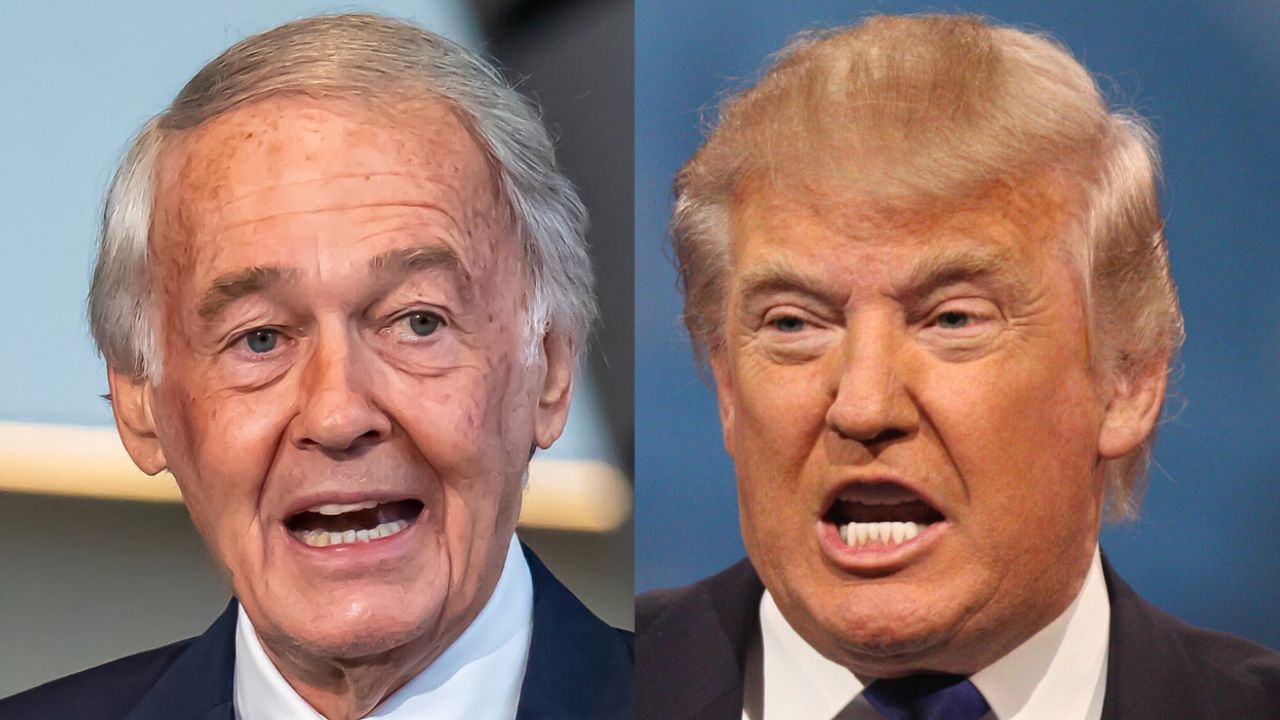
U.S. Sen. Ed Markey (D-Mass.) said in a post on X on Wednesday that President Donald Trump’s war in Iran is causing heating bills to skyrocket this winter. He accused the president of trying to zero out the federal funding that helps families pay those bills. The post came as heating oil prices in New England climbed above $6 a gallon. It also came as the program at the center of the dispute, the Low-Income Home Energy Assistance Program, known as LIHEAP, faces elimination in the White House’s budget request.
The Post
Markey published the statement at 10:44 a.m. on Oct. 7, 2026. In full, it reads:
“Trump’s war in Iran is causing heating bills to skyrocket this winter. To add insult to injury, he wants to zero out funding that helps families pay those skyrocketing bills. I’m fighting to expand LIHEAP, because families shouldn’t have to make sacrifices to keep the heat on.”
The senator attached a news report published Tuesday on rising home heating oil costs. That report described a global energy shock caused by the Iran war pushing prices above $6 a gallon in many places. It said prices in some areas were more than $2 a gallon higher than a year earlier, so some customers face $1,500 or more for a full tank. It also said many heating oil customers describe their household budgets as being at a breaking point.
What LIHEAP Does
LIHEAP is a federal program, administered by the Department of Health and Human Services, that helps income-eligible households pay energy bills and restore service after a disconnection. Markey’s office said an estimated 6 million households nationwide received heating and cooling assistance through the program over the last year. Eligibility varies by state, but most applicants must have household income below 150 percent of the federal poverty guideline or 60 percent of the state median income.
The Budget Fight
The White House released its fiscal year 2027 budget request on April 3. Rep. Shontel Brown (D-Ohio) said in a statement that day that the request seeks $1.5 trillion in military funding, a 42 percent increase, alongside $73 billion in cuts to domestic programs. She said it eliminates LIHEAP. The House Budget Committee’s Democratic staff likewise said the proposal “completely eliminates” the program within HHS. The same document said the budget cuts the Department of Energy by 11 percent.
Congressional Pushback
Rep. Chris Pappas (D-N.H.) led 73 House colleagues in a letter to House Appropriations Committee leadership urging rejection of the proposal. The letter thanked the committee for rejecting the elimination of LIHEAP over five different fiscal years. It asked lawmakers to fund the program “at the highest level possible” for fiscal year 2027.
Markey’s Push for Release of Funds
On Sept. 18, Markey’s office announced he had joined Sens. Jack Reed (D-R.I.), Susan Collins (R-Maine) and Lisa Murkowski (R-Alaska) in urging HHS to release LIHEAP funds swiftly and at the highest level possible. Thirty-one senators signed the letter, including Republican Sen. Dan Sullivan of Alaska. They noted that appropriators had worked on a bipartisan basis to make roughly $4 billion in LIHEAP funds available for the coming year. They also pointed to the “extraordinary pressure consumers will face this winter.”
The Deadline Ahead
The Continuing Appropriations and Extensions Act for Fiscal Year 2027 (P.L. 119-103) requires HHS to distribute no less than 90 percent of its total LIHEAP allotment by Nov. 1, 2026, Markey’s office said. States and tribes typically receive their allocations by early November. Applications are open to all income-eligible households through spring 2027, or until funding runs out. Markey’s office said more households may need help this winter as the cost of oil, gas, propane and other residential fuels rises.
Markey’s Record on the War
Markey has opposed the war since it began. In a statement on Feb. 28, the day the U.S. attack on Iran began, he said, “Trump’s military attack on Iran is illegal and unconstitutional.” He said Congress had not approved it and closed with the line “No more war with Iran.”
On March 18, after voting for a war powers resolution that failed 47-53, Markey linked the conflict to prices at home. “Trump’s chaos abroad is costing us here at home. Gas prices are skyrocketing,” he said. Six days later, after voting for a third resolution that also failed 47-53, his office said 13 U.S. servicemembers had died and gasoline prices had risen 35 percent, or $1 a gallon.
On April 15, Markey voted for a fourth resolution, which failed 47-52. He called the war “a moral tragedy and economic disaster” and said gas prices were $1.20 a gallon higher than before the war. He said vehicle owners would pay $570 more for gas over a year and that the war had cost taxpayers around $50 billion. A week later, after a fifth resolution failed 46-51, he said, “I will not vote for one more penny to fund this illegal war.”
A Long Record on Heating Aid
Markey has pressed for heating aid for years. In a prior release he described himself as the author of the Heating and Cooling Relief Act, legislation to invest in and expand LIHEAP. He said that for fiscal year 2023 he worked with colleagues to secure a total of $6.1 billion in LIHEAP funding, well above the roughly $4 billion now available.
Earlier, in 2008, Markey led a letter signed by 94 House colleagues asking for $5.1 billion for the program in a stopgap funding bill. Congress approved that amount for fiscal year 2009.
What It Means
Markey’s post links two fronts of the Iran war debate in Congress: its cost abroad and its price at home. Each of the four war powers resolutions he addressed in statements between March and April failed, by margins from 46-51 to 47-53. The fight over LIHEAP is now playing out in appropriations, where Congress has so far kept the program alive. With the Nov. 1 distribution deadline less than four weeks away, the pressure now falls on HHS to release the money before the coldest months arrive.