
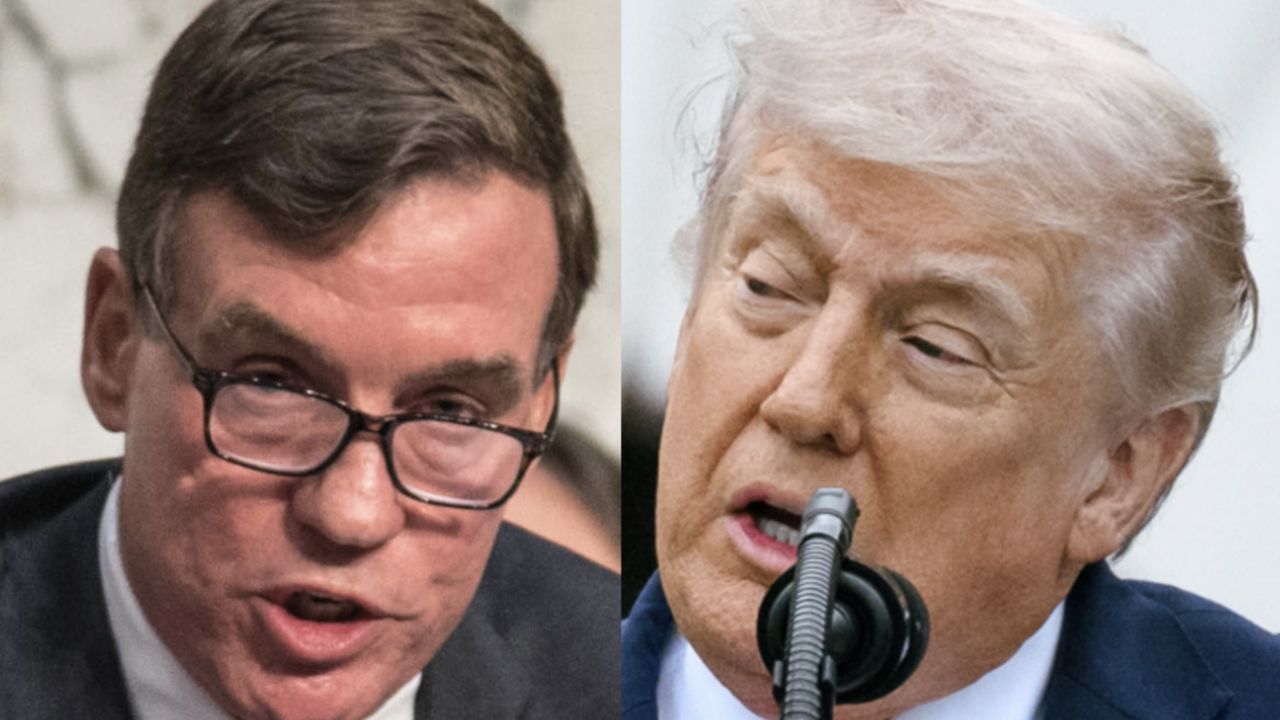
U.S. Senator Mark Warner (D-VA), Vice Chairman of the Senate Select Committee on Intelligence, issued a scathing assessment of President Donald Trump’s war with Iran on Monday, marking the conflict’s sixth month by declaring that it “has been a complete failure” and warning there is “still no end in sight.” Warner’s statement, posted to X on August 31, 2026, arrived hours after the United States and Iran exchanged their first direct strikes in more than a month, ending a period of relative military calm and sending oil prices sharply higher.
Warner’s post laid out a five-point indictment of the war’s trajectory. The full statement, published to his official X account, read as follows:
“We’re 6 months into Trump’s war of choice. What has it accomplished?
- U.S.-Iran strikes are escalating again;
- Oil prices are surging;
- Our servicemembers and military resources are stretched thin;
- Iran’s government is more extreme than it was before the war;
- And Iran still has enriched uranium, missiles, and drones.
The president’s war has been a complete failure, yet there’s still no end in sight.”
The timing of Warner’s statement was not incidental. Monday marked six months and 3 days since the day since Trump announced from Mar-a-Lago on February 28, 2026, that the United States and Israel had launched military operations against Iran, a campaign the president initially suggested could be resolved within four to five weeks.
Renewed Strikes Reignite a Conflict That Had Gone Quiet
Warner’s first bullet point — that strikes between the two countries “are escalating again” — referenced fighting that erupted overnight Sunday into Monday after roughly a month of reduced hostilities. According to Reuters, Iran fired missiles toward U.S. military targets in Jordan and the United Arab Emirates in what it described as retaliation for a U.S. strike on Iranian rocket launchers on Larak Island, while U.S. officials said Iran had also attempted to lay sea mines in the Strait of Hormuz.
Trump was quoted Monday promising to “hit them hard” in response to the overnight missile launches, and the Treasury Department under Secretary Scott Bessent has continued pressing financial institutions to cut ties with Tehran, with Bessent stating that “we’re starting with the banks, and we’re telling the banks it’s not okay to have Iranian money and to aid the regime.”
Oil Prices Surge as Markets React
Warner’s claim that “oil prices are surging” was borne out within hours of his post. Brent crude futures rose more than 2.5%, climbing to roughly $90.27 a barrel by midday Monday and touching an intraday high of $91.52 — the benchmark’s highest level since August 25 — while U.S. West Texas Intermediate crude rose a similar amount to around $85.46 a barrel.
The broader financial toll of the war was also evident on Wall Street Monday, where the S&P 500 fell 0.4% and the Dow Jones Industrial Average dropped roughly 305 points even as energy stocks such as Exxon Mobil and Chevron gained ground. The national average price of gasoline had remained above $4 per gallon every day in August, according to AAA data, marking the most expensive August at the pump on record.
Servicemembers and Military Resources “Stretched Thin”
Warner’s warning about servicemembers and military resources being “stretched thin” echoes concerns he has raised repeatedly since the war began. In an April 2026 statement posted to his official Senate website responding to remarks by Trump on the conflict, Warner noted that “thirteen American service members have already paid the ultimate price,” adding that “we owe them, their families, and every man and woman in uniform clarity, accountability, and a strategy worthy of their sacrifice.”
By late August, other lawmakers were citing even higher casualty figures. Senator Jack Reed (D-RI), the top Democrat on the Senate Armed Services Committee, stated in a release marking the war’s six-month anniversary that “eighteen servicemembers have lost their lives and more than 700 have been wounded,” and said Trump “has entangled the United States in a foreign policy failure of historic consequence.”
Warner Has Repeatedly Called the War a “War of Choice”
Warner’s description of the conflict as “Trump’s war of choice” is language he has used consistently since the war’s opening days. Speaking to PBS NewsHour on March 3, 2026, shortly after a classified congressional briefing on the strikes, Warner said flatly that “this is a war of choice brought by Donald Trump,” adding that while he considers himself “a strong supporter of Israel,” he believed “the timing of this war was dictated by Bibi Netanyahu” rather than by any imminent threat to American forces or allies.
In a separate statement issued from his Senate office responding to the Trump administration’s decision to temporarily lift sanctions on Russian oil, Warner said that “Trump’s war of choice with Iran has come with immeasurable cost to American lives — with 13 servicemembers killed and hundreds more injured — and passed enormous costs on to working families.”
“Iran’s Government Is More Extreme Than It Was Before the War”
Warner’s assertion that Iran’s government has grown “more extreme than it was before the war” aligns with an analysis published in The Washington Post marking the six-month anniversary on Friday, August 28. The Post reported that Trump’s ability to decisively win the conflict declined markedly “after Iranian leaders discovered that they could withstand intense bombardment and slowly degrade the world’s most powerful military with a cheap combination of mines and drones.”
Warner made a similar point in June, telling Meet the Press NOW that the diplomatic arrangement reached with Tehran left the United States “worse than we were before the war.” That same month, in an X post, Warner argued that “Donald Trump keeps claiming the war is about to end… but the truth is, America is still striking Iran,” and accused the president of “breaking every promise, starting new forever wars, and raising costs on everything.”
Enriched Uranium, Missiles, and Drones Remain Intact
The senator’s final point — that “Iran still has enriched uranium, missiles, and drones” — reflects assessments made throughout the summer that the core objectives Trump laid out when he launched the war were not fully met. NBC News reported that Trump described six specific goals for the conflict in his February 28 address, and that six months later, “not a single objective” among them had been fully achieved, according to Reed’s statement, even as Trump sought to publicly characterize the operation as a success.
Warner made the same point in an April 2026 statement, saying “there is still no clear plan to secure Iran’s nuclear material” and that “its ballistic missile capabilities remain a threat,” while criticizing the administration for “easing oil sanctions in a way that is sending billions of dollars back to the very regime we are confronting.”
Democratic Colleagues Echo the Criticism
Warner was far from alone among Democrats marking the war’s six-month mark with public criticism. Senate Minority Leader Chuck Schumer (D-NY) wrote that “Trump’s disastrous war in Iran has accomplished nothing but the depletion of American stockpiles and the weakening of our military standing,” calling it “an abject failure.” House Minority Leader Hakeem Jeffries (D-NY) similarly labeled the conflict a “war of choice” and called for Defense Secretary Pete Hegseth’s removal.
Senator Elizabeth Warren (D-MA), meanwhile, has led a separate effort demanding a nonpartisan accounting of the war’s costs, and in June said that “Trump’s war is a failure by his administration’s own metrics” following the announcement of a memorandum of understanding with Iran, arguing that “Iran is now a more extreme regime with greater leverage over the Strait of Hormuz.”
Republicans Have Defended the Operation
Not all lawmakers have shared Warner’s assessment. Senator Todd Young (R-IN) voted against efforts to curtail Trump’s war powers authority in the conflict’s early days, saying in a March 2026 statement that “Iran has funded terror around the globe, including against Americans and our allies,” and that “an abrupt disengagement could pose increased risks to American lives and interests.” Young added that he wanted “to do my part to help this effort succeed and end Iran’s reign of terror,” while also urging Congress to maintain oversight as the conflict developed.
No Resolution as the War Enters Its Seventh Month
As of Monday, the Strait of Hormuz — a waterway that under normal conditions carries roughly a fifth of the world’s oil shipments — remained a central flashpoint, with vessel traffic through the corridor reported well below pre-war levels amid continued mine and missile threats. Warner’s post did not specify what steps he believes Congress or the administration should take next, but it continued a pattern established across his public statements throughout the war: pairing sharp criticism of the conflict’s toll with calls for greater transparency and accountability from the Trump administration.
With strikes resuming, oil markets reacting, and none of the war’s original objectives fully realized after six months, Warner’s Monday post underscored a message he has delivered consistently since the war’s opening days — that the conflict has imposed steep costs on American servicemembers and the broader economy without a clear resolution in sight.