
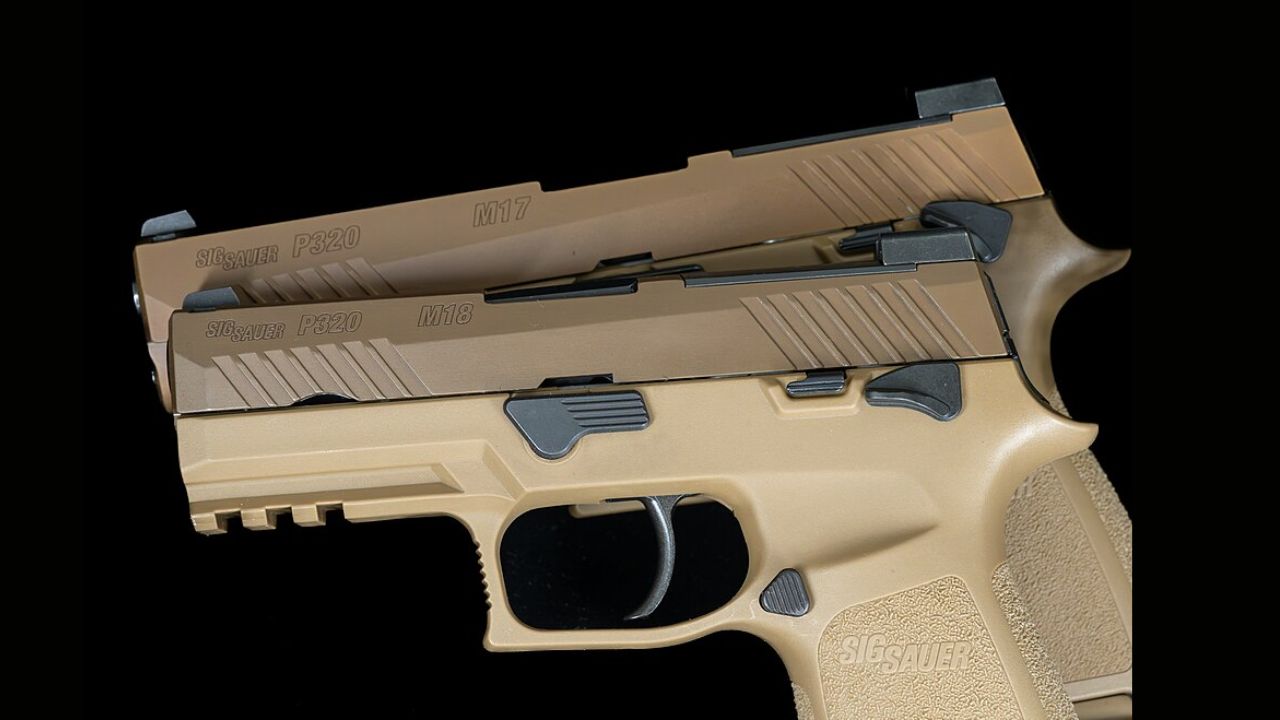
The Marine Corps has formally opened handgun qualification to red dot optics on its standard-issue M17 and M18 pistols, aligning sidearm training with modern combat gear and long-standing rifle practices. The decision reflects a broader shift in Marine marksmanship, where precision pistol fire is treated less as a niche skill and more as a core requirement for Marines who carry sidearms.
The change also signals institutional confidence in the durability and effectiveness of enclosed pistol optics that are already common across the US civilian and law enforcement markets, as well as among allied militaries.
From experiment to official policy
Marines can now use optic-equipped pistols when qualifying in the Combat Pistol Program, a course required for specific jobs and units that issue sidearms, rather than being limited to iron sights alone.
According to a recent policy update, Marines can use an optic during pistol qualifications for the first time, provided the sight is an approved model and installed by unit armorers. The change moves red dots from informal range experiments into the formal scoring system.
The policy is rooted in a change message from the Marines that updates the fiscal year combat marksmanship guidance and explicitly authorizes red dot use on M17 and M18 pistols during qualification events.
That message follows years in which rifle shooters benefited from optical sights as standard equipment while pistol shooters continued to qualify with open sights, despite the growing presence of red dots in combat zones.
Why the M17 and M18 matter
The US armed forces selected the M17 and M18, the military versions of the Sig Sauer P320, as their standard service pistol in 2017, which gave the Marines a modular, optic-ready platform long before the qualification rules caught up.
As the “M17” designation implies, the optic now approved for Marine qualification is designed specifically for the M17 and M18 handguns and is compatible with the same slide cuts and mounting systems used across NATO members and partner countries.
Closely following the specifications of the U.S. Army’s M17 and M18, the commercial versions are compatible with the ROMEO series pistol optic, which helped standardize how an enclosed red dot can be mounted, powered, and protected on this family of pistols.
Commercial offerings such as the Sig Sauer Romeo M17 2/32 MOA Red Dot Circle Sight feature a fully enclosed, sealed optical system that protects the emitter and glass from dust, moisture, and impact, a design that directly addresses earlier concerns about the survivability of slide-mounted optics in field conditions.
The fine print of Marine adoption
According to a recently released MARDMIN (104/26) message, Marines Can Use Red Dot Optic Equipped M18 Pistols for Qualification, but the optic must be on an approved list and mounted to the handgun by unit armorers rather than by individual Marines.
The same guidance notes that Marines are also allowed to use the optic in combat once it is properly installed and zeroed, which means the sight picture Marines see on the qualification range now matches what they will rely on in deployed environments.
Under the updated rules, Marines can now use a red dot optic when qualifying in the Combat Pistol Program, and the scoring standard remains demanding, with shooters required to reach 264 out of 400 points to pass the course.
Though all Marines train with rifles in boot camp, far fewer do so with pistols, and those who are issued a pistol because of their job must now qualify on the weapon using the same configuration they will carry on duty.
Training focus and deployment reality
Additional changes announced in the March 12 message include a shift from annual qualification to deployment-focused training cycles, which places handgun proficiency in the same readiness framework as other combat skills.
Under the new approach, Marines who carry the M17 or M18 will refresh their pistol training as they prepare for operational deployments rather than simply checking a yearly box on a fixed calendar.
Every Marine is a rifleman, but under these new marksmanship rules the few who also shoot pistols can build habits around a single aiming system instead of bouncing between irons in training and optics in combat.
Advocates inside the Corps have argued that red dot optics have been proven on carbines and rifles for decades and can help Marines become better shooters with handguns, particularly under stress and in low light where a bright aiming point is easier to pick up than traditional sights.
Wider context across services
Commentary around the change notes that the Corps is aligning with broader trends across the US military and its allies, which have increasingly treated pistol optics as standard gear rather than specialized accessories.
Observers at the national level have framed the move as part of a gradual modernization in which the Marine Corps, long known for the mantra “Every Marine is a rifleman,” accepts that a modern rifleman is not automatically a pistol expert and that dedicated training with current technology is required.
Within that context, the decision to allow red dot optics for M17 and M18 pistol qualification looks less like a niche equipment tweak and more like a recognition that sidearms, and the Marines who carry them, deserve the same level of attention and capability as primary weapons.