
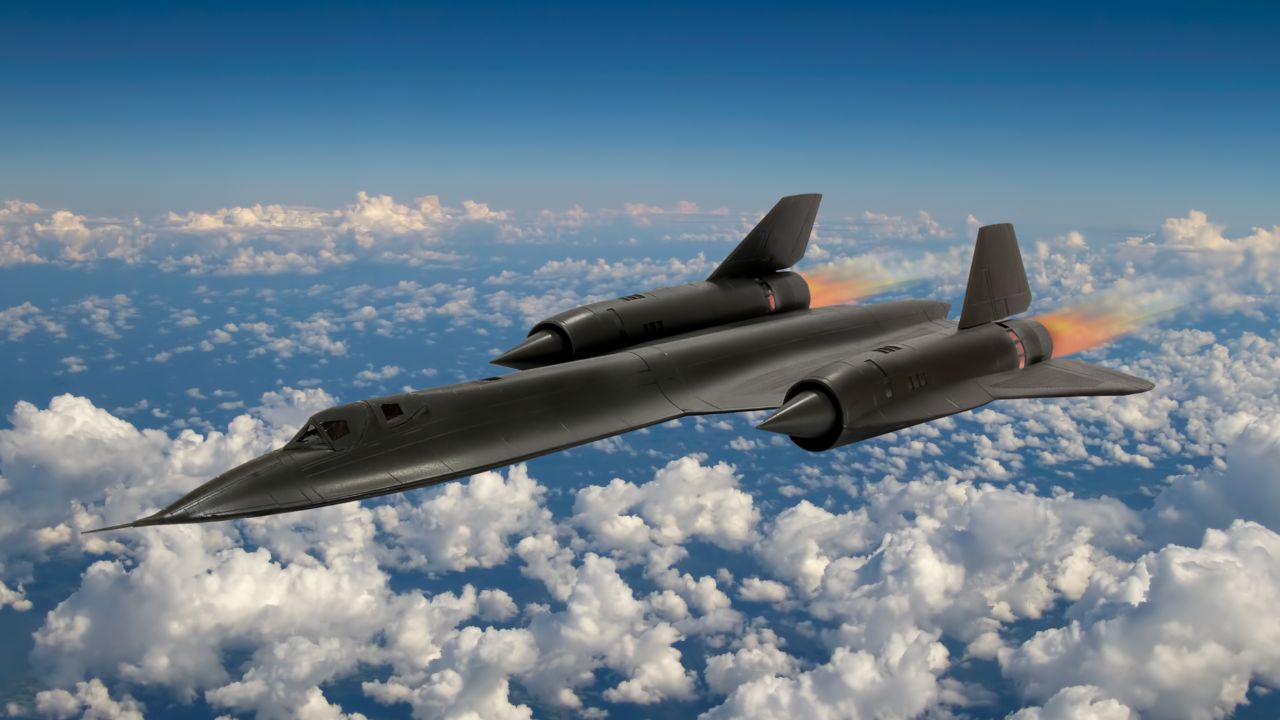
Lockheed Martin’s “Darkstar” concept, originally depicted as a futuristic aircraft in the film “Top Gun: Maverick,” is capturing the imagination of aviation enthusiasts and experts alike. Recent technological advancements suggest that this once-fictional aircraft might be on the verge of becoming a reality, merging Hollywood flair with cutting-edge aerospace engineering.
The Origins of Darkstar
The creation of the Darkstar aircraft owes much to the collaboration between Lockheed Martin’s Skunk Works and Hollywood filmmakers for “Top Gun: Maverick.” Skunk Works, known for its secretive development of advanced technology projects, provided a unique opportunity to showcase a plausible futuristic aircraft. The filmmakers worked closely with the engineers to develop a design that would not only look impressive on screen but also hold roots in real aerospace engineering.
The design of Darkstar draws inspiration from several real-world projects, notably the SR-72, a hypersonic spy plane concept that Lockheed Martin has been developing as a successor to the SR-71 Blackbird. The sleek, angular lines of Darkstar and its emphasis on speed and stealth reflect the advanced capabilities envisioned for future hypersonic aircraft. Upon its debut, the public and industry experts were intrigued by the aircraft’s realistic portrayal and the potential it hinted at for actual aerospace advancements.
Technological Advancements
Hypersonic technology is at the forefront of current aerospace research, with several nations racing to achieve breakthroughs in this area. The Darkstar’s proposed capabilities align with ongoing developments in hypersonic flight, which involves speeds exceeding Mach 5. Recent tests and prototypes have shown promising results, suggesting that the era of routine hypersonic travel might not be far off.
Significant advancements in materials science and engineering are also playing a crucial role in making such an aircraft feasible. New composites and heat-resistant materials have been developed to withstand the extreme temperatures associated with hypersonic speeds. Moreover, the integration of artificial intelligence and autonomous systems is transforming the way aircraft are designed and operated. These technologies promise to enhance the safety, efficiency, and capabilities of next-generation aircraft like Darkstar.
Potential Applications and Implications
A real-world Darkstar could have profound implications for military and defense strategies. Its hypersonic capabilities would allow for rapid response times and enhanced reconnaissance missions, potentially altering the balance of power in international military engagements. The speed and stealth of such an aircraft could provide significant advantages in both offensive and defensive operations.
Beyond military applications, the technologies developed for Darkstar could influence commercial aviation and civilian sectors. The possibility of reducing flight times dramatically could revolutionize air travel, making long-haul flights quicker and more efficient. However, the deployment of such advanced technologies also raises ethical and strategic considerations, requiring careful evaluation to balance innovation with safety and ethical responsibility.
Challenges and Future Prospects
While the prospects for Darkstar are exciting, several technical and engineering hurdles remain. Developing propulsion systems capable of sustained hypersonic speeds, ensuring structural integrity at high temperatures, and integrating complex autonomous systems are major challenges that need to be addressed. Overcoming these obstacles is crucial for transitioning from concept to reality.
Regulatory and safety concerns also loom large. Existing aviation regulations and safety protocols must evolve to accommodate such innovations. Regulatory bodies will need to devise comprehensive frameworks to ensure the safe operation of hypersonic aircraft within civilian airspace. Looking ahead, the successful realization of the Darkstar vision could usher in a new era of aviation, with far-reaching implications for both military and civilian sectors.