
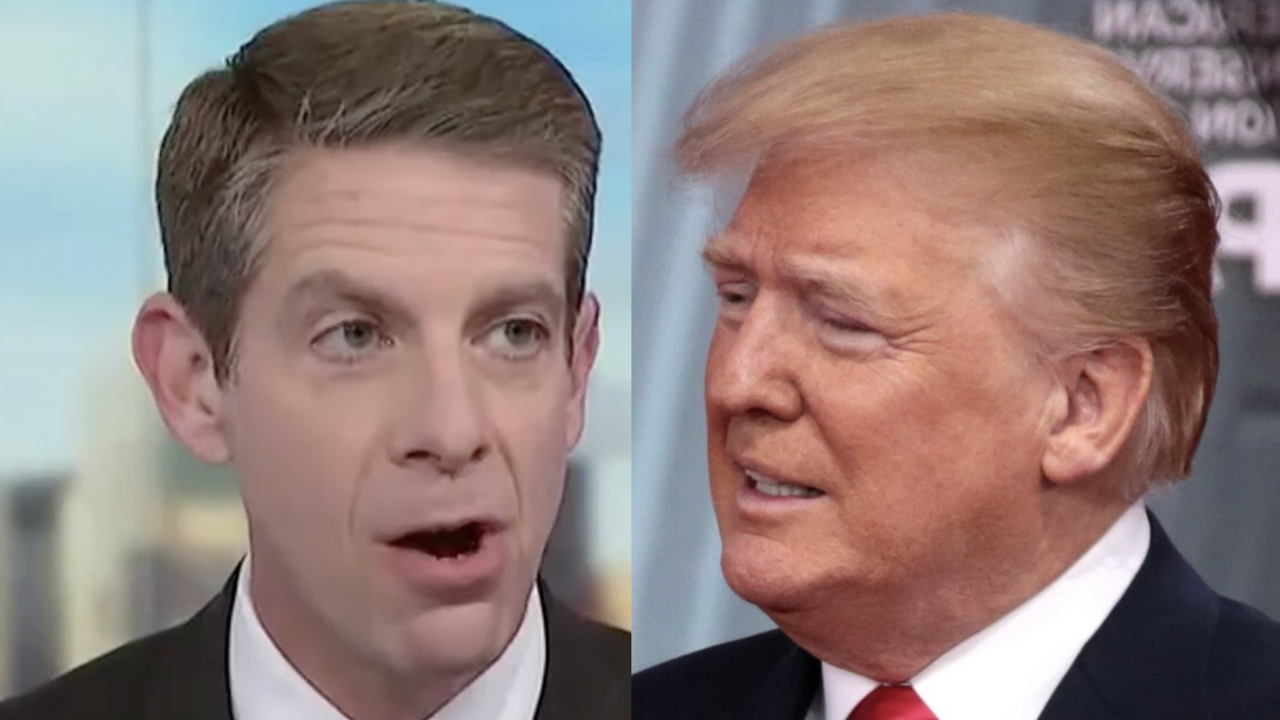
Rep. Mike Levin of California said the Trump administration owes the public an explanation for the whereabouts of billions of dollars in Venezuelan oil revenue, after a Financial Times investigation found only a small fraction of the money has been publicly traced.
“The Trump Administration has some serious explaining to do because there’s a ton of money missing and ZERO explanation for where it went,” Levin wrote on X. “It has collected an estimated $13 billion from Venezuelan oil sales. Take a wild guess on how much of that is currently accounted for. The answer is $300 million. That’s roughly 2.3 percent. And even that information came from the Venezuelan government, not the Trump Administration. So where is the rest of the money?”
Levin linked a Financial Times investigation published July 22 that found the Trump administration had collected more than $13 billion in revenue from Venezuelan oil sales since U.S. forces captured Venezuelan President Nicolás Maduro in a January raid, while providing almost no public accounting of how the money has been used or where it currently sits.
Trump has offered shifting explanations for the funds since the oil sales began. On Jan. 6, Trump wrote on Truth Social that the oil revenues “will be controlled by me, as President of the United States of America, to ensure it is used to benefit the people of Venezuela and the United States.” Three days later, Trump signed Executive Order 14373, “Safeguarding Venezuelan Oil Revenue for the Good of the American and Venezuelan People,” which declared a national emergency under the International Emergency Economic Powers Act and stated that the funds are the sovereign property of Venezuela, to be held by the U.S. Treasury “solely in a custodial and governmental capacity, and not as a market participant.” The order directs the Treasury Secretary to disburse or transfer the funds only as instructed by the Secretary of State.
Secretary of State Marco Rubio told Congress in June that the oil sales are audited by KPMG and that the funds are held in a Citibank account. “It’s an ongoing audit, so it’s not a once-a-year audit, it’s on every expenditure, every single disbursement is audited by KPMG,” Rubio testified. Energy Secretary Chris Wright separately told Semafor in April that the U.S. had sold approximately 150 million barrels of Venezuelan oil since January, and said in February that the administration had initially deposited $500 million in oil sale proceeds into an account in Qatar under U.S. government control.
Trump addressed the Financial Times report directly for the first time on July 27, when a reporter asked him aboard Air Force One where the $13 billion had gone. “Thirteen billion from Venezuela? I think even more than that,” Trump said. “Venezuela, we paid for that war many times over. And that’ll happen with Iran also. We paid for the war many times over.” Trump did not directly answer the question of where the money currently is.
The $300 million figure Levin cited has a more specific origin than Venezuelan government statements alone. At a Jan. 28 Senate Foreign Relations Committee hearing, Rubio testified that the first $500 million sale of Venezuelan oil had been deposited in a Qatari bank account, and that $300 million of that amount had since been transferred to Venezuela’s government to meet payroll obligations for public sector employees, according to a letter from Reps. Sean Casten and Sen. Chris Van Hollen to Treasury Secretary Scott Bessent recounting that testimony. Rubio separately testified the Treasury Department has a written agreement governing use of the funds, though the letter noted the agreement’s full terms had not been made public.
A State Department witness testified before Congress in April that approximately $3 billion had been authorized for disbursement to Venezuela but could not specify how much money remained under U.S. control at that time, according to reporting on the testimony.
Levin, a member of the House Appropriations Committee’s Subcommittee on Military Construction, Veterans Affairs and Related Agencies, has previously joined other Democrats in pressing for greater transparency around administration funding decisions tied to the Iran war and the Pentagon’s casualty reporting.
Congressional Democrats have pressed the administration for months for clarity on how the Venezuelan oil funds are managed, who ultimately benefits, and what independent oversight exists over the arrangement, with some lawmakers calling for an independent audit separate from the administration’s internal KPMG review.
The oil revenue has accumulated since U.S. special forces captured Maduro in a Jan. 3 raid that the Pentagon code-named Operation Absolute Resolve, a mission Joint Chiefs of Staff Chairman Gen. Dan Caine said involved more than 150 aircraft launched from 20 bases across the Western Hemisphere. After the operation, the administration announced plans to seize and sell Venezuelan crude, with early proceeds initially structured through an escrow arrangement in Qatar before shifting to conventional dollar-denominated sales as the program scaled up.
Neither the White House nor the State Department has issued a detailed public accounting of the $13 billion beyond Rubio’s June testimony and Trump’s brief remarks aboard Air Force One.