
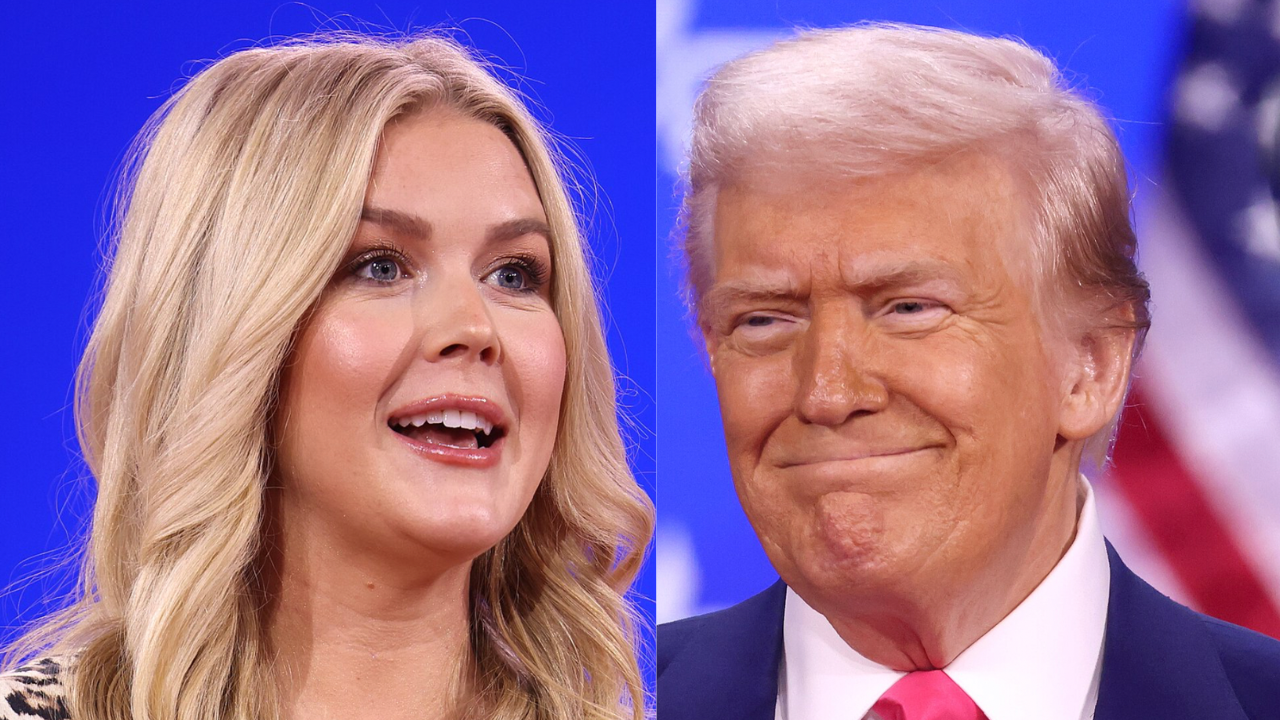
White House Press Secretary Karoline Leavitt told reporters Thursday that President Donald Trump’s primetime address on election integrity would “shock” the American public, previewing a speech that the administration says will be backed by newly declassified facts and evidence about the safety of U.S. elections.
Speaking from the James Brady Press Briefing Room in her first appearance since returning from maternity leave, Leavitt said the findings Trump plans to reveal at 9 p.m. Eastern tonight would surprise anyone approaching them with an open mind. “It does it will shock you if you have an honest eye listening to the president tonight,” Leavitt said, adding that “everything he is saying will be backed by facts and by evidence that will be provided this evening.”
The remarks came after ABC correspondent Garrett pressed Leavitt on why the president appeared unable to move past the 2020 election, noting that the 2024 contest — in which Trump won a decisive victory — has been widely accepted as secure, while the 2020 race has already undergone “dozens of recounts, lawsuits, audits.” Leavitt rejected the premise of the question outright. “I think part of the problem is that the media has refused to acknowledge that tens of millions of Americans across the country share the concerns of this president about the sanctity of our elections,” she said, accusing the reporter of “jumping ahead to a conclusion in this speech before even hearing it.”
Leavitt framed election security as a matter that should transcend party lines. “I think all Americans, Democrat, Republican, should agree that we are the greatest country in the history of the world,” she said. “We should have the safest and most secure elections in the history of the world. And what the president will be speaking about tonight will show you that perhaps that is not the case.”
She tied the speech directly to legislative action already underway on Capitol Hill, pointing to the Save America Act as “a key legislative priority for this president” and saying Trump “wants to see all senators and members of Congress voting in favor” of the bill, which she described as “crucially important as we move forward.”
Later in the briefing, when CBS’s Ed asked directly whether Trump would accept the results of November’s midterm elections, Leavitt again declined to get ahead of the speech. “You should tune in to the president’s speech tonight before you jump ahead to conclusions about what’s actually in the speech,” she said, adding that she had “seen a lot of reporting and misreporting about what the president will say.”
The press secretary also addressed concerns from some Republicans that a speech centered on past elections could distract from pocketbook issues ahead of the midterms. Bloomberg’s Rachel Bade noted that GOP lawmakers on the Hill have said focusing on the economy would be a smarter pre-election strategy, and asked how the White House would respond to Republicans uneasy about the speech’s timing. Leavitt pushed back on the idea that the White House was choosing one priority over another. “This administration and especially this president are able to walk and chew gum at the same time and tackle a number of issues on a number of different subjects every single day,” she said, noting Trump would continue to travel the country to talk about the economy regardless of tonight’s topic.
Asked again later in the briefing whether the address would also cover Iran, given the intensified U.S. strikes this week, Leavitt said the speech’s focus was not a matter of ranking priorities. “It’s not a matter of importance. It’s just a matter of timing,” she said. “The president will be making a very important announcement with respect to the integrity of our elections.” She added that Trump could still touch on Iran or the economy at the top of his remarks, noting that “President Trump is a man of his own word” who is “sometimes thinking about these things up until he walks out.”
Leavitt closed her comments on the speech by calling on television networks to broadcast it in full and encouraging viewers to reach their own conclusions. “I think that the mainstream media should air the president’s speech and allow the American people to draw their own conclusions from it,” she said, responding to a question about Rep. Alexandria Ocasio-Cortez’s calls for networks to decline carrying the remarks. “I think it’s important that the American public hears directly from the president of the United States on a topic that is very near and dear to the hearts of many Americans across the country.”
According to reporting from the briefing room, Trump has in recent days floated a range of topics for the address, including voting machines and election integrity more broadly, with some outlets noting the speech could revisit disputed claims about his 2020 loss to Joe Biden. The address is scheduled to air at 9 p.m. Eastern and stream live on multiple television and online outlets.
The speech arrives as the administration pushes the Save America Act, a federal elections bill that Leavitt said the late Sen. Lindsey Graham had discussed with Trump shortly before his death, calling it a legislative priority he believed the party was well positioned to advance. Leavitt said House Speaker Mike Johnson and congressional Republicans are working to attach elements of the Save America Act to a forthcoming budget reconciliation package, a process she said the president supports.
The briefing also marked Leavitt’s return to the podium after nearly three months away following the May birth of her daughter, Viviana. During her absence, Vice President JD Vance, Secretary of State Marco Rubio, Treasury Secretary Scott Bessent and other officials rotated through briefing duties. Leavitt is the youngest press secretary in U.S. history and the first to have given birth while serving in the role.
Trump’s address comes roughly four months before the November midterm elections, with control of Congress at stake. The speech is expected to air alongside continued coverage of the administration’s confrontation with Iran and this week’s inflation data, both of which Leavitt also addressed during Thursday’s briefing.