
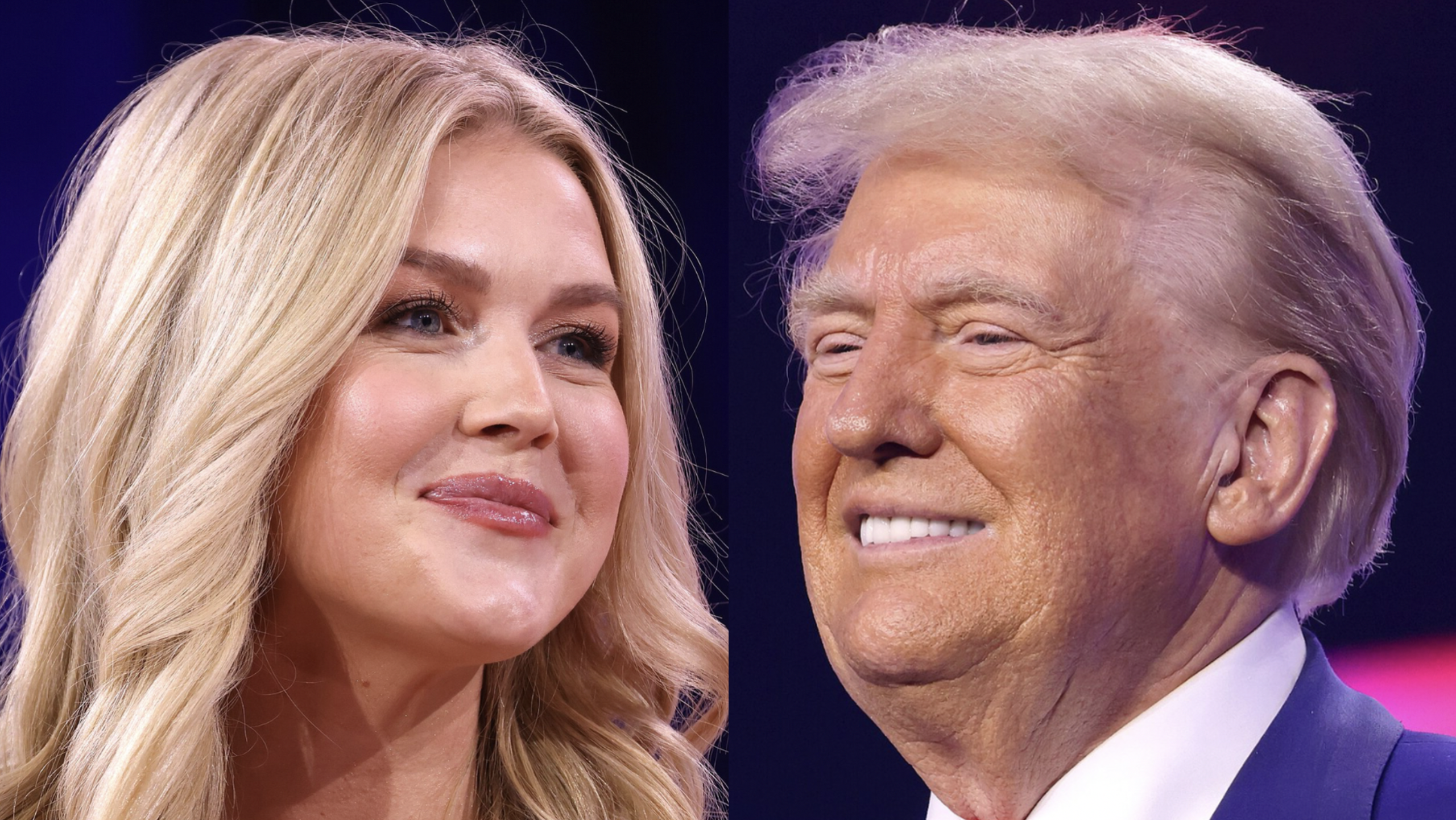
White House Press Secretary Karoline Leavitt used her official X account on Tuesday to spotlight the U.S. military’s latest recruiting numbers, framing the achievement as further evidence of a turnaround in the armed forces under President Donald Trump. In a post published at 9:51 a.m. on August 4, 2026, Leavitt wrote in full: “US military hits recruiting target, exceeds retention goals.” The post, sent from her verified @PressSec account, linked to a Fox News segment detailing the Army’s recruiting resurgence at Fort Hood, Texas.
The post arrives amid a broader pattern of the Trump administration publicizing recruiting and retention figures across every branch of the armed forces throughout 2026, part of a sustained messaging effort tying military manpower gains to the president’s leadership and to Secretary of War Pete Hegseth’s overhaul of Pentagon recruiting strategy. Leavitt’s message did not include additional commentary beyond the headline-style statement, instead directing followers to the linked video segment for details.
The Fox News video Leavitt linked, titled “US military hits recruiting target, exceeds retention goals,” aired on the network’s “Special Report” program and was reported by correspondent Brooke Taylor. It was accompanied by a written Fox News article published August 3, 2026, which reported that the Army has already reached its fiscal year 2026 active-duty recruiting goal, with more than 61,500 future soldiers signing on for service.
According to the Fox News report, Fox was granted exclusive access inside Fort Hood, one of the Army’s largest installations, where commanders and soldiers described what they characterized as the drivers behind the recruiting resurgence. The report noted that after hitting a low point in fiscal year 2022, Army recruiting has climbed every year since, rising nearly 38% overall, with the sharpest increase coming in fiscal year 2025.
Among the soldiers featured was infantryman Guadalupe Campos, who enlisted at 18 and recently extended his service nearly six years later. “I wanted to do my due diligence and service to my country,” Campos said. He added that the Army has reinforced both his patriotism and the bonds formed with fellow soldiers: “I love my country, I love America. This is our home, and we have, I mean, this is everything that we all have in common is this American flag that we fly on our right shoulder.” Campos also described the Army as a unifying institution for people from different backgrounds, saying, “A lot of the guys that I worked with, they come from a lot of parts of life, whether it’s good or bad. And at the end of the day, we have that one common goal and that’s to be ready when the time comes for us to have to do our jobs. We serve and protect the United States Constitution and its people from enemies of a foreign and domestic, and we take that to heart.”
Jade Root, an Army Recruiting battalion commander, told Fox News the numbers reflect a broader desire among young Americans to serve a cause larger than themselves. “Locally we have seen a strong sense of young men and women who want to serve a purpose much higher than themselves. They understand the opportunities that the Army provides to acquire critical skills and leadership skills that will last them a lifetime,” Root said. Root went further, connecting the recruiting figures to a larger cultural signal: “I think it shows a strong signal that patriotism is alive and well. We have a high propensity of people that want to serve, but most importantly that our Army is growing.”
Army leaders interviewed by Fox News attributed the rebound to a combination of patriotism, benefits and purpose, noting that today’s typical recruit is about 23 years old and that recruiters are spending increased time in high schools, on college campuses and within local communities. Root also emphasized the human dimension behind the recruiting statistics: “I always ask our recruiters, remember they are not just a number, this is someone’s son or daughter.”
The report also highlighted the scope of career paths now available within the service, noting the Army offers more than 200 career fields spanning medics, helicopter mechanics, cybersecurity, engineering, military intelligence and animal care. Army Animal Care Specialist Grizel Cornejo told Fox News that many prospective recruits are surprised by that range of opportunity: “It’s really encouraging for people to realize they can have the career they want… but also be in the Army and serve the country.” Fox News further reported that Army leaders are increasingly prioritizing recruits with technical skills in cybersecurity, engineering and military intelligence as the service prepares for future battlefield requirements.
Leavitt’s Tuesday post is consistent with the Army’s own account of its recruiting timeline this year. The Army officially announced on May 23, 2026, that it had met its fiscal year 2026 active-duty recruiting goal of signing more than 61,500 future soldiers, doing so four months before the fiscal year’s September 30 close. In a release posted to the service’s official website, Brig. Gen. Sara Dudley, commanding general of the U.S. Army Recruiting Division, said, “I’m incredibly proud of our U.S. Army Recruiters,” crediting recruiters’ dedication to attracting “the best, most qualified talent” as the reason for reaching the milestone.
The Army’s release also noted that command teams framed the achievement in terms beyond raw numbers. Command Sgt. Maj. Danny Basham, the Recruiting Division’s command sergeant major, said the recruits “are actively showing their commitment to something larger than themselves,” adding that “the nation depends on their strength, character and commitment.”
This marked the third consecutive fiscal year the Army has met its enlistment target, following shortfalls in 2022 and 2023 that had prompted the service to overhaul its recruiting approach, including the creation of the Future Soldier Preparatory Course, a program designed to help applicants meet academic and physical fitness standards before formally enlisting. In 2025, the Army hit its recruiting goal of 61,000 in early June — at the time the earliest the service had reached its target in more than a decade — before exceeding it with a final count of 62,050 recruits.
The Army’s 2026 success has not stood alone. The Air Force and Space Force announced in April that they had met their combined fiscal year 2026 recruiting goals of roughly 32,000 active-duty accessions five months ahead of schedule, enlisting 32,750 active-duty airmen and 730 active-duty Guardians. The Marine Corps has also reported meeting its 2026 goal of 26,600 recruits, while the Navy announced in early July that it had reached its target of 45,000 future sailors three months early — after raising that goal by 10% from the prior year.
Defense Secretary Pete Hegseth has repeatedly publicized the recruiting gains throughout the year, including in testimony before the House Armed Services Committee on April 29, 2026, when he told lawmakers the military was experiencing what he called “the historic, record-breaking surge in recruiting in our ranks,” adding that the services were “meeting recruiting goals halfway through the year” and, in some cases, having to “turn people away and push them to the next fiscal year.” Hegseth cited the trend as justification for a Pentagon budget request seeking to grow the force by roughly 44,500 additional troops.
Hegseth also addressed the Army’s specific 2026 milestone directly during a commencement address at the United States Military Academy at West Point on May 23, 2026, telling graduating cadets: “Recruitments are up across the joint force, and I’m pleased to announce that just two days ago, the U.S. Army met its 2026 recruiting goals four months early. A second record year in a row.” He told the newly commissioned officers they would soon be leading many of the 61,500 new soldiers reflected in that total.
The administration has consistently tied the recruiting turnaround to a broader narrative of restoring what officials describe as a merit-based, mission-focused culture within the ranks. The Pentagon’s chief spokesman laid out this framing as early as June 2025, when it was announced that the Department of Defense had seen its highest percentage of recruiting mission achieved in three decades since Trump’s election, prompting the creation of a dedicated Military Service Recruitment Task Force to sustain the gains.
Taken together, Leavitt’s Tuesday post continues a pattern set by senior administration and defense officials throughout 2026: publicizing recruiting and retention data across the Army, Navy, Air Force, Space Force and Marine Corps as evidence of renewed enlistment interest among young Americans. For commanders at installations like Fort Hood, officials say the figures reflect more than a bureaucratic target reached — they describe a new generation of service members stepping forward, motivated, in their telling, by patriotism, career opportunity and a desire to serve a cause larger than themselves.