
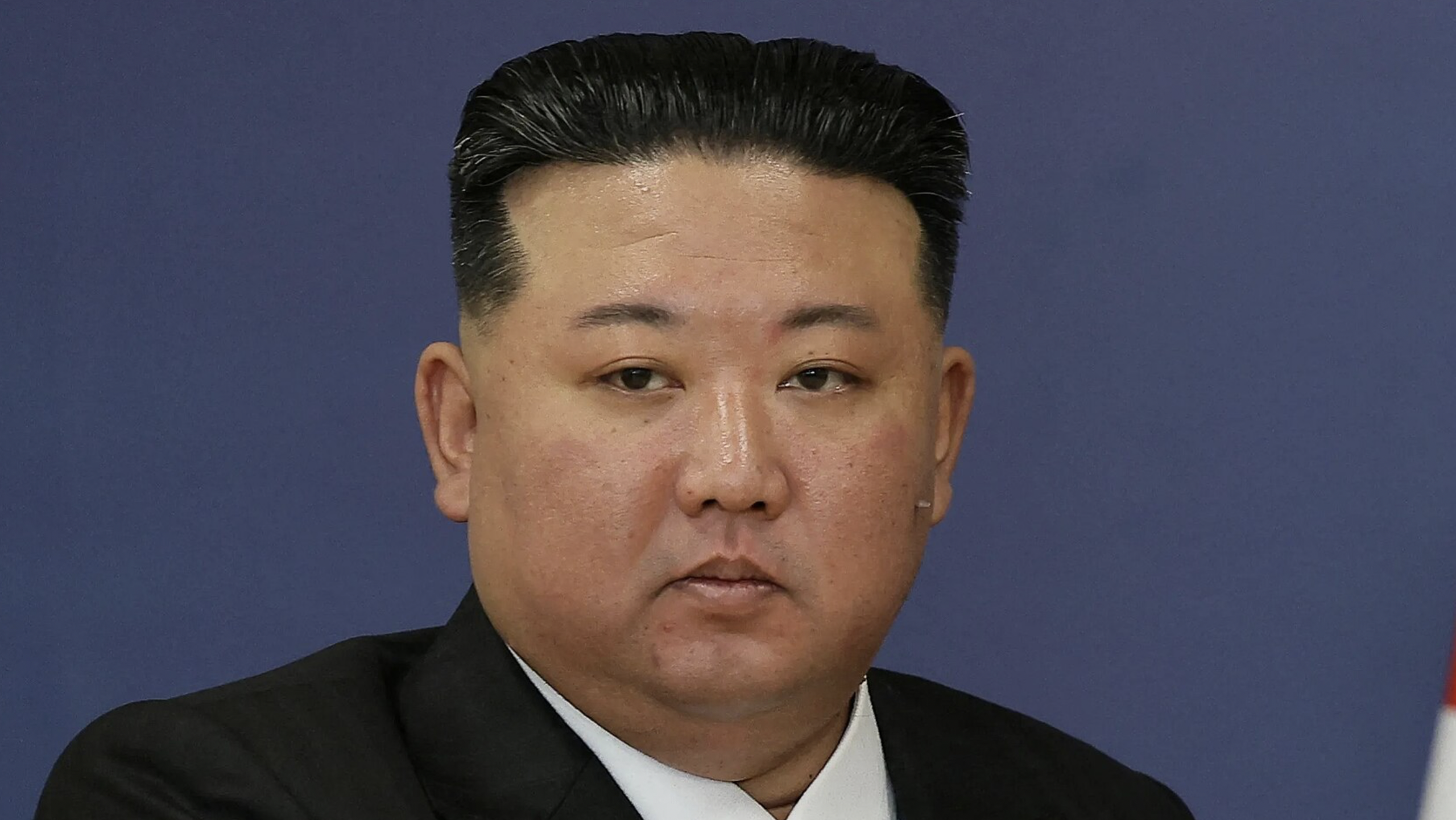
North Korean leader Kim Jong Un has publicly confirmed that his country’s troops fighting alongside Russian forces in the war against Ukraine have been ordered to take their own lives rather than be captured, marking the first official acknowledgment of a policy long suspected by intelligence sources and battlefield reports.
The remarks were delivered during a ceremony in Pyongyang marking the inauguration of a memorial museum dedicated to North Korean soldiers killed in the conflict. According to state-run media, Kim praised what he described as the “extraordinary heroism” of troops who “unhesitatingly opted for self-blasting, suicide attack,” framing such actions as acts of loyalty and sacrifice in combat conditions tied to the ongoing war effort.
North Korea is the only third-party nation known to have deployed ground troops directly into the conflict between Russiaand Ukraine, a war that has now stretched beyond four years since its escalation in 2022. The deployment is part of an expanding military alignment between Pyongyang and Moscow under Vladimir Putin. South Korean intelligence estimates indicate that approximately 15,000 North Korean soldiers have been sent to support Russian operations, including combat efforts in the western Kursk region. Of those, roughly 2,000 are believed to have been killed, though exact figures remain uncertain.
The memorial ceremony, attended by Russian defence minister Andrey Belousov, coincided with the first anniversary of Russia’s recapture of territory in Kursk that had been seized by Ukrainian forces. Images from the event showed rows of soldiers assembled behind graves of fallen troops as part of the commemoration.
Kim referenced the policy of battlefield suicide multiple times during his speech, stating that soldiers chose death to protect national honor and emphasizing that they did not expect compensation or reward for what he called their “self-sacrifice through self-blasting.” The language reinforced longstanding accounts suggesting that North Korean forces are instructed to avoid capture under any circumstances.
Previous reporting had indicated the extreme measures taken by these troops. Since their presence in Russia became publicly known in late 2024, only two North Korean soldiers have reportedly been captured alive. Ukrainian accounts have described heavy casualties among their ranks, and one wounded soldier was said to have attempted to bite his own wrists in an effort to avoid detention.
Kim also characterized the broader military campaign as “a new history of friendship with Russia written in blood” and described the war as a “sacred war to wipe out the Ukrainian armed invaders,” underscoring the ideological framing being used domestically to justify the deployment.
Beyond the battlefield, the relationship between North Korea and Russia continues to deepen. Discussions between Kim and Belousov included plans for a new military cooperation agreement covering the period from 2027 to 2031. This would build on the Comprehensive Strategic Partnership Treaty signed in 2024, which includes a mutual defense clause committing both nations to provide immediate military assistance in the event of armed aggression.
The war has also provided Pyongyang with opportunities to test and refine its weapons systems under real-world conditions. North Korea has conducted multiple missile launches in 2026, including tests of the Hwasong-11 short-range ballistic missile, also known as the KN-23 or KN-24, systems that Ukrainian officials have said were supplied to Russian forces for use in the conflict.
At the same time, international monitoring agencies have raised concerns about broader military developments. Rafael Grossi, director general of the International Atomic Energy Agency, recently reported a “rapid increase” in activity at North Korea’s nuclear facilities, signaling continued expansion of the country’s strategic weapons capabilities alongside its growing involvement in the prolonged war.