
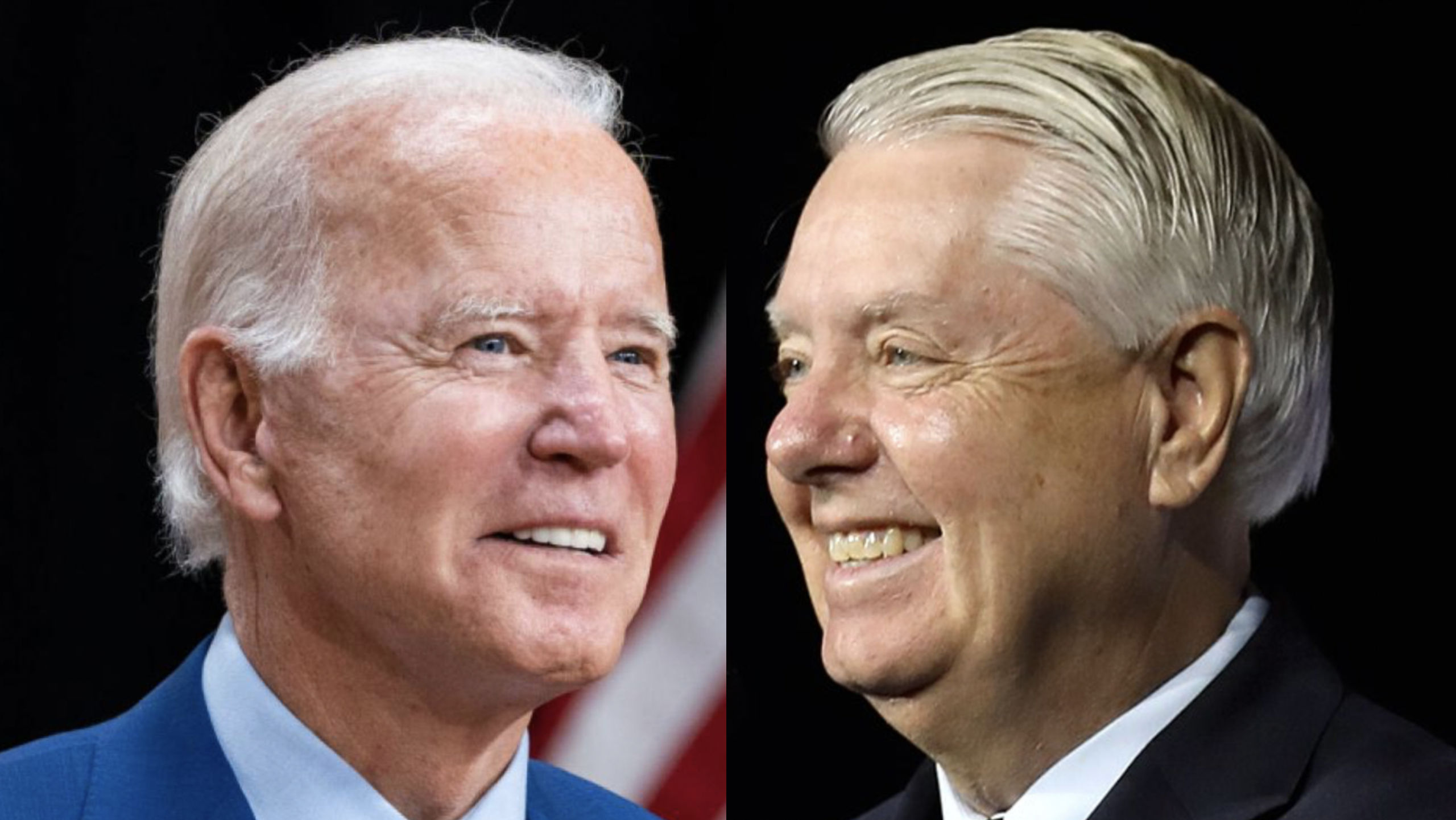
Former President Joe Biden said Sunday that he and Jill Biden were “shocked” by the sudden death of Senator Lindsey Graham, the South Carolina Republican who served alongside Biden in Congress for more than a decade and later became one of the Senate’s most prominent voices on military intervention and foreign policy. Graham, 71, died Saturday evening from what his office described as a brief and sudden illness, just hours before he was scheduled to appear on NBC’s “Meet the Press.”
Biden’s statement, posted to X at 10:39 a.m. on July 12, 2026, was among the first from a former president and placed particular emphasis on the two men’s shared history on the Senate Foreign Relations Committee, where both built reputations as advocates for an assertive American role abroad, even as they frequently clashed on domestic policy and Graham later became one of former President Donald Trump’s closest allies in the Senate.
The Full Statement
Biden’s post read in full: “Jill and I are shocked by the sudden passing of Lindsey Graham. Lindsey and I served together in Congress for over a decade, and worked closely on many issues throughout the years. We traveled the world together as members of the Senate Foreign Relations committee. We disagreed often, and sometimes loudly. Lindsey and I did agree on the profound importance of public service. Like me, he loved the Senate as an institution, even with all its flaws and complexities. To his family, his staff, his constituents in South Carolina, and everyone who loved him: Jill and I are keeping you in our prayers.”
A Rivalry Rooted in Shared Committee Work
Biden’s own two-plus decades in the Senate overlapped with Graham’s for more than ten years, and the two men crossed paths most frequently through their work on the Foreign Relations Committee, where Biden served as chairman for several years before becoming vice president. Both men were known during that period for favoring a muscular U.S. presence overseas, with Graham frequently teaming up with the late Senator John McCain and Senator Joseph Lieberman on trips abroad to press for American military engagement, particularly during the Iraq War.
Biden’s statement did not shy away from the friction that also defined the relationship, noting plainly that the two “disagreed often, and sometimes loudly.” That tension became especially visible after 2016, when Graham shifted from being one of Trump’s sharpest Republican critics to one of his most reliable defenders, and again in the aftermath of the 2020 election, when Graham’s phone call to Georgia’s secretary of state drew scrutiny from investigators examining efforts to challenge Biden’s victory. Graham was ultimately not charged in that inquiry.
Common Ground on Institution and Service
Despite those disagreements, Biden’s statement pointed to a shared reverence for the Senate itself, saying Graham, “like me,” viewed the chamber as an institution worth defending “even with all its flaws and complexities.” That framing echoed language Biden has used throughout his public life to describe his own attachment to the Senate, where he served Delaware for 36 years before becoming vice president and later president. The sentiment offered a notable point of unity between two men who had spent much of the past decade on opposite sides of nearly every major political fight.
The Circumstances of Graham’s Death
Graham’s office said in an early Sunday statement that the senator died from “a brief and sudden illness,” without providing further detail. He had just returned from his tenth trip to Ukraine, where he met with Ukrainian President Volodymyr Zelensky on Friday and visited a drone factory during what turned out to be his final overseas trip. Law enforcement officials told reporters they had seen no indication that Graham’s death resulted from unnatural causes, describing the review as standard procedure. Graham had won a fifth Republican primary for his Senate seat just last month and had been set to face Democrat Annie Andrews, a pediatrician, in the November general election.
A Career Defined by Foreign Policy and Political Transformation
Graham’s Senate career, which began in 2003 after he succeeded longtime Senator Strom Thurmond, was defined in large part by his advocacy for American military power, his strong support for Israel and Ukraine, and his willingness to buck his own party on issues such as immigration and gun control earlier in his tenure. He later became one of the architects of President Trump’s judicial confirmations as Judiciary Committee chairman and helped shepherd Trump’s tax and spending agenda through the Senate as Budget Committee chairman. That trajectory marked one of the more striking political transformations in recent Senate history, given that Graham had once branded Trump a “demagogue” during the 2016 campaign before becoming one of his most consistent defenders.
Reactions From Across Washington and the World
Biden’s statement was one of dozens issued Sunday as tributes poured in from across the political spectrum. Trump called Graham “one of the greatest people and Senators I have ever known,” while Senate Majority Leader John Thune said Graham “believed in the might of America to achieve good in the world.” Vice President JD Vance, who served alongside Graham in the Senate, recalled clashing with him over Ukraine funding one day only to find him quietly supporting Vance’s own legislative priorities the next. Israeli Prime Minister Benjamin Netanyahu called Graham a “beloved friend,” and Zelensky said he was “deeply saddened,” describing Graham as someone who understood the values that make the world safer.
Biden’s Broader Legacy With Graham
Biden’s tribute did not attempt to smooth over the two men’s political differences, but it did underscore a relationship that stretched back to a period when bipartisan travel and cooperation on foreign policy was more common on Capitol Hill. That theme was echoed by other Democrats who worked closely with Graham, including Senator Chris Coons of Delaware, who has described their bond as a complicated but genuine friendship built through both cooperation on foreign aid and bitter disputes such as the 2018 Kavanaugh confirmation fight.
Closing
Graham’s death leaves South Carolina Governor Henry McMaster to appoint a temporary replacement for the seat, and it comes as Senate Republicans already face the prolonged hospitalization of Senator Mitch McConnell of Kentucky, thinning the chamber’s ranks of senior lawmakers. For Biden, whose own Senate tenure and worldview on foreign policy were shaped in many of the same committee rooms and overseas trips as Graham’s, the statement stood as a reminder of a Senate era increasingly defined in retrospect by relationships that crossed party lines even amid deep and public disagreement.