
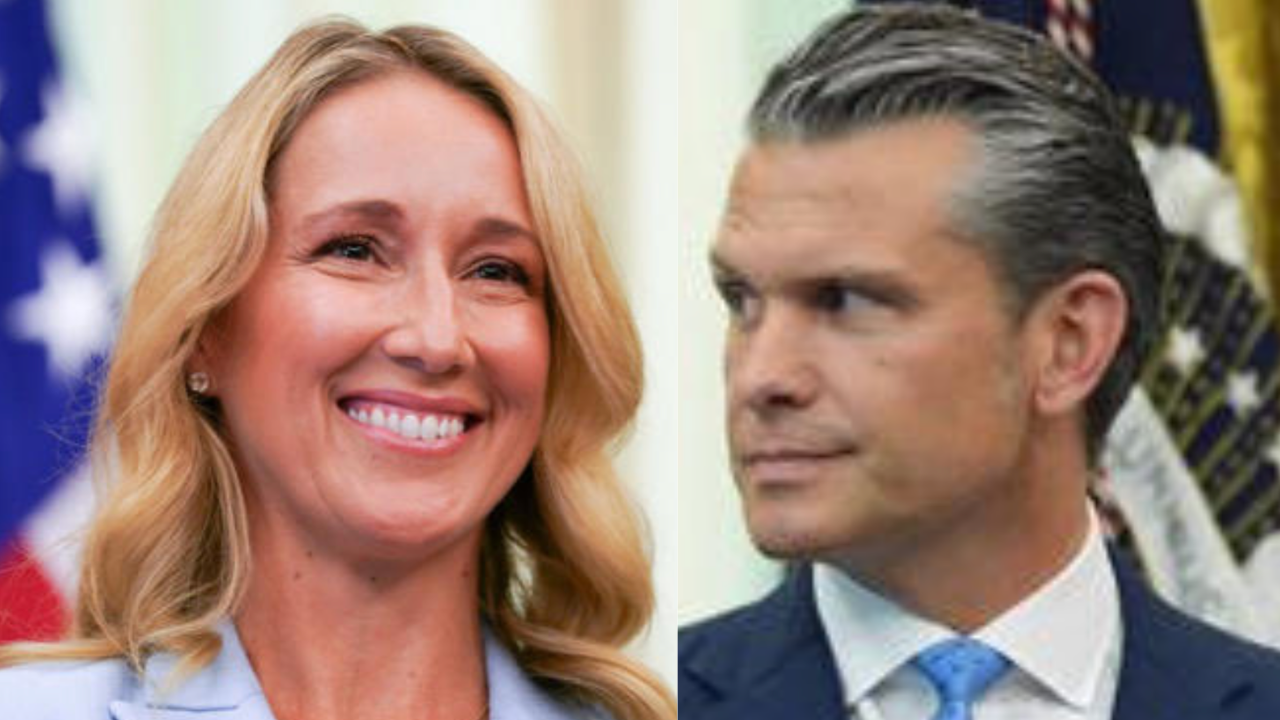
When President Trump signed the executive order creating the President’s Military Spouse Commission on Monday, he handed the floor to its new chairwoman, Jennifer Hegseth, wife of Secretary of War Pete Hegseth. Her remarks, delivered in the Oval Office and captured in the official White House video of the signing, laid out a personal and specific case for why the commission exists — grounded not in policy abstractions but in a year of her own travel and conversations with military families.
“Generational Issues That Are Long Overdue”
Hegseth opened by thanking Trump directly, framing the commission as a continuation of his broader record on military issues rather than a standalone initiative. “Mr. President, you have been a champion for the military, and we are so grateful for that, and that continues today,” she said. “And like you said, these are generational issues that are long overdue to address.”
Why She Trusts the Commission’s Members
Hegseth spent much of her remarks vouching for the specific people who would sit on the commission with her, arguing their qualification was lived experience rather than credentials. “We have the most amazing women here who have decades of experience as military spouses themselves, um, to take a look at it,” she said. “There’s really nothing we’re gonna find that they haven’t experienced. And so between what they’ve experienced and what they know, we’re gonna really tackle these things.”
A Year of Listening, Repeated in Every Location
The most substantive part of Hegseth’s remarks described the groundwork she said she had already done before the commission formally existed. “I’ve spent the last year traveling around, meeting with military spouses and families around the world and around the country,” she said, “and it’s the same from Kentucky to Singapore. It’s housing, it’s healthcare, it’s employment, it’s childcare, it’s education.” That framing — the same five problems surfacing regardless of geography, whether a domestic posting or an overseas one — became the organizing logic she offered for what the commission would actually examine. “So we’re gonna take a look at all of those things,” she said.
The Paramedic Story
Hegseth illustrated the employment problem with a specific, if anonymized, example from inside the room. “Even one of the women up here, I won’t, I won’t say who, but was a paramedic,” she said, “and as they moved from state to state, she could not get the license switch to that state in time before you move again, before you PCS” — using the military shorthand for a Permanent Change of Station — “and it makes it really difficult for these families to survive, let alone all the other sacrifices we’re asking for them.” The anecdote functioned as a concrete stand-in for the licensure-portability problem the commission’s founding order identifies as one of several barriers military spouses face in sustaining a career across repeated relocations.
Connecting the Commission to a Message for Troops
Hegseth closed by tying the commission to a phrase she said her husband uses when addressing deployed servicemembers directly. “Every time Pete travels around…” she began, then corrected herself mid-sentence — “Secretary Hegseth” — prompting Trump to laugh. “Travels around talking to the troops, he tells them, ‘The President has your back,’ and now the families know that you have their back, too, and we are grateful. Thank you.” Trump replied simply: “Thank you, Jennifer. Great job. Thank you.”
Who Chairs the Commission
Under the order’s own terms, the chair position is defined as “the spouse of the Secretary of War” rather than a separately appointed role, which is how Jennifer Hegseth came to hold it. The order specifies that if she is “unable to serve as Chair for any reason,” the commission’s executive director would perform the chair’s duties until the president designates a new one — tying the position directly to her husband’s role rather than to an independent nomination process.
The Data Behind Her Anecdotes
Hegseth’s paramedic story and her broader housing-healthcare-employment-childcare-education list are consistent with data federal agencies have published on the scale of the problem. The U.S. Department of the Interior’s own Military Spouse Employment Partnership page states that military spouses face “a 25 percent unemployment rate and a 25 percent wage gap compared to their civilian counterparts,” and that “77 percent of these spouses want or need work, yet frequent relocation is often a barrier to finding and maintaining a rewarding career” — the same relocation-driven employment barrier Hegseth illustrated with the paramedic’s licensing struggle.
How Her Remarks Match the Order’s Text
Hegseth’s five-issue list — housing, healthcare, employment, childcare, and education — maps almost exactly onto the duties laid out in the official executive order she now leads, which directs the commission to develop policy “in key areas such as housing, employment, healthcare, education, and deployment-related support.” The overlap suggests her remarks weren’t simply ceremonial framing but a direct preview of the commission’s actual working agenda.
Speaking as Both Chair and Spouse
Notably, Hegseth’s remarks blended two roles at once — the commission’s newly appointed chairwoman laying out its mandate, and a military spouse herself speaking from personal proximity to the demands of the role her husband holds. Her closing line, translating “the President has your back” from a message for deployed troops into one for their families, was the clearest example of that dual framing, and it was echoed almost word for word hours later when Secretary Hegseth posted his own tribute to her on X.
What Happens Next
Under the order’s terms, Hegseth and the commission’s other members are now tasked with monitoring the order’s implementation, continuing to liaise directly with military spouses, and submitting a report to the president at the end of each fiscal year. Her remarks at the signing suggest that reporting process will draw heavily on the year of listening tours she described having already completed — meaning the commission’s first substantive output may lean less on new research than on synthesizing conversations she said she has already had with families “from Kentucky to Singapore.”
A Personal Framing for a Federal Body
What stands out across Hegseth’s remarks, taken together, is how consistently she grounded a formal federal advisory body in individual, specific stories rather than abstract policy language — a single unnamed paramedic’s licensing delay, a self-correction mid-sentence about her husband’s title, a closing line borrowed from what she said he tells troops overseas. That approach may shape how the commission itself operates going forward, given that its chair has already signaled a preference for anecdote-driven evidence over the kind of aggregate statistics typically cited in federal reports on military family policy.