
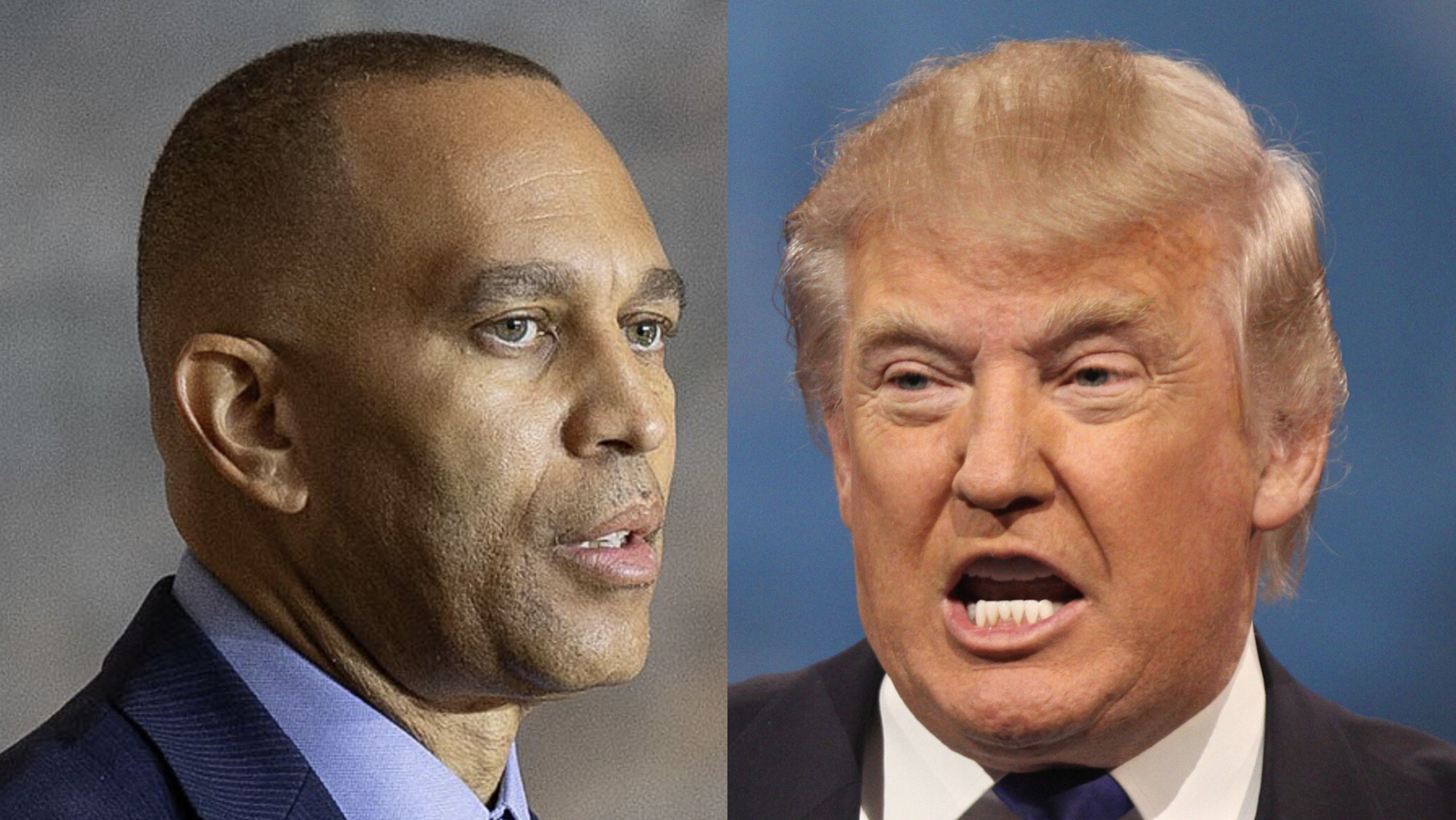
House Democratic Leader Hakeem Jeffries (D-N.Y.) accused oil companies of profiteering off the ongoing conflict with Iran on Friday, arguing that record industry earnings are coming directly out of the pockets of American drivers struggling with gas prices that have climbed sharply since fighting escalated this month.
In a post on X published at 9:47 a.m. on July 31, 2026, Jeffries wrote: “Oil companies are making record profits as a result of the Republican war of choice in Iran. Meanwhile. Everyday Americans are drowning in skyrocketing gas prices. Hold the crooks accountable.”
The post is Jeffries’ latest attempt to link the economic fallout of the Iran conflict to the broader affordability message House Democrats have built their midterm campaign around, and it lands as the war enters its sixth month with no clear resolution in sight.
Oil Majors Post Blowout Earnings as War Enters Sixth Month
Jeffries’ post came the same day major oil companies reported second-quarter results showing sharp profit growth tied to the disruption in Middle East energy markets. ExxonMobil reported that its quarterly profit doubled to $14.53 billion, powered in part by record diesel production, while revenue rose 42% to $116.02 billion. Chevron reported that its profit nearly quadrupled to $12.07 billion as revenue jumped 56% to $70.06 billion. Six of Europe’s largest oil companies posted combined first-quarter profits of $22 billion, more than 40% higher than the prior year.
The conflict, now in its sixth month, has halted most shipping through the Strait of Hormuz, a narrow waterway that previously carried roughly a fifth of the world’s oil and natural gas. With global supply constrained, Brent crude soared from about $70 a barrel to above $100 for much of March, April and May, at one point touching $126.
Crude Prices Climbing Again in July
Brent crude was trading above $88 a barrel on Friday, extending its monthly advance to more than 20% amid renewed hostilities between Washington and Tehran and reports that tankers were being forced to turn around in the Strait of Hormuz. Iran’s Fars news agency reported that the Revolutionary Guards stopped two tankers from passing through the waterway and diverted four others, though Kpler ship-tracking data showed two very large crude carriers that loaded in the Gulf successfully exited the strait on Friday. By some measures, Brent was on pace for a nearly 24% monthly gain in July, its strongest since March, as the temporary pause in fighting between the U.S. and Iran collapsed, Yemen’s Houthis became more involved in the conflict, and Saudi forces joined U.S. operations against Iran-backed groups in Iraq.
Iran also claimed it struck two tankers transiting the Strait of Hormuz under U.S. military escort, though Western maritime authorities had not confirmed the incident as of Friday. Elsewhere, attacks near Russia’s Black Sea oil export infrastructure, including the Caspian Pipeline Consortium terminal that serves Kazakhstan’s exports to European refiners, have added further uncertainty to global supply, even after the CPC decided to continue operations. Declining U.S. crude inventories and a Ukrainian strike on Russia’s Volgograd refinery have compounded the pressure on prices.
Pump Prices Squeeze American Drivers
The national average price for a gallon of regular gasoline stood at $4.106 on Friday, according to AAA, nearly a dollar higher than the same time last year. Crude oil has remained in the $80-per-barrel range for weeks as instability along the Strait of Hormuz persists, and AAA noted that the seasonal relief drivers typically see as August arrives could be delayed by elevated crude prices. California, Hawaii and Washington remain the most expensive markets in the country for gasoline, while several southern states have posted the lowest prices nationally.
Democrats Push Windfall Tax on Oil Profits
Friday’s post is consistent with a broader push by Democratic lawmakers to tax the windfall profits oil companies have collected during the war. Sen. Sheldon Whitehouse (D-R.I.) and Rep. Ro Khanna (D-Calif.) have proposed legislation to tax big oil’s windfall gains tied to the Iran-driven price crisis, arguing the revenue should be returned to households facing higher costs. Khanna said in a statement that Trump’s war in Iran is not just a moral mistake but an economic blunder driving up gas prices for working Americans. Dozens of consumer and environmental advocacy groups, including the Sierra Club and Public Citizen, sent a letter to Congress backing the proposal.
Jeffries’ Long-Running Opposition to the War
Jeffries has repeatedly criticized President Trump’s decision to enter the conflict, describing it in a statement following the initial escalation as a moment when the president “promised to bring peace to the Middle East” but instead increased the risk of war, adding that he was praying for the safety of American troops deployed to the region.
Jeffries has also joined other House Democratic leaders, including Whip Katherine Clark, Caucus Chair Pete Aguilar, and the ranking members of the Foreign Affairs, Intelligence and Armed Services committees, in announcing votes on Iran war powers resolutions aimed at reining in the administration’s military authority. One such resolution, sponsored by Reps. Thomas Massie (R-Ky.) and Ro Khanna (D-Calif.), failed on the House floor by a narrow 212-219 vote earlier this year, with all but two Republicans opposed and four Democrats crossing the aisle. Jeffries later said Democrats intended to bring a new resolution to the floor reflecting developments in the conflict.
Iran War Folded Into the Affordability Message
Jeffries has increasingly woven the war into his party’s broader “Fighting for an Affordable America” agenda, which he unveiled as Democrats kicked off the 100-day sprint to the November midterms. Speaking at the launch event, Jeffries argued that Republicans had been willing to spend money on what he called Trump’s “reckless war of choice in Iran” while failing to make life more affordable at home, telling the crowd that when it comes to lowering costs for Americans, “the cookie jar is empty.”
Jeffries has also pledged that Democrats would crack down on price gouging, ban stock trading by the president, vice president and members of Congress, and push to release additional files related to the Justice Department’s investigation into Jeffrey Epstein if the party regains control of Congress. On the war specifically, Jeffries told supporters that a Democratic-controlled Congress would work to “force President Trump to wind down” the conflict, which was nearing its fifth month at the time.
Midterm Stakes and a Battleground Push
Jeffries has been vocal in recent weeks about Democrats’ chances of flipping the House majority in November, framing the war and its economic fallout as central to that effort. Democrats are working against the historical trend of a sitting president’s party losing seats in midterm elections, but strategists believe voter disapproval of the war, combined with anger over gas and grocery prices, gives the party an opening. Jeffries and Pennsylvania Gov. Josh Shapiro have campaigned together in Pennsylvania’s 7th Congressional District, one of fewer than 20 seats considered genuine toss-ups nationally, in support of Democratic candidate Bob Brooks, a retired firefighter challenging the Republican incumbent.
In a separate interview, Jeffries acknowledged divisions within the Democratic caucus exposed by this year’s primary season but said the party remains focused on flipping Republican-held seats, lowering costs and opposing what he called “MAGA extremism,” while continuing to criticize Trump’s handling of the Iran conflict as a “war of choice.”
Background: A War Now in Its Sixth Month
The current conflict between the United States and Iran began earlier this year and has since drawn in additional regional actors, including Yemen’s Houthi movement and Saudi forces operating alongside U.S. troops against Iran-backed groups in Iraq. The Pentagon’s war casualty count has topped 600 amid ongoing questions about transparency from the administration, and recent polling from NBC News has shown that most voters disapprove of how Trump has handled the conflict. House Speaker Mike Johnson (R-La.) has said he will not use the War Powers Act against the administration over the war, instead calling on NATO allies and other Middle Eastern nations to take on a larger role in the conflict.
Friday’s post keeps Jeffries’ message consistent with statements he has issued throughout the war, from his initial expressions of concern over troop safety to his current framing of the conflict as both a moral and economic failure. As oil companies report another quarter of outsized profits and gas prices remain elevated heading into the fall, Democrats are signaling that the war’s economic toll will remain a central line of attack through November.