
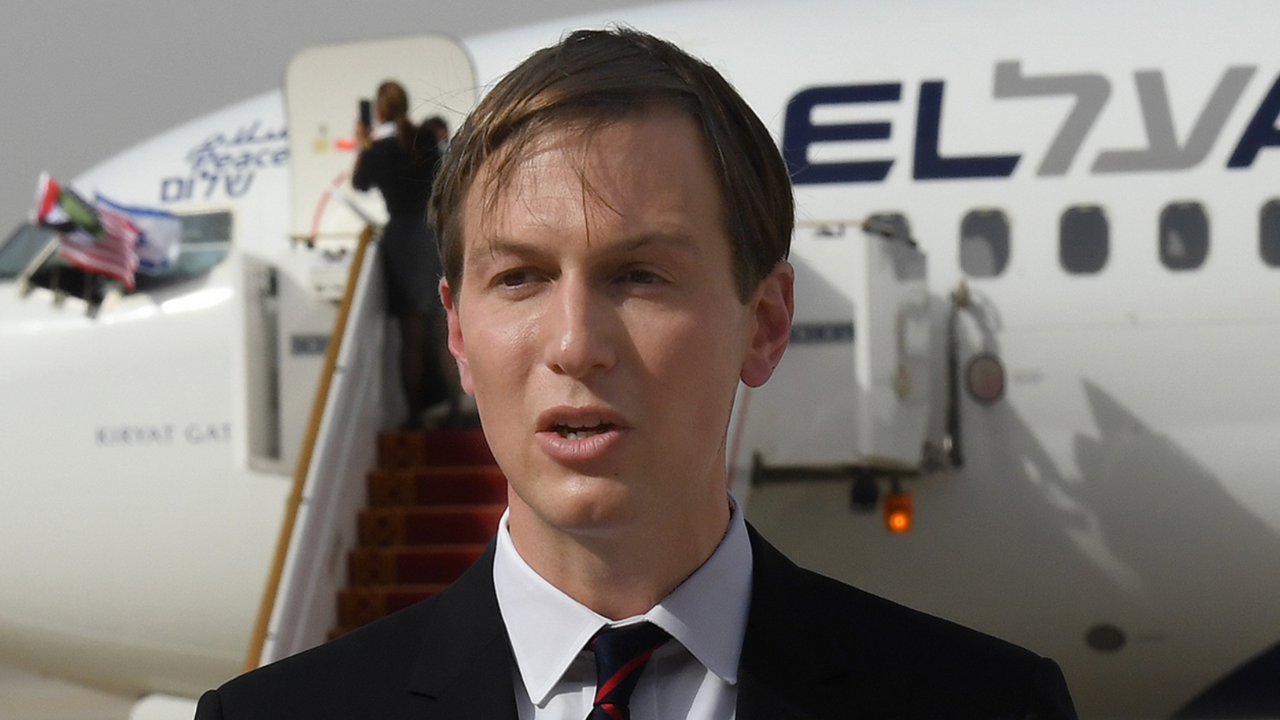
United States Special Envoy for Peace Jared Kushner said Monday that Iran is “not showing any interest” in reaching a nuclear agreement with the United States as the 60-day memorandum of understanding between Washington and Tehran expired without a permanent peace deal. Kushner made the remarks in an interview with Fox News’ Trey Yingst on August 17, the same day the ceasefire framework signed by President Donald Trump and Iranian President Masoud Pezeshkian in June ran out.
“President Trump’s been very focused on the economic pressure. He really feels strongly about the blockade,” Kushner told Yingst. “If you look at the Iranian economy, it’s way worse off. It was bad before the war. It’s way worse off now. But President Trump’s been very clear on why he took the actions he took, which is he believes that Iran cannot have a nuclear weapon. And if Iran is willing to finish the deal that they’ve been discussing with us to give up their ability to create a nuclear weapon, then obviously he’s willing to make a deal that could be great for the Iranian people, and it’s something he would be open to. But right now, they’re not showing any interest in doing something that makes sense for us.”
The memorandum of understanding, a 14-point framework brokered in Islamabad and signed on June 17, established a 60-day negotiating window intended to produce a lasting nuclear agreement and address the reopening of the Strait of Hormuz. The framework called for an immediate cessation of hostilities and mutual respect for sovereignty, but the two sides began accusing each other of violations almost immediately. Trump declared the agreement “over” on July 7, after which the United States resumed strikes on Iranian targets and Tehran announced it was suspending its own obligations under the accord.
Economic Pressure and the Naval Blockade
Kushner’s comments underscored the administration’s current strategy of leaning on economic and military pressure rather than active battlefield escalation as the 60-day window lapsed. Trump has continued to enforce a naval blockade in the region and has directed the Treasury Department to prepare additional sanctions targeting Iran’s economy. Treasury Secretary Scott Bessent announced on August 14 that the administration intended to impose what he described as unprecedented measures against Tehran.
Iranian officials have disputed how the deadline should be interpreted. Foreign Ministry spokesperson Esmail Baghaei told Tasnim News Agency that the 60-day window applied only to nuclear negotiations and not to the broader memorandum, while Foreign Minister Abbas Araghchi said in a Telegram post over the weekend that Tehran “has not yet made a decision to restart negotiations with the United States.” Araghchi added that mediators from Qatar and Pakistan have continued relaying messages to Iranian officials, and that Tehran is separately negotiating with Oman over new shipping routes through the Strait of Hormuz, though he said that arrangement depends on reaching a broader political settlement.
Nuclear Demands Remain the Central Obstacle
Kushner reiterated that Trump’s central demand of Iran has not changed since the war began on February 28: Tehran must permanently give up any capability to build a nuclear weapon. Trump made the same point Monday morning in a post on Truth Social, writing that “the number one Goal is, and always will be, that Iran cannot have, in any way, shape, or form, a Nuclear Weapon.”
Kushner said the United States remains open to a broader economic arrangement with Iran if Tehran agrees to verifiably dismantle its nuclear program. “They have to be willing to make a real deal,” Kushner said of Iranian negotiators. “I think if they’re going to try to play a trick or do something to hide certain cards and get certain concessions, for not — President Trump wants to make a fair deal, that could be a win-win. But that has to be very basic, and they have to want to be a real country, which is no nuclear weapons and no funding terror in the region.” Kushner added that Iran possesses what he called the world’s fifth-largest store of natural resources and “could be one of the wealthiest countries in the world if they choose to pursue it.”
The IRGC Back Channel
Yingst pressed Kushner on Trump’s claim, made earlier Monday in a separate Fox News interview, that a back channel exists between the administration and senior officials of Iran’s Islamic Revolutionary Guard Corps, outside the formal diplomatic track. Kushner declined to detail the channel but confirmed its existence. “I can’t go into the details of it, but I will say that the conversations between the US government and different areas of the Iranian government at all areas is probably more robust than it’s maybe ever been,” Kushner said. “There’s been a lot of good dialogues, which I think is very helpful. You can’t make deals with each other if you don’t understand each other. You have to exchange views. There’s really not a lot of trust between America and Iran after all these years of not having these relations and dialogues. But obviously they’re engaging in a very strong way, and that’s quite positive. But we’re not there yet on an understanding, and President Trump’s going to be very patient. He doesn’t want to rush to a deal. He’ll make the right deal when the right deal is ready. But we are having very positive and active conversations, and we’ll see what happens.” Asked how recently those contacts had occurred, Kushner said only that “there’s quite frequent conversations.”
Separate reporting has indicated that one of the intermediaries used in earlier stages of the back-channel effort was Nechirvan Barzani, president of Iraq’s Kurdistan Regional Government, who has relationships with officials on both sides. A source told the Times of Israel that an IRGC official conveyed support for Iran’s negotiating team through the channel, saying “I fully support them and this is also the position of the IRGC. We prefer to solve this crisis through negotiations.”
Kushner’s Expanding Role Since the War Began
Kushner’s involvement in the Iran file has grown steadily since the conflict began in February. He was part of the American delegation, alongside Vice President JD Vance and special envoy Steve Witkoff, that traveled to Islamabad in the spring for ceasefire talks with Iranian negotiators. He later joined Witkoff at a follow-up round of talks near Lucerne, Switzerland, in June, the day after Trump signed the memorandum of understanding, where the two briefed skeptical Republican lawmakers on the vague terms of the 14-point document.
Kushner and Witkoff also met with Oman’s Minister of Foreign Affairs, Sayyid Badr bin Hamad Al Busaidi, in Geneva in late February, part of a broader effort to use Gulf intermediaries to keep lines of communication with Tehran open even as fighting continued. That diplomacy has unfolded alongside sustained U.S. military pressure; Secretary of War Pete Hegseth has said Iran’s senior military and intelligence leadership was “systematically eliminated” over the course of the war, including the deaths of the IRGC commander, the armed forces general staff commander and the intelligence minister.
A Diplomat Working Multiple Fronts at Once
Kushner’s Fox News interview came at the end of a whirlwind stretch that illustrated how central he has become to the administration’s broader Middle East diplomacy, not just its Iran strategy. He traveled to Cairo over the weekend for talks with Hamas officials and regional mediators on the Gaza ceasefire, then flew to Jerusalem on Monday for roughly four hours of meetings with Israeli Prime Minister Benjamin Netanyahu on the disarmament of Hamas. Kushner told Yingst that Hamas leader Khalil al-Hayya signed a document last week reaffirming a commitment to give up the group’s weapons within 60 to 90 days, and that Netanyahu and the U.S. delegation had agreed on the shared goal of a demilitarized Gaza.
That same day, Trump threatened to bomb Oman if it “gets in the way” of U.S. efforts to reopen the Strait of Hormuz, even as Iran’s Foreign Ministry said it had reached a separate understanding with Muscat on future shipping routes through the waterway. The strait, through which roughly a fifth of global oil supply passes, has been a central flashpoint of the conflict; Iran has continued to target commercial vessels there that it says failed to follow its approved shipping routes, prompting repeated rounds of U.S. retaliation.
What Comes Next
Trump has said publicly that the 60-day window was never a hard deadline, and there is no indication that its expiration will automatically trigger a return to large-scale U.S. strikes. Kushner echoed that posture in his interview, framing the current lack of a deal as a matter of patience rather than urgency. “I think as we said, we continue to have communications, and when the deal is ready, the deal will be ready,” Kushner said. “Deals are hard. President Trump is always aiming for the impossible deals. A lot of politicians say, ‘Well, this is too controversial, this is too hard.’ He thinks more like an owner than a renter. His goal is to really focus on the big things that will change the world long after he’s no longer president. So he’s really trying to focus on the big things, and that’s why he’s focused on this issue, but he’s going to hold out to do something that is the right deal that he believes will withstand the test of time.”
Analysts in the region have questioned how much significance to attach to the expiration date itself. “Why are we still hanging on to this 17 August date like it means something?” political economist Nader Itayim said, noting that Iran does not consider the 60-day clock to have formally begun in the way Washington does.
For now, Kushner’s account leaves the negotiating track exactly where it has stood for weeks: an active but unresolved back channel, an economic blockade the administration is intensifying rather than easing, and an Iranian government that, in Kushner’s words, has yet to show Washington it is prepared to accept a deal that “makes sense for us.”