
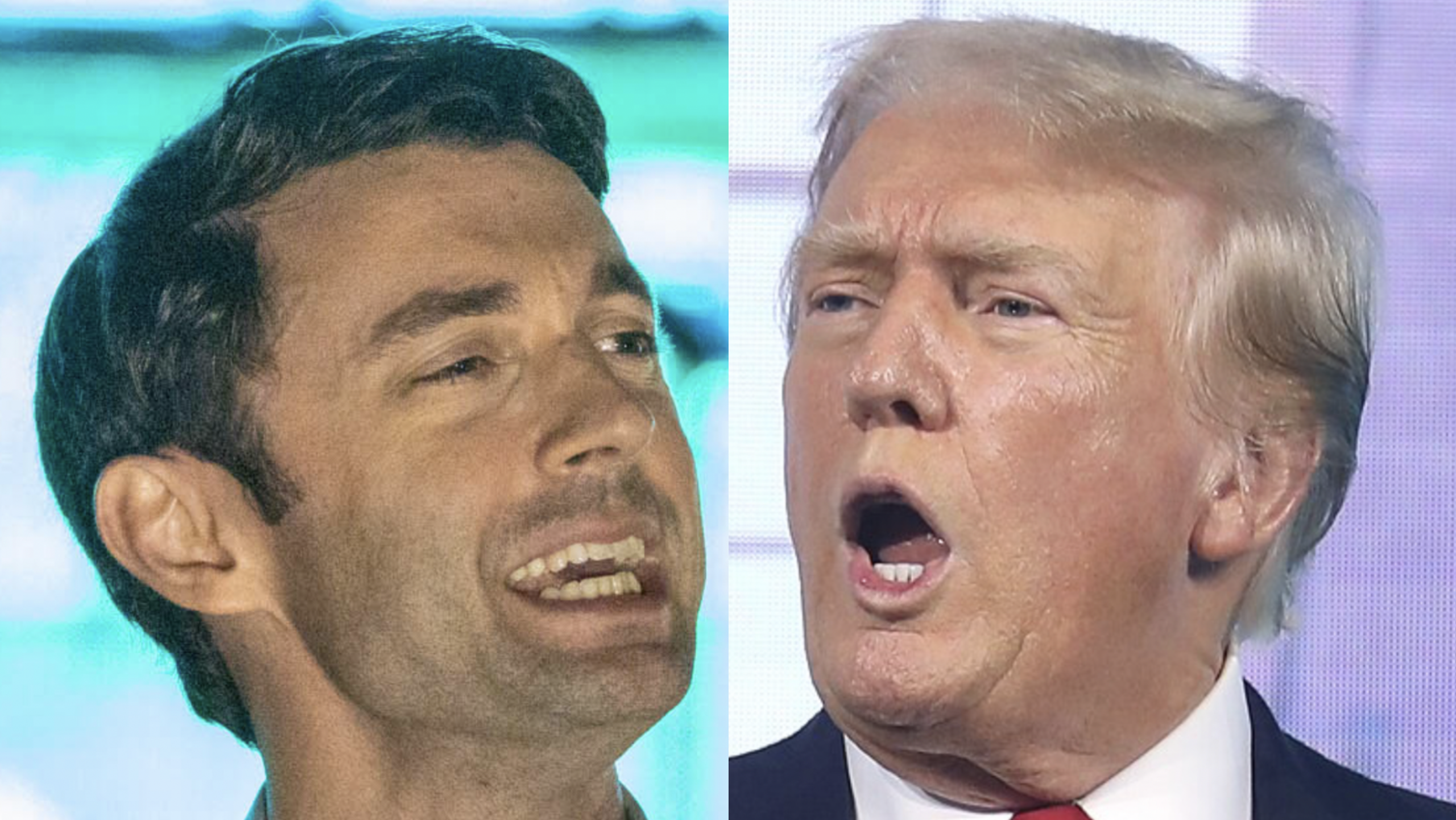
U.S. Senator Jon Ossoff (D-Ga.) delivered a scathing assessment of President Donald Trump’s handling of the Iran war on Wednesday, June 17, 2026, telling MSNOW that the conflict has become “a disaster for American foreign policy, for the American economy, for American national security, and for of a Trump presidency.” Appearing the day after Georgia Republican Mike Collins won his party’s primary to challenge him in November, Ossoff used the bulk of the interview to argue that Trump misled the public from the earliest days of the war and that the country will spend years recovering from the fallout.
Ossoff’s remarks came directly after Trump held what the MSNOW host described as “an absolutely bananas press conference” at the G7 summit, where the president discussed his administration’s approach to Iran. Asked for his reaction to that press conference, Ossoff did not hold back. “This is a disaster for American foreign policy, for the American economy, for American national security, and for of a Trump presidency,” he said. He then traced the arc of the war back to its opening days, telling viewers, “remember that it was on day one of this war that Donald Trump assured us it was running ahead of schedule. And then he lied and lied and lied and declared victory daily, weekly, for weeks.”
According to Ossoff, that pattern of declared victories never materialized into an actual resolution. “Victory always, either imminent or just around the corner or already secured,” he said, describing the administration’s messaging throughout the conflict. He argued that the result is a president now confronting the consequences of his own claims. “And now he is humiliated by the failure of his foreign policy in the Middle East,” Ossoff said.
The senator outlined what he described as the tangible costs of the war. “That has made America less safe,” he said. “That has cost Americans tens of billions of dollars. That has expended munitions and military equipment. It will take years for us to replace. That has diminished our standing in the world. It will take years to rebuild from this foreign policy failure.” Ossoff offered no specific dollar figures or timelines beyond those statements, framing the damage in terms of safety, finances, military readiness, and international standing.
Ossoff connected his criticism of the war to a separate fight unfolding in Washington over the nation’s top intelligence post. He pointed to Trump’s decision to cancel a Senate confirmation hearing for Jay Clayton, the president’s nominee for director of national intelligence, calling it “a clear effort to be able to meddle in elections like the one in Georgia.” He argued that scuttling the hearing serves to keep Bill Pulte, whom Ossoff called “a Trump sicophant,” in the role on an acting basis. “Part of what he’s doing here is allowing Bill Pulte to remain, who’s a Trump sicophant, to remain in the job to potentially likely weaponize the agency,” Ossoff said.
Pressed by the host to elaborate, Ossoff escalated his criticism of the arrangement. “First of all, I think the installation of a thug and a hack like Pulte as the acting director of national intelligence is maybe the most chilling and the most dangerous nomination or appointment that this president has made,” he said. He drew a direct line to Pulte’s predecessor in the acting role, Tulsi Gabbard, telling viewers, “it was Py’s predecessor in this post, Tulsi Gabbard, that the president dispatched to Georgia to oversee that ballot raid on an election facility in Fulton County.” He went on to argue that elevating Pulte “a top of the entire intelligence community” amounted to installing “a partisan loyalist with no background whatsoever in intelligence or national security.”
Ossoff said the stakes of that appointment extend beyond politics into national security itself. “He is putting the national security of the country at risk,” he said of Trump. “His handling of this is putting the United States at risk and making a terrorist attack more likely because he is destabilizing America’s intelligence capabilities.” He added that he sees a political dimension as well, warning that Pulte “is also putting someone in who is a political hack who will abuse his authorities in the intelligence community.”
The interview opened with Ossoff addressing his newly confirmed general election opponent, Mike Collins, who won Georgia’s Republican Senate primary the night before. Ossoff described Collins as “pro-war,” “pro-tariff,” and “pro-cutting your healthcare,” and called him “a Trump puppet who will serve Donald Trump’s needs and agenda mindlessly if he is elected to the United States Senate.” He urged supporters to visit his campaign website, warning that national Republican groups aligned with Trump hold a substantial financial advantage heading into the fall campaign.
Asked about a new nickname Trump gave him in connection with the Georgia race, Ossoff was dismissive of the insult itself but used the moment to return to his broader argument about the president’s state of mind. “I didn’t think it was his best work as nicknames go,” Ossoff said. “But more to the point, he is increasingly unstable. And I think that it flows from the fact that he is globally humiliated from this failed war.” He added that Trump’s posture toward the Georgia race fits into that pattern: “we see him lashing out and behaving erratically in ways that put the nation at risk.”
Ossoff’s comments on MSNOW echo statements he has made in his official capacity throughout the Iran war. In a statement released through his Senate office, Ossoff said he opposed the conflict from its outset, arguing that “Trump has launched this regime change war and put American forces at risk without presenting evidence of an imminent threat, without clear objectives, without having exhausted diplomacy, without a plan for the aftermath, and without the consent of Congress.” He called on Congress to “pass a War Powers Resolution to assert our Constitutional authority over war and peace.”
Ossoff has also pressed the administration directly on the war’s underlying justification. During a Senate Intelligence Committee hearing, he questioned then-Director of National Intelligence Tulsi Gabbard on her assertion that Iran’s nuclear enrichment program had been “obliterated” by U.S. airstrikes and that Tehran had made “no efforts since then to try to rebuild their enrichment capability.” When Gabbard responded that determining what constitutes an imminent threat was a presidential rather than an intelligence community responsibility, Ossoff rejected that characterization on the record, telling her the assessment of threats to the United States was “precisely your responsibility.”
Ossoff was also among more than three dozen Senate Democrats who signed a letter to Trump disputing the administration’s claim that hostilities with Iran had “terminated” as of May 1, 2026. The senators argued that ongoing naval operations, a blockade in the Strait of Hormuz, and continued use of force by both sides meant the conflict remained active under the War Powers Resolution, and they requested that the administration release the legal opinion underlying its position.
The fight over Clayton’s nomination that Ossoff referenced has continued to develop. According to a statement posted by Senate Intelligence Committee Chairman Tom Cotton, the panel initially intended to proceed with Clayton’s confirmation hearing as scheduled despite the president’s call to delay it, before ultimately postponing the hearing after Trump directed Clayton not to appear. Cotton said in his statement that he considered the delay “regrettable” and that he intended to move forward with Clayton’s confirmation “in the near future.” Trump has tied the nomination’s path forward to the confirmation of a separate nominee for U.S. Attorney for the Southern District of New York and to passage of voting legislation that had already failed in the Senate, leaving Pulte in the acting director role in the interim.
Ossoff’s general election campaign against Collins is now underway, with the race widely viewed as one of the most closely watched Senate contests of the 2026 midterm cycle. Both the Iran war and the fight over the nation’s intelligence leadership are likely to remain central themes as the campaign progresses through the fall.